
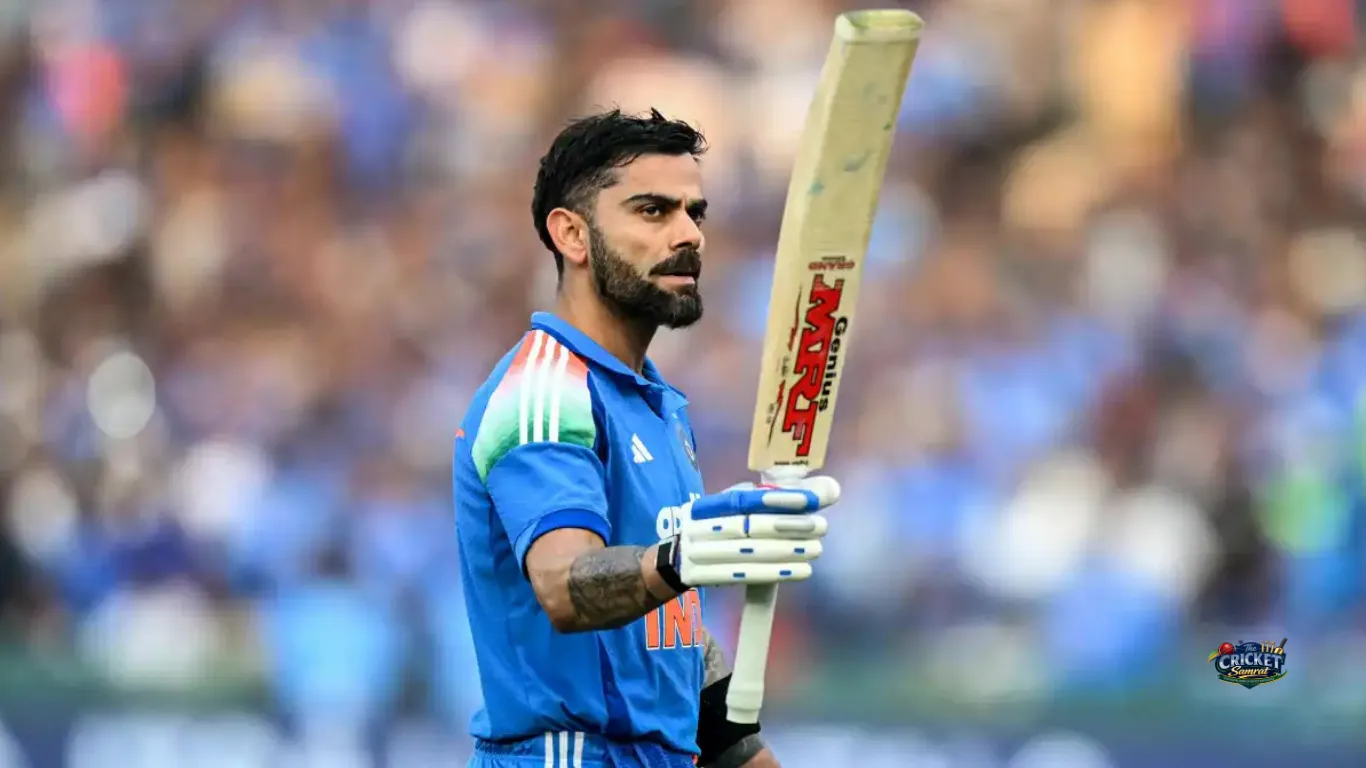
Vadodara: Indian cricket witnessed another historic chapter on Sunday night as Virat Kohli once again proved why he remains one of the greatest batters the game has ever seen. Playing at the Kotambi Stadium in Vadodara during the opening One Day International of the India vs New Zealand series, Kohli produced a masterclass innings that not only kept India firmly in the chase but also elevated him to second place on the list of highest run-scorers in international cricket history.
As India responded to New Zealand’s challenging total of 300 for eight, Kohli’s calm authority at the crease stood in sharp contrast to the mounting pressure of a high-stakes run chase. By the time India reached 157 for two in 26.2 overs, the foundation for a memorable chase had been firmly laid, with Kohli and Shreyas Iyer standing tall in the middle.
This match was not just about numbers on the scoreboard—it was about legacy, resilience, and milestones that continue to define Virat Kohli’s extraordinary career.
New Zealand Post 300 After Choosing to Bat
Earlier in the day, India won the toss and opted to bowl first, trusting their pace attack and spin resources to restrict a formidable New Zealand batting lineup. The visitors, however, responded with a disciplined and well-paced innings, reaching exactly 300 runs for the loss of eight wickets in their allotted 50 overs.
New Zealand’s innings was anchored by three half-centuries, reflecting a collective batting effort rather than reliance on a single standout performance.
Daryl Mitchell Leads New Zealand’s Charge
Daryl Mitchell emerged as New Zealand’s top scorer, crafting a fluent 84 off just 71 deliveries. His innings was a blend of intelligent placement, powerful strokeplay, and sharp running between the wickets. Mitchell counter-attacked during the middle overs, ensuring New Zealand maintained momentum even as wickets fell at the other end.
Henry Nicholls played a stabilising role, scoring a composed 62 runs, while Devon Conway contributed a vital 56 at the top of the order. Together, the trio ensured New Zealand crossed the 300-run mark, a total that has historically posed significant challenges on Indian pitches.
Indian Bowlers Share the Spoils
India’s bowling attack showed discipline and balance throughout the innings. Mohammed Siraj, Prasidh Krishna, and young pacer Harshit Rana each claimed two wickets, applying pressure during key phases of the innings. Kuldeep Yadav chipped in with a wicket of his own, using his variations effectively to slow the scoring rate.
Despite their efforts, New Zealand’s depth and composure allowed them to set India a stiff target of 301 runs.
India’s Chase Begins with Early Setback
India’s response began with intent but suffered an early blow when Rohit Sharma was dismissed for 26. The Indian opener looked in good touch, striking the ball cleanly and adding early runs to the scoreboard. However, Kyle Jamieson drew the breakthrough, inducing a catch from Rohit that was safely held by Michael Bracewell.
India were 39 for one, and the pressure immediately shifted to the middle order. What followed next was a partnership that showcased the future and present of Indian cricket coming together seamlessly.
Virat Kohli and Shubman Gill Steady the Innings
With the scoreboard ticking and the required run rate hovering at a manageable level, Virat Kohli joined captain Shubman Gill at the crease. The duo displayed remarkable composure, carefully assessing conditions before accelerating with precision.
Gill, leading the side with maturity beyond his years, played a captain’s knock, scoring 56 runs. He mixed patience with aggression, rotating the strike effectively while punishing loose deliveries.
A Century Partnership Under Pressure
The partnership between Gill and Kohli soon crossed the 100-run mark, becoming the backbone of India’s chase. The milestone came in the 24th over when Gill took a quick single off Glenn Phillips, bringing up the partnership amid applause from the Vadodara crowd.
India had been wobbling after the early loss of Rohit Sharma, but the calm presence of Kohli and the assured strokeplay of Gill ensured the innings remained on track.
Unfortunately for India, the partnership was eventually broken at 118 runs when debutant spinner Aditya Ashok dismissed Gill. Glenn Phillips completed a sharp catch, ending a crucial stand that had steadied the innings.
Virat Kohli Rewrites History Yet Again
While partnerships and match situations matter, individual milestones often define legends—and Virat Kohli delivered one of the biggest moments of his illustrious career during this innings.
Surpassing Kumar Sangakkara
As Kohli reached 42 runs in his innings, he overtook Sri Lankan great Kumar Sangakkara’s tally of 28,016 international runs. This achievement elevated Kohli to second place on the list of highest run-scorers in international cricket history.
Only Sachin Tendulkar, with 34,357 runs, now stands ahead of him.
This landmark was greeted with a standing ovation, as fans and teammates alike recognised the magnitude of the achievement. In an era dominated by fast bowling, packed schedules, and intense scrutiny, Kohli’s consistency across formats remains unparalleled.
77th International Half-Century
Kohli didn’t stop there. He went on to register his 77th half-century in international cricket, once again underlining his reputation as one of the most reliable run-machines the game has ever produced.
His innings was marked by controlled aggression—classic cover drives, precise flicks through mid-wicket, and an unshakable temperament that allowed him to thrive under pressure.
Rohit Sharma Breaks Chris Gayle’s ODI Sixes Record
Although Rohit Sharma’s stay at the crease was relatively brief, the Indian opener still managed to carve his name into the record books.
By hitting his second six of the innings, Rohit surpassed West Indies legend Chris Gayle to become the opener with the most sixes in One Day International cricket.
A Record of Power and Longevity
- Rohit Sharma (ODI opener): 329 sixes in 193 matches
- Chris Gayle (ODI opener): 328 sixes
Across all batting positions, Rohit already holds the record for most sixes in ODIs, with a staggering total of 357 maximums. The achievement highlights Rohit’s evolution from a stylish batter into one of the most destructive openers in the history of the format.
New Zealand’s Bowling Effort
New Zealand’s bowlers showed intent and discipline during India’s chase. Kyle Jamieson used his height and bounce to trouble the Indian batters early, while Aditya Ashok impressed with his control and composure, especially with the wicket of Shubman Gill.
Michael Bracewell and Glenn Phillips provided support in the middle overs, attempting to break partnerships and slow the scoring rate. However, with Virat Kohli still at the crease, New Zealand knew the task was far from over.
Playing XIs: India vs New Zealand, 1st ODI
India Playing XI
- Shubman Gill (Captain)
- Rohit Sharma
- Virat Kohli
- Shreyas Iyer
- KL Rahul (Wicketkeeper)
- Ravindra Jadeja
- Washington Sundar
- Harshit Rana
- Kuldeep Yadav
- Mohammed Siraj
- Prasidh Krishna
New Zealand Playing XI
- Michael Bracewell (Captain)
- Devon Conway
- Henry Nicholls
- Will Young
- Daryl Mitchell
- Glenn Phillips
- Mitchell Hay (Wicketkeeper)
- Zakary Foulkes
- Christian Clarke
- Kyle Jamieson
- Aditya Ashok
Read also: Mumbai vs Delhi WPL: Mumbai Indians Dominate Delhi Capitals with 50-Run Victory in WPL 2026
The Enduring Impact of Virat Kohli
Matches like these reinforce why Virat Kohli is more than just a cricketer—he is a phenomenon. His ability to adapt across formats, conditions, and phases of his career sets him apart in modern cricket.
From chasing down steep totals to rewriting record books, Kohli continues to raise the bar for excellence. His innings in Vadodara was not merely about scoring runs; it was about control, confidence, and an unwavering belief in his craft.
For fans in India and across the world—especially in cricket-loving regions like the UK and the US—Kohli’s journey represents dedication, discipline, and the relentless pursuit of greatness.
What This Means for the Series
With India well-positioned in the chase and key batters in form, the opening ODI has set the tone for what promises to be a fiercely contested series. New Zealand’s balanced performance shows they will not be easy opponents, while India’s batting depth and experience continue to be major strengths.
As the series progresses, all eyes will remain on Virat Kohli—not just for the records he might break next, but for the standards he continues to set for international cricket.
Conclusion
The first ODI in Vadodara will be remembered as another milestone night in the career of Virat Kohli. Surpassing Kumar Sangakkara, registering yet another international fifty, and guiding India through a crucial phase of a challenging chase—Kohli once again proved why his name belongs among the greatest in cricket history.
As India pushes forward in this series, one thing remains certain: whenever Virat Kohli walks out to bat, history is never far behind.