
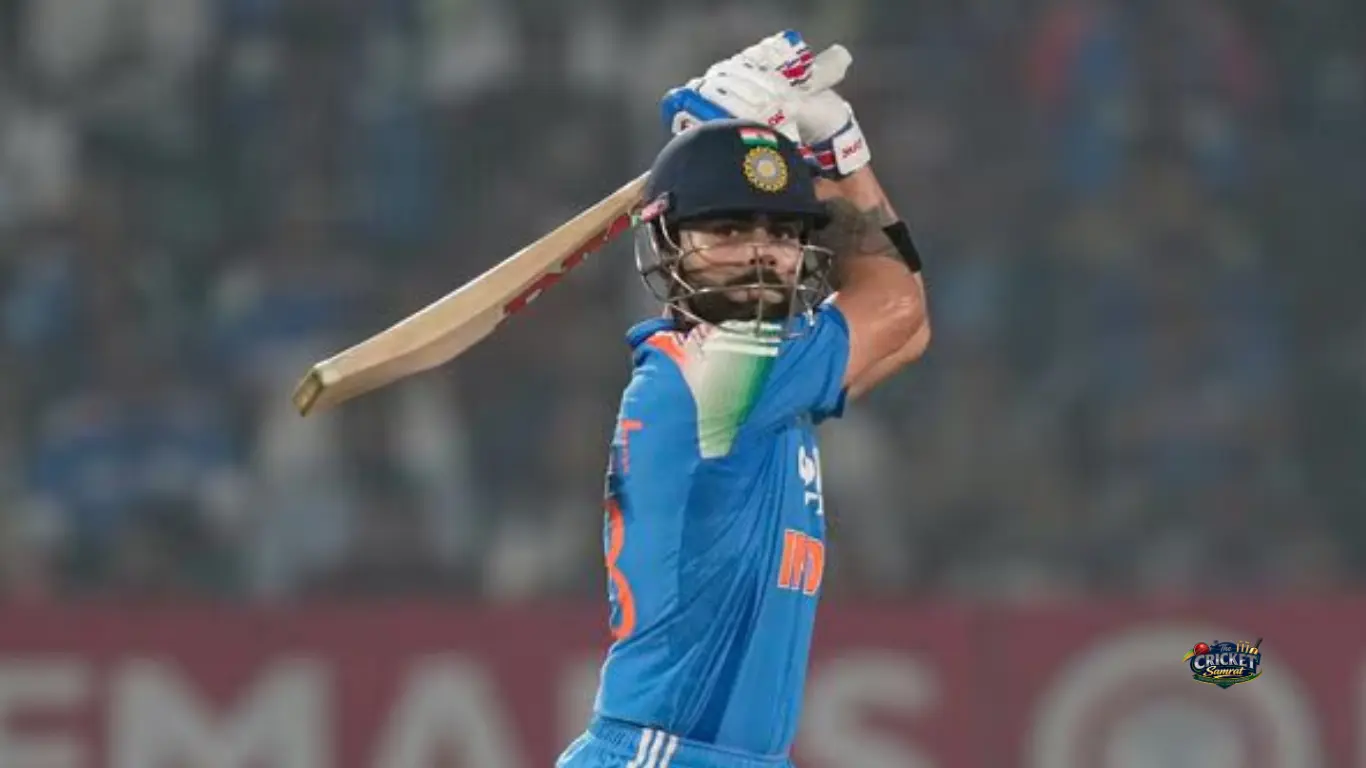
India delivered a memorable start to the India vs New Zealand ODI 2026 series with a nerve-wracking four-wicket victory at the Kotambi Stadium in Vadodara on Sunday night. Chasing a challenging target of 301, the Indian team showcased composure, depth, and resilience to clinch the match with one over to spare, taking a 1–0 lead in the three-match ODI series.
Virat Kohli stood tall as the hero of the night with a sublime innings of 93 runs, narrowly missing out on a century but anchoring India’s chase with trademark authority. His performance not only earned him the Player of the Match award but also saw him surpass Sri Lankan legend Kumar Sangakkara to become the second-highest run-scorer in international cricket history.
The match had everything fans could ask for-high-quality batting, crucial breakthroughs, record-breaking moments, and a dramatic finish-setting the tone for what promises to be a gripping India vs New Zealand ODI 2026 series.
India’s Confident Chase After New Zealand’s Competitive Total
After winning the toss, India opted to bowl first under lights, a decision that appeared tactical given the dew factor and the pitch conditions at the Kotambi Stadium. New Zealand responded with a disciplined batting display, posting 300 runs for the loss of eight wickets in their allotted 50 overs.
The target of 301 was far from straightforward, especially against a New Zealand bowling attack led by the tall and menacing Kyle Jamieson. However, India’s batting depth and experience eventually proved decisive.
India completed the chase in 49 overs, losing six wickets along the way. The victory came when KL Rahul smashed a towering six off Christian Clarke, sending the Vadodara crowd into a frenzy and sealing a memorable win for the hosts.
Virat Kohli’s 93: A Classic ODI Innings Under Pressure
Virat Kohli’s innings was a masterclass in controlled aggression and situational awareness. Walking in with expectations sky-high, Kohli played with patience early on, rotating the strike effectively before shifting gears once settled.
His 93-run knock was built on flawless timing, elegant stroke play, and impeccable shot selection. Although he fell short of a hundred, Kohli’s presence at the crease ensured India never lost control of the chase.
More importantly, his innings carried immense historical significance. During the knock, Kohli overtook Kumar Sangakkara’s tally of 28,016 international runs, becoming the second-highest run-scorer in international cricket, with only Sachin Tendulkar ahead of him.
Kohli’s innings epitomised why he remains one of the greatest batters the game has ever seen and reaffirmed his pivotal role in the India vs New Zealand ODI 2026 campaign.
Gill Leads from the Front, Middle Order Adds Stability
Indian captain Shubman Gill played a calm and composed innings of 56 runs, providing stability at the top of the order. His partnership with Kohli was crucial in building momentum after the early overs and ensuring the required run rate remained manageable.
Shreyas Iyer narrowly missed his half-century, scoring 49 runs in a fluent knock that kept the scoreboard ticking. His ability to find gaps and handle spin proved vital during the middle overs.
Towards the end, KL Rahul displayed nerves of steel, remaining unbeaten on 29, while Harshit Rana chipped in with a valuable 29 runs, showcasing India’s lower-order resilience.
The collective batting effort underlined India’s depth and adaptability-a major advantage as the India vs New Zealand ODI 2026 series unfolds.
Jamieson Leads New Zealand’s Bowling Effort
Despite the defeat, New Zealand’s bowling attack showed moments of brilliance. Kyle Jamieson was the standout performer, claiming four wickets and consistently troubling Indian batters with bounce and movement.
Christian Clarke and the supporting bowlers managed to apply pressure in phases, but the Indian batting unit held its nerve in crunch moments, preventing New Zealand from capitalising fully.
New Zealand’s Batting: Three Fifties Set the Platform
Earlier in the match, New Zealand’s innings was highlighted by three half-centuries that helped them reach the 300-run mark.
- Daryl Mitchell played the most impactful knock, scoring 84 runs off 71 balls, combining power with precision.
- Henry Nicholls contributed a steady 62, anchoring the innings during the middle overs.
- Devon Conway added 56 runs, providing solidity at the top.
While New Zealand batted well, India’s bowlers ensured they never fully ran away with the game.
Indian Bowlers Share the Spoils
India’s bowling effort was disciplined and effective, with wickets spread evenly across the attack.
- Mohammed Siraj picked up two key wickets with his pace and movement.
- Prasidh Krishna delivered crucial breakthroughs in the middle overs.
- Harshit Rana impressed with two wickets and an all-round contribution.
- Kuldeep Yadav added one wicket, keeping things tight with his spin.
The bowling unit’s ability to strike at regular intervals prevented New Zealand from pushing beyond 300, a factor that proved decisive in the final outcome of the India vs New Zealand ODI 2026 opener.
Major Records Broken During the Match
Kohli Surpasses Sangakkara in International Runs
Virat Kohli’s innings marked a historic milestone. By crossing Sangakkara’s run tally, Kohli now sits second on the all-time international run-scorers list, behind only Sachin Tendulkar’s monumental record of 34,357 runs.
The achievement further cements Kohli’s legacy as one of cricket’s all-time greats.
Rohit Sharma Breaks Chris Gayle’s Six-Hitting Record
Rohit Sharma also made history by becoming the highest six-hitting opener in ODI cricket. With his second six of the innings, Rohit surpassed Chris Gayle’s record of 328 sixes.
Rohit now has 329 sixes as an opener in ODIs and continues to lead the chart for most sixes overall in the format, with 357 sixes to his name.
Kohli Dedicates Player of the Match Award to His Mother
Virat Kohli was named Player of the Match for the 45th time in his illustrious career. Speaking during the post-match presentation, Kohli delivered an emotional message.
“I dedicate all my awards to my mother. She feels proud, and that means everything to me,” Kohli said.
Reflecting on becoming the second-highest run-scorer in international cricket, he added, “When I look back at my journey, it feels like a dream come true. I always believed in my abilities and worked extremely hard to reach this point.”
Kohli also emphasised that milestones are not his primary focus anymore. “I don’t think about records while playing. I feel blessed that people come to watch me play, and seeing happiness on their faces gives me immense joy.”
Series Update and What’s Next
With this victory, India now lead the three-match series 1–0. The second ODI of the India vs New Zealand ODI 2026 series will be played on January 14 at the Niranjan Shah Stadium in Rajkot.
Both teams are expected to make minor tactical adjustments as the series progresses, with New Zealand aiming to bounce back strongly and India looking to build on their momentum.
Playing XIs
India XI
Shubman Gill (Captain), Rohit Sharma, Virat Kohli, Shreyas Iyer, KL Rahul (Wicketkeeper), Ravindra Jadeja, Washington Sundar, Harshit Rana, Kuldeep Yadav, Mohammed Siraj, Prasidh Krishna.
New Zealand XI
Michael Bracewell (Captain), Devon Conway, Henry Nicholls, Will Young, Daryl Mitchell, Glenn Phillips, Mitchell Hay (Wicketkeeper), Zakary Foulkes, Christian Clarke, Kyle Jamieson, Aditya Ashok.
Conclusion
The opening clash of the India vs New Zealand ODI 2026 series delivered high drama, elite performances, and unforgettable moments. Virat Kohli’s brilliance, India’s calm chase, and New Zealand’s competitive spirit ensured fans were treated to a thrilling contest.
As the series moves to Rajkot, anticipation continues to build. If the first match is any indication, cricket lovers around the world are in for a spectacular ODI series filled with intensity, history, and top-class cricket.