
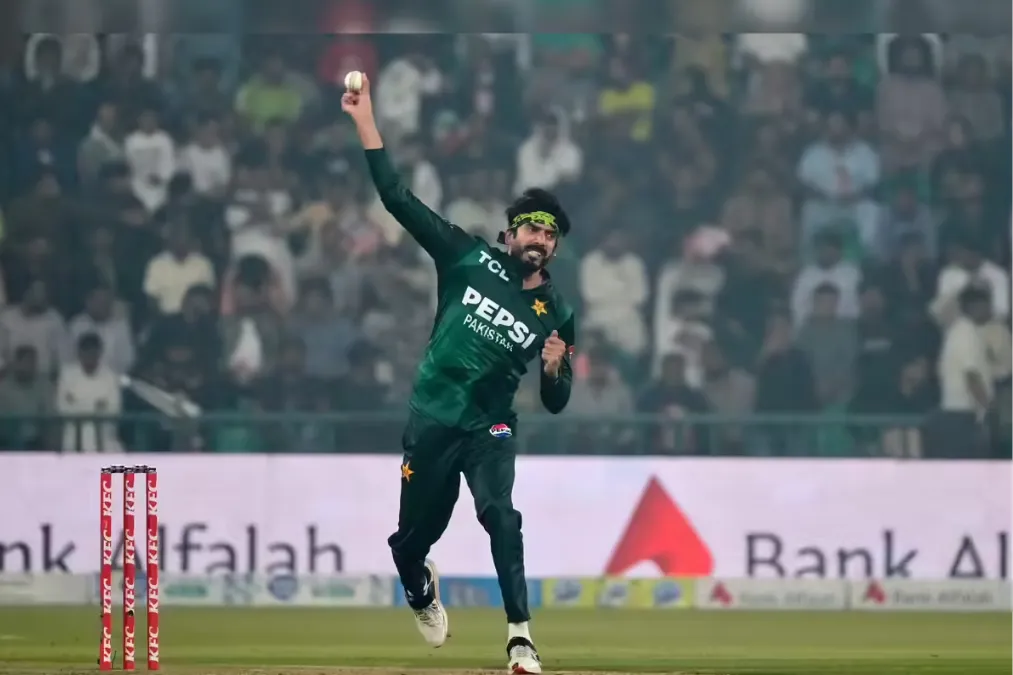
Usman Tariq: A new controversy has erupted in international cricket following a heated moment during the second T20 International between Pakistan and Australia, where Australian all-rounder Cameron Green appeared to question the bowling action of Pakistan spinner Usman Tariq. The incident, which took place at Lahore’s Gaddafi Stadium, has sparked intense debate among fans, former players, and analysts across the cricketing world.
The flashpoint occurred after Green was dismissed by Usman Tariq during Australia’s run chase. As the Australian batter walked back to the pavilion, television cameras captured him making a gesture widely interpreted as a reference to “chucking”-a term used for an illegal bowling action involving excessive elbow extension. The moment quickly went viral on social media, triggering a wave of reactions and reigniting old discussions around Tariq’s bowling mechanics.
Cameron Green is not happy with chucker Usman Tariq's bowling action after getting out pic.twitter.com/nLIki7BBgH
— Ashish Shrivastava (@ashishayush1177) January 31, 2026
The Incident That Set Social Media Ablaze
Cameron Green was in aggressive form during Australia’s innings, scoring 35 runs off just 20 balls while attempting to keep his side in contention during a challenging chase. However, his stay at the crease ended when he mistimed a delivery from Usman Tariq and offered a straightforward catch to Shadab Khan in the field.
As Green walked back to the dugout, cameras zoomed in on a brief hand movement that many viewers interpreted as a “throwing” gesture. Within minutes, clips of the moment began circulating online, drawing millions of views and dividing opinion among cricket fans worldwide.
While some Australian supporters felt Green’s reaction suggested genuine concern, a large section of Pakistani fans dismissed the gesture as frustration following his dismissal rather than a serious allegation.
Divided Opinions Among Fans and Experts
The incident has sharply split public opinion. Supporters of Usman Tariq were quick to defend the spinner, pointing out that he has already undergone official testing multiple times and has been cleared on every occasion.
Many fans argued that high-pressure match situations often lead to emotional reactions from players, especially when a batter struggles to read a bowler during a crucial phase of the game. According to them, Green’s gesture was more about disappointment than any formal accusation.
On the other hand, critics believe the episode highlights how closely bowling actions are scrutinized in modern cricket, particularly for spinners who rely on variations and subtle changes in release.
Usman Tariq’s Bowling Action: A History of Scrutiny
This is not the first time usman tariq has faced questions regarding his bowling action. During earlier seasons of the Pakistan Super League (PSL), the spinner’s action came under review, leading to official reporting on more than one occasion.
However, on each instance, Tariq followed due process and was subjected to biomechanical testing at PCB-accredited facilities. The results consistently confirmed that his action was within the limits prescribed by the International Cricket Council (ICC).
Cameron green should stop crying and focus on his batting, Australia dropped him mid ashes and he is now crying over Usman Tariq's action just because he got him out. pic.twitter.com/mkmfXsiKkQ
— N (@SaadonaBreak3) January 31, 2026
Previous Assessments of Usman Tariq’s Bowling Action
| Tournament / Year | Reported for Action | Testing Outcome |
|---|---|---|
| PSL Season 9 | Yes | Cleared – Action Legal |
| PSL Season 10 | Yes | Cleared – Action Legal |
| International Matches | Monitored | No violation found |
According to ICC regulations, a bowler is allowed a maximum of 15 degrees of elbow extension during delivery. Tariq has repeatedly stated that his bowling action comfortably falls within this permitted range.
Tariq Breaks Silence on the Controversy
Earlier, the 30-year-old spinner had openly addressed doubts surrounding his action, expressing confidence in the legality of his bowling. He emphasized that he has nothing to hide and has passed every test conducted by official authorities.
“I was confident from the beginning that I don’t throw the ball,” Usman Tariq said in a previous interview. “I’ve been tested twice in Pakistan under official procedures, and my action has been declared legal both times.”
His calm response and reliance on official validation have strengthened his support base, especially among Pakistan fans who see him as a disciplined professional unfairly targeted by speculation.
Pakistan’s Dominant Performance Overshadows the Drama
While the controversy grabbed headlines, it should not overshadow Pakistan’s commanding performance in the match. The hosts delivered a clinical display with both bat and ball to secure a massive victory over Australia and seal the series.
Salman Ali Agha starred with the bat, smashing 76 runs off just 40 deliveries to propel Pakistan to a formidable total of 198 for 5 in their 20 overs. The Australian bowling attack struggled to contain Pakistan’s aggressive approach, especially during the middle overs.
Pakistan Batting Highlights – 2nd T20I
| Player | Runs | Balls | Strike Rate |
|---|---|---|---|
| Salman Ali Agha | 76 | 40 | 190.00 |
| Babar Azam | 41 | 29 | 141.38 |
| Mohammad Rizwan | 28 | 18 | 155.55 |
Australia Collapse Under Pressure
In response, Australia’s batting lineup crumbled under relentless pressure from Pakistan’s bowlers. The visitors were bowled out for just 108, suffering a heavy 90-run defeat.
Pakistan’s spinners played a decisive role, exploiting the surface brilliantly and keeping the Australian batters tied down.
Bowling Figures – Pakistan vs Australia, 2nd T20I
| Bowler | Overs | Wickets | Runs |
|---|---|---|---|
| Abrar Ahmed | 4 | 3 | 18 |
| Shadab Khan | 4 | 3 | 21 |
| Usman Tariq | 4 | 1 | 24 |
Despite the loss, Cameron Green remained Australia’s top scorer, highlighting how little support he received from the rest of the batting order.
Also read: Sam Curran Hattrick Shakes Sri Lanka Ahead of T20 World Cup as England Make Strong Statement
Conclusion:
With Pakistan taking an unassailable lead in the three-match series, attention now shifts to the final T20I scheduled for Sunday, February 1, at the same venue. While the series outcome is already decided, the match offers both teams a chance to fine-tune combinations and end the tour on a positive note.
For usman tariq, the focus will likely be on his performance rather than the noise surrounding his bowling action. Having already been cleared by official authorities, the spinner will aim to let his cricket do the talking once again.