
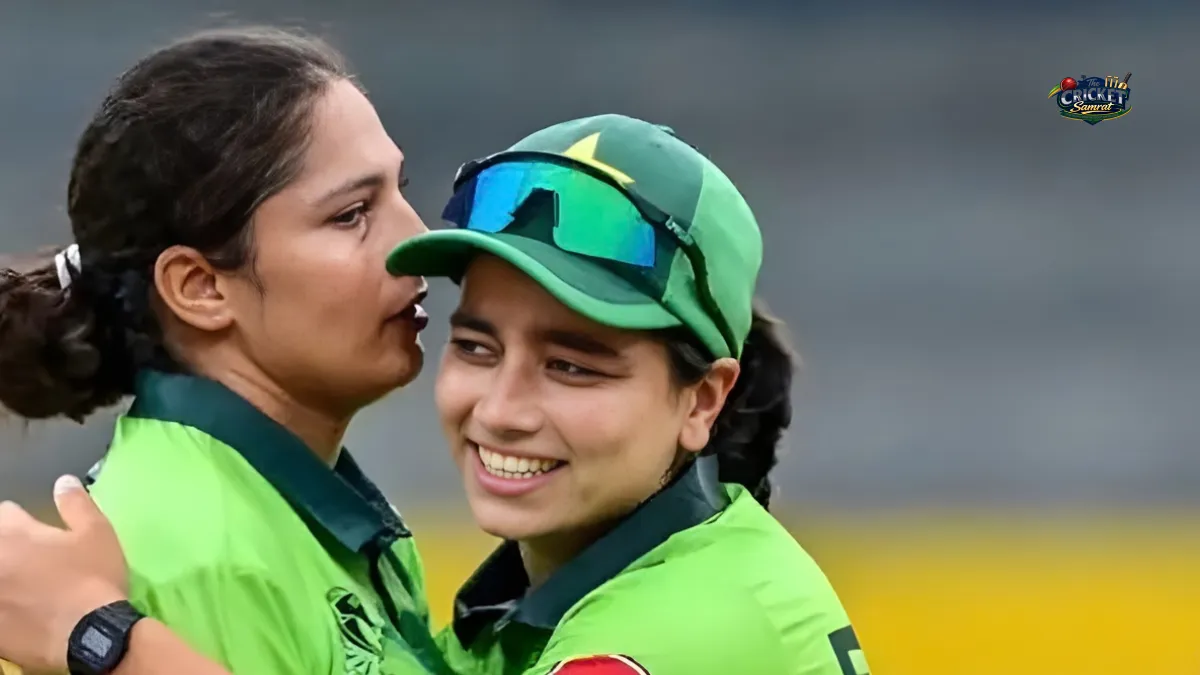
The Hundred 2026 Auction has unexpectedly become one of the most talked-about events in international cricket after Pakistan’s star spinner Sadia Iqbal, currently ranked the world’s No.1 T20I bowler, went unsold during the women’s player auction. The outcome has surprised many fans and analysts and has triggered a wider debate about whether Pakistani players are being overlooked in the England-based competition.
The auction for the upcoming season of The Hundred took place in England on Wednesday, where several international women’s cricketers were picked by franchises for the 100-ball tournament. However, one of the biggest headlines from The Hundred 2026 Auction was the absence of any bids for Sadia Iqbal. The left-arm spinner, who has consistently been one of the top performers in women’s T20 cricket, was listed with a base price of £15,000 but did not attract interest from any of the eight teams.
Pakistan all-rounder Fatima Sana also shared the same fate. She too entered the auction with a base price of £15,000 but remained unsold at the end of the bidding process. The results immediately sparked discussion among cricket followers and on social media, where many questioned why two prominent Pakistani players failed to secure contracts.
Sadia Iqbal’s Unsold Status Raises Questions
Sadia Iqbal’s absence from team selections has particularly raised eyebrows because of her recent performances in international cricket. As the current No.1 ranked T20I bowler in women’s cricket, she has been a crucial member of Pakistan’s national team and has built a reputation for her consistent wicket-taking ability and control.
For many observers, the fact that a player with such credentials could go unsold in The Hundred 2026 Auction appears unusual. Several cricket experts believe that players with similar rankings from other countries usually attract significant interest during franchise tournaments.
While franchises have complete freedom to select players according to team strategies and combinations, Sadia Iqbal’s omission has fueled speculation about whether external factors could have influenced the outcome.
Debate Over IPL Franchise Influence
One of the main talking points following The Hundred 2026 Auction is the growing involvement of investors who also own teams in the Indian Premier League. In recent months, multiple Hundred franchises have received investment from companies that are already associated with IPL teams.
This development has led some cricket followers to question whether these connections might indirectly affect the selection of players from certain countries. Critics on social media have argued that franchises linked with IPL owners might be less inclined to sign Pakistani players because Pakistani cricketers do not participate in the IPL.
However, there is currently no official evidence supporting such claims. Team managements usually make their decisions based on squad balance, form, and tactical requirements rather than nationality alone.
ECB Previously Addressed Nationality Concerns
Before the auction took place, the England and Wales Cricket Board (ECB), which organizes The Hundred, had already clarified its stance regarding player selection. According to the ECB, franchises are not allowed to discriminate based on nationality and selections should be made purely on cricketing merit.
Despite this clarification, the outcome of The Hundred 2026 Auction has revived the debate among fans and analysts. Some believe that the situation may simply reflect the strategic choices of the teams, while others feel that it highlights a broader pattern involving Pakistani players in global leagues.
Pakistani Women Yet to Feature in The Hundred
Another interesting aspect of the discussion is that Pakistani women’s cricketers have never played in The Hundred since the competition began in 2021. Even in earlier seasons, when IPL-linked investors were not involved with the teams, Pakistani female players were not selected in the tournament.
This suggests that the trend may not be entirely linked to the recent ownership changes. Nevertheless, the fact that a top-ranked bowler like Sadia Iqbal remained unsold in The Hundred 2026 Auction has still surprised many observers in the cricket community.
Indian Players Receive Strong Bids
While Pakistani players faced disappointment, Indian women’s cricketers enjoyed a successful auction with several players receiving impressive contracts. Franchises showed strong interest in Indian talent, highlighting the growing popularity and influence of India’s women’s cricket stars.
The following table shows some of the notable signings involving Indian players during The Hundred 2026 Auction:
| Player Name | Country | Auction Price |
|---|---|---|
| Richa Ghosh | India | £50,000 |
| Deepti Sharma | India | £27,000 |
In addition to these signings, two of India’s biggest stars had already secured places in teams before the auction took place.
| Player Name | Status | Team Action |
|---|---|---|
| Smriti Mandhana | Pre-signed | Retained by franchise |
| Jemimah Rodrigues | Pre-signed | Retained by franchise |
The strong demand for Indian players reflects their consistent performances in international cricket and domestic leagues such as the Women’s Premier League.
Another noticeable trend in The Hundred 2026 Auction was the increase in salary levels for women’s players compared with previous seasons. The rise in pay demonstrates the growing investment and interest in women’s cricket globally.
Rising Financial Opportunities in Women’s Cricket
The expansion of financial opportunities in leagues such as The Hundred indicates that women’s cricket is continuing to grow at a rapid pace. Franchises are increasingly willing to invest larger amounts in players who can strengthen their squads and attract fan engagement.
Higher salaries also reflect the rising commercial value of the tournament and the broader push to promote women’s cricket internationally. The Hundred has played a key role in providing a global platform for female cricketers from different countries.
Despite the controversy surrounding some selections in The Hundred 2026 Auction, the tournament continues to be one of the most visible competitions for women’s cricket talent.
Attention Now Turns to the Men’s Auction
Following the women’s auction, attention is now shifting toward the men’s player draft, which is expected to generate significant interest. Several high-profile Pakistani male cricketers have registered for the upcoming auction, including some of the biggest names in international cricket.
Players such as Shaheen Shah Afridi, Naseem Shah, and Mohammad Amir are among those expected to attract attention from franchises. Their performances in global T20 competitions have made them valuable prospects for teams looking to strengthen their bowling attacks.
The outcome of the men’s draft will likely determine whether the concerns raised after the women’s auction continue or fade away. If Pakistani male players receive contracts during the next stage of The Hundred 2026 Auction process, it may help reduce the controversy that has emerged following the women’s selections.
A Story That Continues to Develop
For now, the results of The Hundred 2026 Auction have sparked conversations across the cricket world. The unexpected absence of bids for the world’s No.1 T20 bowler Sadia Iqbal has left many fans puzzled and raised broader questions about representation in global franchise leagues.
As the tournament prepares for its next season, all eyes will remain on how franchises build their squads and whether upcoming auctions create new opportunities for players from every cricketing nation. The final outcome of the men’s auction could play a key role in shaping the narrative surrounding The Hundred 2026 Auction and the participation of Pakistani players in the competition.