
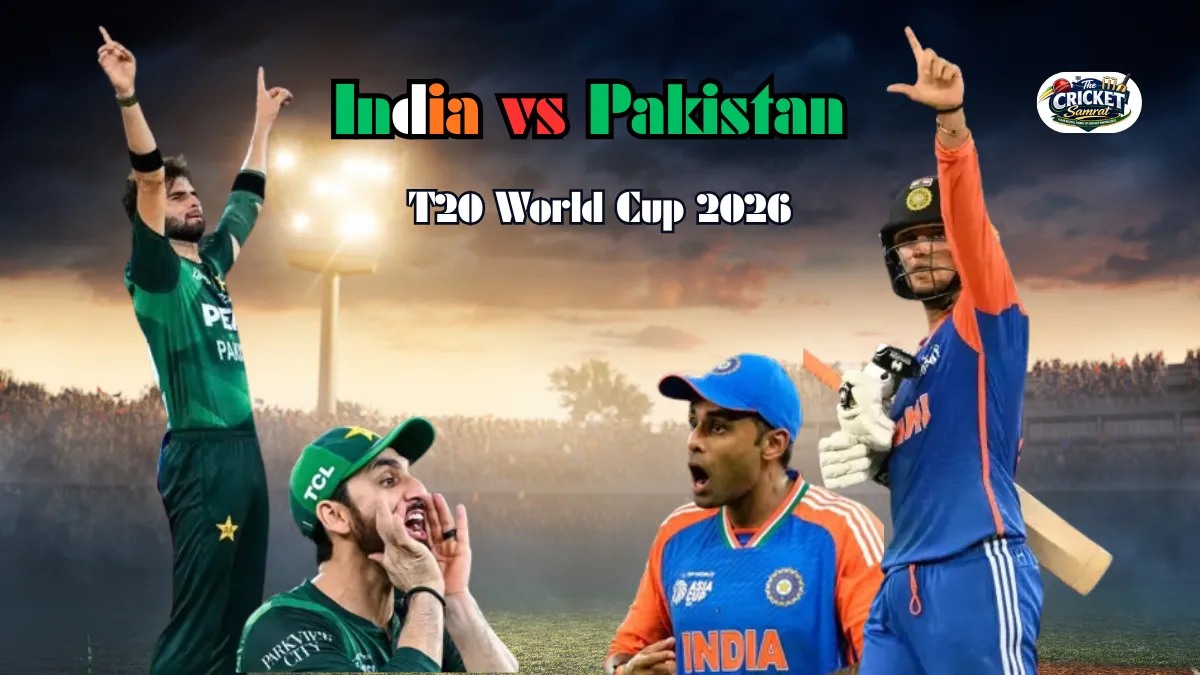
The cricketing world is once again preparing for one of the most anticipated clashes in international sport — India vs Pakistan. The high-voltage encounter in the ICC T20 World Cup 2026 is scheduled to take place on February 15 at the iconic R. Premadasa Stadium in Colombo. Whenever these two cricketing giants face off, it is more than just a game; it is an event followed passionately across continents, especially in cricket-loving nations like India, Pakistan, the United Kingdom, and the United States.
Both teams have started their T20 World Cup 2026 campaign strongly, winning two matches each so far. With both sides unbeaten in the tournament, fans are expecting nothing less than a thrilling contest filled with intensity, drama, and world-class performances.
Here is a detailed look at the India vs Pakistan head-to-head record in T20 World Cups and overall T20 Internationals, along with key updates ahead of the much-awaited showdown.
India vs Pakistan Head-to-Head in T20 World Cup History
When it comes to T20 World Cup encounters, India have historically held the upper hand over Pakistan.
So far, India and Pakistan have faced each other eight times in T20 World Cup history. Out of these matches:
- India have won 7 matches
- Pakistan have won 1 match
India’s dominance in ICC tournaments against Pakistan has been one of the defining narratives of modern cricket. The only time Pakistan managed to defeat India in a T20 World Cup came in the 2021 edition, a result that broke India’s long-standing unbeaten streak in the tournament against their arch-rivals.
Apart from that solitary loss, India have consistently delivered strong performances, whether defending totals or chasing under pressure. Several memorable performances over the years have cemented India’s superiority in this format at World Cup level.
This historical advantage gives India a psychological edge heading into the 2026 clash, although Pakistan are known for their unpredictability and ability to rise to big occasions.
Overall India vs Pakistan T20 International Record
Looking beyond the World Cup and considering overall T20 Internationals, India’s dominance remains evident.
To date, the two sides have played 16 T20 International matches against each other. The results stand as follows:
- India: 13 wins
- Pakistan: 3 wins
These numbers clearly show that in the shortest format of the game, India have enjoyed sustained success against Pakistan. Whether in multi-nation tournaments or bilateral encounters, India have often managed to outplay their rivals through disciplined bowling, aggressive batting, and sharp fielding.
However, statistics alone do not determine the outcome of an India vs Pakistan match. Given the intensity of the rivalry, momentum and composure on the day often prove more important than past records.
T20 World Cup 2026: Match Context
Both teams come into this fixture with confidence. Each side has won two matches in the tournament so far, placing them in strong positions within their group.
With qualification scenarios tightening and net run rate potentially playing a role later in the competition, this match carries significant weight. A win would not only strengthen semi-final prospects but also provide a crucial psychological boost.
The ICC T20 World Cup 2026 has already delivered exciting contests, but the India vs Pakistan clash remains the headline attraction. Tickets have reportedly seen massive demand, and global viewership is expected to break records, particularly in cricket-following communities in the UK and USA.
Abhishek Sharma Declared Fit Ahead of Pakistan Clash
In a major boost for India, captain Suryakumar Yadav confirmed ahead of the match that young batter Abhishek Sharma has fully recovered and is fit to play against Pakistan.
There had been concerns about Abhishek’s availability after he faced fitness issues earlier in the tournament. However, speaking at the pre-match press conference, Suryakumar clarified that the player is ready for selection and available for the crucial February 15 encounter in Colombo.
In a light-hearted yet confident remark, the Indian captain suggested that if Pakistan wished to face India at full strength, Abhishek would certainly feature. His statement came shortly after comments from Pakistan captain Salman Agha, who had expressed hope that Abhishek would recover quickly because Pakistan wanted to compete against the best possible Indian XI.
The exchange reflects the competitive spirit surrounding the fixture, while also highlighting mutual respect between the players.
Handshake Controversy: Will Players Greet Each Other?
Tensions between India and Pakistan are often reflected beyond the boundary line. During the Asia Cup 2025, players from both teams did not shake hands, sparking discussions across media platforms.
Ahead of the T20 World Cup 2026 clash, Suryakumar Yadav was asked whether Indian players would shake hands with their Pakistani counterparts this time. The Indian captain avoided giving a direct answer, stating that the team’s focus remains on playing good cricket and that decisions would be taken at the appropriate time.
While such moments add to the narrative of the rivalry, both teams are expected to maintain professionalism on the field.
Why India Enter as Favourites
Based on historical records and current form, India appear to have a slight advantage going into this encounter. Their strong head-to-head record in both T20 World Cups and overall T20 Internationals gives them confidence.
Moreover, India’s batting lineup has shown consistency, while their bowling unit has delivered under pressure in the tournament so far. Pakistan, on the other hand, possess match-winners capable of changing the game within a few overs, making them a dangerous opponent regardless of statistics.
The India vs Pakistan rivalry is known for producing unpredictable outcomes. Even with a superior record, India cannot afford complacency.
Global Spotlight on India vs Pakistan
Few sporting rivalries command as much global attention as India vs Pakistan. From London to New York, from Mumbai to Lahore, millions tune in to witness this clash.
For fans in the UK and US, where South Asian communities passionately follow cricket, the match is expected to dominate sports headlines. Digital platforms, streaming services, and broadcasters anticipate record-breaking engagement.
As February 15 approaches, excitement continues to build. Will India extend their dominance? Or will Pakistan rewrite the narrative in Colombo?
One thing is certain — when India vs Pakistan takes center stage at R. Premadasa Stadium, the cricketing world will be watching.