
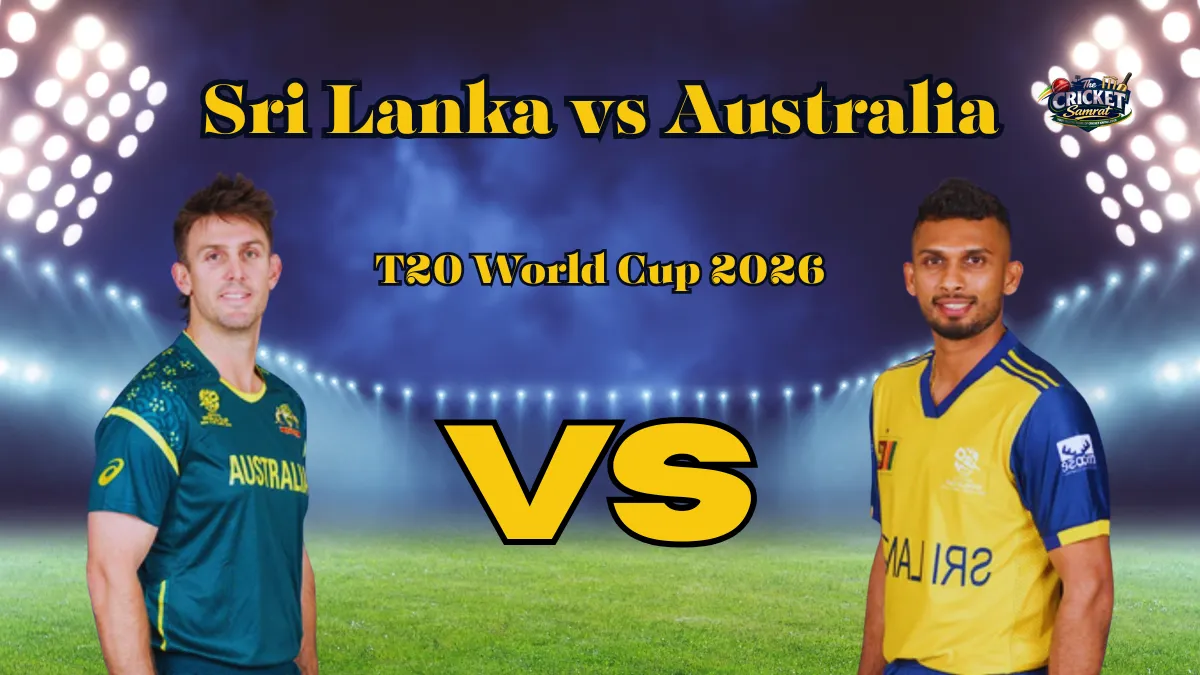
T20 World Cup 2026 – Match 30 Report
In a high-stakes encounter at the T20 World Cup 2026, Sri Lanka delivered a commanding performance to defeat Australia by eight wickets, sealing their place in the Super 8 stage. Chasing a competitive target of 182, Sri Lanka reached the total comfortably in just 18 overs, losing only two wickets. The result marked Australia’s second consecutive loss in the tournament and significantly boosted Sri Lanka’s campaign.
The much-anticipated Sri Lanka vs Australia clash lived up to expectations, with explosive batting, sharp bowling, and crucial turning points that shaped the outcome.
Match Summary: Sri Lanka vs Australia
| Match | T20 World Cup 2026 – Match 30 |
|---|---|
| Teams | Sri Lanka vs Australia |
| Australia Score | 181/9 (20 overs) |
| Sri Lanka Score | 182/2 (18 overs) |
| Result | Sri Lanka won by 8 wickets |
| Milestone | Sri Lanka qualify for Super 8 |
Toss and Early Momentum
Sri Lanka captain Dasun Shanaka won the toss and opted to field first, a decision that proved tactically sound. Australia started aggressively, racing to 50 runs in just 4.5 overs and reaching 100 in 8.2 overs. The early acceleration suggested a massive total was on the cards.
However, despite the blistering start, Sri Lanka’s bowlers pulled things back at crucial intervals.
Australia’s Innings: Head and Marsh Shine, But Middle Order Falters
Australia’s innings was built around powerful strokes from Travis Head and Mitchell Marsh.
Key Performances – Australia Batting
| Player | Runs | Balls | Fours | Sixes | Dismissal |
|---|---|---|---|---|---|
| Travis Head | 56 | 29 | 7 | 3 | c Hemnatha |
| Mitchell Marsh | 50 | 25 | 8 | 2 | lbw |
| Glenn Maxwell | 22 | 15 | 1 | 1 | — |
| Josh Inglis | 27 | 22 | 3 | 0 | c Chamira |
| Marcus Stoinis | 4 | — | — | — | b Chamira |
| Tim David | 6 | 5 | 1 | 0 | b Mendis |
| Cameron Green | 3 | 7 | 0 | 0 | st Wellalage |
| Cooper Connolly | 3 | 4 | 0 | 0 | c |
Travis Head once again showed why he is one of the most dangerous T20 openers in world cricket. He reached his half-century in just 27 balls, peppering the boundary ropes with seven fours and three sixes. Mitchell Marsh complemented him brilliantly, smashing eight fours and two sixes en route to a quick-fire 50 off 25 balls.
At 100 inside nine overs, Australia looked set for a 200-plus total. But Sri Lanka’s bowlers struck back decisively.
Sri Lanka Bowling Impact
Dusshan Hemnatha was the standout performer with the ball, claiming three crucial wickets. Dushmantha Chameera also made key breakthroughs, dismissing Marcus Stoinis and Josh Inglis. The middle and lower order failed to capitalize on the strong foundation, and Australia finished on 181/9 — competitive, but arguably below par given their explosive start.
Sri Lanka’s Chase: Clinical, Composed and Commanding
Chasing 182 in a high-pressure T20 World Cup match is never easy, especially against Australia’s experienced bowling attack. But Sri Lanka approached the target with maturity and intent.
Key Performances – Sri Lanka Batting
| Player | Runs | Balls | Fours | Sixes | Dismissal |
|---|---|---|---|---|---|
| Kusal Mendis | 51 | 38 | 6 | 1 | c Stoinis |
| Pathum Nissanka | 50 | 32 | 5 | 2 | — |
| Kusal Perera | 1 | 3 | 0 | 0 | c Stoinis |
Pathum Nissanka set the tone early with fluent stroke play. He brought up his half-century in just 32 balls, striking five boundaries and two sixes. At the other end, Kusal Mendis played a steady yet aggressive knock. He reached his fifty in 35 balls and finished with 51 off 38 deliveries before being caught off Marcus Stoinis.
Sri Lanka crossed the 100-run mark in just 11.2 overs, staying well ahead of the required run rate throughout the chase. The controlled aggression ensured there were no panic moments.
Despite losing Kusal Perera cheaply for 1 run, Sri Lanka maintained momentum. The partnership between Nissanka and Mendis effectively took the game away from Australia.
With calm finishing touches, Sri Lanka reached 182/2 in 18 overs, sealing an emphatic eight-wicket win.
Tactical Breakdown: Why Sri Lanka Dominated
The Sri Lanka vs Australia encounter highlighted several key factors:
- Middle-Over Control: After Australia’s explosive powerplay, Sri Lanka’s bowlers slowed the scoring rate significantly.
- Wicket-Taking Ability: Hemnatha’s three wickets shifted momentum.
- Disciplined Chase: Sri Lanka avoided risky shots and paced their innings perfectly.
- Early Platform: Nissanka and Mendis’ partnership neutralized Australia’s bowling threat.
Australia, in contrast, struggled to recover after losing momentum in the middle overs. Their second consecutive defeat now places them under serious pressure in the tournament standings.
Playing XIs
Australia:
Mitchell Marsh (Captain), Travis Head, Cameron Green, Josh Inglis, Tim David, Marcus Stoinis, Glenn Maxwell, Cooper Connolly, Xavier Bartlett, Nathan Ellis, Adam Zampa.
Sri Lanka:
Pathum Nissanka, Kusal Perera, Kusal Mendis, Pavan Rathnayake, Dasun Shanaka (Captain), Kamindu Mendis, Dunith Wellalage, Dusshan Hemnatha, Dushmantha Chameera, Maheesh Theekshana, Matheesha Pathirana.
What This Means for the Tournament
With this win in the Sri Lanka vs Australia clash, Sri Lanka officially advance to the Super 8 stage of the T20 World Cup 2026. The team’s balanced combination of aggressive batting and disciplined bowling has made them serious contenders.
Australia, meanwhile, face a must-win situation in their remaining fixtures. Two back-to-back losses have dented their campaign and raised questions about their bowling execution in crucial phases.
Also read: Sri Lanka vs Australia Prediction: Who Will Win Today’s ICC T20 World Cup 2026 Match?
Conclusion
The Sri Lanka vs Australia showdown was a defining moment in the T20 World Cup 2026 group stage. Sri Lanka’s composed chase and tactical bowling display under pressure demonstrated why they remain a formidable force in white-ball cricket.
As the tournament moves into its next phase, Sri Lanka carry momentum and confidence into the Super 8, while Australia must regroup quickly to keep their title hopes alive.
The T20 World Cup drama continues, but on this night, it was unmistakably Sri Lanka’s show.