
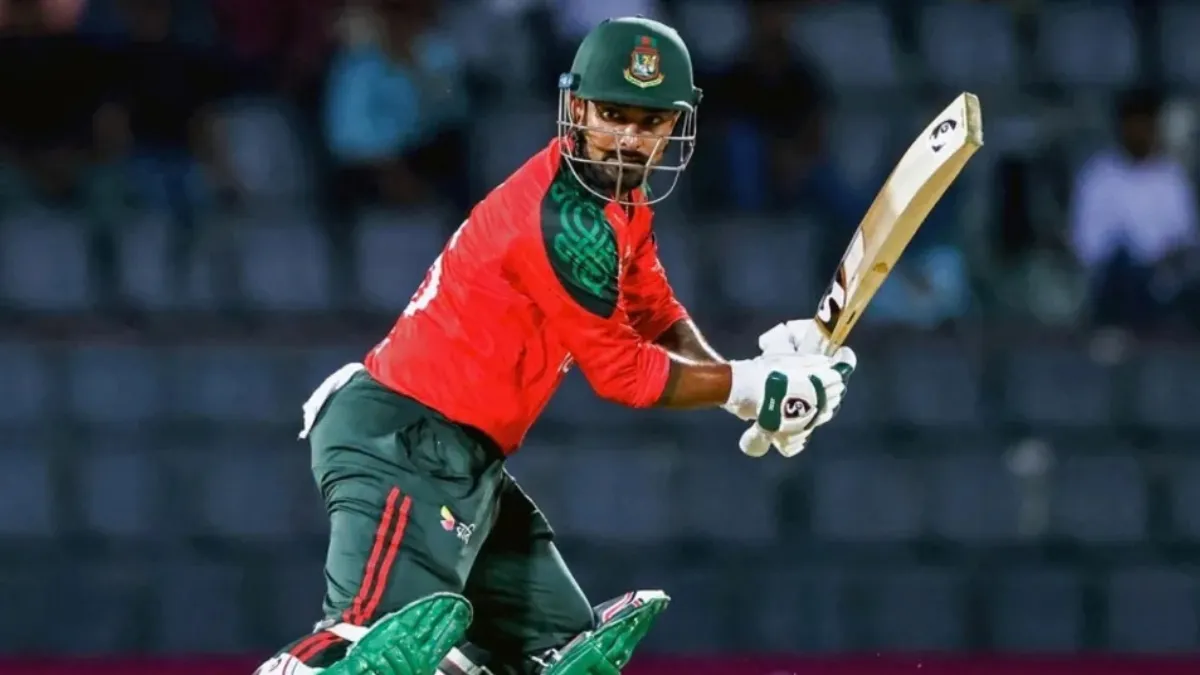
The upcoming Pakistan vs Bangladesh ODI series marks the beginning of a new chapter for both teams as they start preparing for the 2027 ICC Cricket World Cup. Scheduled to begin in Dhaka, the three-match One Day International series is more than just another bilateral contest. It is a testing ground for new players, fresh strategies, and renewed ambitions.
For Pakistan, the series represents a significant transition phase after a disappointing exit from the recent T20 World Cup. The selectors have introduced six uncapped players in the squad, signaling a clear intention to build a new core for the future. Bangladesh, on the other hand, returns to international cricket after nearly three months away from the global stage, having missed the T20 World Cup due to political complications.
As the two cricketing nations face off once again, the Pakistan vs Bangladesh series promises intrigue, experimentation, and intense competition. Both teams will look to reset their plans and identify the combinations that could shape their future in international cricket.
A New Beginning for Pakistan and Bangladesh
The period following a major tournament like the World Cup often brings sweeping changes. Teams reassess their performances, evaluate players, and experiment with new talent. This Pakistan vs Bangladesh ODI series fits perfectly into that narrative.
Pakistan’s early elimination from the T20 World Cup triggered a wave of introspection within the cricket board. In response, the selectors have brought in a number of fresh faces, particularly among the top-order batters. This move reflects a broader strategy to rebuild the team and create a squad capable of competing strongly in the next World Cup cycle.
Bangladesh’s situation is slightly different but equally significant. The team has not played international cricket for around three months. During this period, they were forced to stay away from the T20 World Cup due to internal political challenges. Now back in action, Bangladesh will use the Pakistan vs Bangladesh ODI series as an opportunity to regain rhythm and rebuild confidence.
Both sides have clear objectives: Pakistan wants to test emerging players, while Bangladesh aims to refine its lineup and address areas of weakness.
Bangladesh’s Focus on Strengthening the Middle Order
One of the key issues Bangladesh has faced in recent years is inconsistency in the middle overs. Coaches and team management believe the side needs improvement in both batting stability and bowling efficiency during the middle phase of an ODI match.
To address this challenge, Bangladesh is experimenting with a new middle-order combination. The return of Litton Das and Afif Hossain after a break from the format is expected to provide both experience and versatility.
Litton Das, known for his elegant stroke play and ability to handle spin bowling, will likely bat in the middle order. Meanwhile, Afif Hossain’s all-round abilities offer balance to the lineup. The team management hopes this new combination will help Bangladesh control the innings better during crucial middle overs.
In the Pakistan vs Bangladesh series, much will depend on whether these changes can deliver the desired results.
Bangladesh’s Opening Pair: Aiming for an Explosive Start
Bangladesh will rely heavily on their opening partnership to set the tone in the Pakistan vs Bangladesh contest.
Saif Hassan and Soumya Sarkar are expected to open the innings. Both players possess attacking instincts and the ability to score quickly during the powerplay overs. If they manage to provide a strong start, it could reduce pressure on the middle order and allow the team to build substantial totals.
However, Bangladesh’s batting unit has struggled in recent ODI series. The team has faced difficulties maintaining momentum after promising starts. That is why a solid opening partnership will be crucial in the upcoming matches.
A good start from Saif and Soumya could create the platform Bangladesh needs to challenge Pakistan effectively.
Bangladesh’s Bowling Attack: The Strongest Weapon
While the batting lineup continues to search for consistency, Bangladesh’s bowling unit has emerged as the team’s biggest strength.
The pace trio of Taskin Ahmed, Mustafizur Rahman, and Rishad Hossain is expected to carry the majority of the workload. Together, they are likely to bowl nearly three-fifths of the overs in the Pakistan vs Bangladesh series.
Taskin Ahmed brings raw pace and aggression, often troubling batters with his sharp bounce. Mustafizur Rahman, widely known as “The Fizz,” is famous for his deceptive slower deliveries and cutters. Rishad Hossain adds another dimension with his ability to bowl effectively in the middle overs.
Captain Mehidy Hasan Miraz will play a dual role as an all-rounder and leader. His off-spin could prove particularly useful on the slow Dhaka pitch. Tanvir Islam is also expected to be part of the bowling lineup, providing another spin option.
Additionally, Bangladesh has backup pace options such as Shoriful Islam and Nahid Rana, ensuring depth in the bowling department.
Given the spin-friendly conditions in Dhaka, Bangladesh’s bowlers could play a decisive role in the Pakistan vs Bangladesh showdown.
Pakistan’s Bold Selection Strategy
The Pakistan squad for the Pakistan vs Bangladesh series has generated considerable curiosity among cricket fans and experts.
Six players in the 15-member squad are uncapped at the ODI level. Interestingly, four of these newcomers are top-order batters. This unusual approach highlights Pakistan’s intention to revamp its batting lineup.
Among the debutants, Sahibzada Farhan is the most recognizable name. He impressed during the T20 World Cup and is expected to play a key role in the top order.
Alongside Farhan, two other young batters—Shamyl Hussain and Maaz Sadaqat—are also likely to feature prominently. Together, they could form a completely new opening trio for Pakistan.
While the youth movement brings excitement, it also introduces a degree of uncertainty. Inexperienced players facing international bowling attacks can sometimes struggle under pressure.
Therefore, experienced players like Mohammad Rizwan and Salman Agha will carry additional responsibility in stabilizing the innings.
The Importance of Pakistan’s Middle Order
Pakistan’s middle order will be crucial in the Pakistan vs Bangladesh series.
Mohammad Rizwan, one of Pakistan’s most dependable batters, is expected to anchor the lineup. Known for his calm temperament and ability to rotate strike, Rizwan often provides stability during challenging situations.
Salman Agha will likely complement Rizwan with his aggressive approach and ability to accelerate the scoring rate.
Other players such as Hussain Talat and Abdul Samad add depth to the batting unit. Abdul Samad, another debutant, is known for his power-hitting and could play the role of a finisher.
If Pakistan’s young top order fails to deliver, the middle order will need to step up and guide the team to competitive totals.
Shaheen Shah Afridi: The Leader and Spearhead
All eyes will be on Pakistan captain Shaheen Shah Afridi during the Pakistan vs Bangladesh series.
Afridi has enjoyed a promising start to his captaincy career in ODIs. Under his leadership, Pakistan secured series victories against both South Africa and Sri Lanka. These wins helped establish him as a capable leader despite his relatively young age.
However, Afridi’s recent T20 World Cup campaign was not particularly impressive. Although he took eight wickets during the tournament, his economy rate was high, conceding runs at over 10 per over.
The series against Bangladesh offers Afridi an opportunity to regain momentum. As both captain and lead fast bowler, he will be expected to deliver strong performances with the new ball.
Pakistan’s Fast Bowling Tradition Continues
Pakistan has long been famous for producing world-class fast bowlers. The Pakistan vs Bangladesh series will continue that tradition.
Afridi will lead the pace attack, supported by Haris Rauf and Mohammad Wasim. Both bowlers have demonstrated the ability to take wickets in crucial moments.
Rauf’s raw speed and aggressive bowling style can unsettle batters, while Wasim’s accuracy makes him a reliable option during the death overs.
However, Pakistan’s spin department appears relatively inexperienced. Abrar Ahmed is the only established spinner in the squad, which means Pakistan might rely heavily on its fast bowlers.
Given the spin-friendly conditions in Dhaka, this could present a challenge.
Players to Watch in Pakistan vs Bangladesh
Every cricket series has individuals who can change the course of the game. In the Pakistan vs Bangladesh series, two players stand out.
Litton Das
Litton Das returns to Bangladesh’s ODI squad despite struggling with form in recent years. His last two seasons in the format have been disappointing, and he will be eager to prove his critics wrong.
The team management believes his ability to play spin could make a significant difference in Dhaka’s conditions. Litton will also take on wicketkeeping responsibilities, which adds to his workload.
Batting at number five may allow him more freedom and reduce pressure. If Litton finds form, he could become one of the most influential players in the Pakistan vs Bangladesh series.
Shaheen Shah Afridi
For Pakistan, the spotlight firmly remains on Shaheen Shah Afridi.
His ability to swing the new ball at high speed makes him one of the most dangerous fast bowlers in the world. Early wickets from Afridi could disrupt Bangladesh’s top order and set the tone for Pakistan.
At the same time, Afridi must lead a relatively inexperienced team. Balancing captaincy duties with bowling responsibilities will be a key challenge.
Probable Playing XI for Bangladesh
Bangladesh is likely to field a balanced combination of batters, all-rounders, and bowlers in the Pakistan vs Bangladesh series.
Bangladesh probable XI:
Saif Hassan
Soumya Sarkar
Towhid Hridoy
Najmul Hossain Shanto
Litton Das (wicketkeeper)
Afif Hossain
Mehidy Hasan Miraz (captain)
Rishad Hossain
Taskin Ahmed
Tanvir Islam
Mustafizur Rahman
This lineup offers a mixture of youth and experience, along with a strong spin presence.
Probable Playing XI for Pakistan
Pakistan’s squad includes several debutants who are expected to play important roles in the Pakistan vs Bangladesh series.
Pakistan probable XI:
Sahibzada Farhan
Maaz Sadaqat
Shamyl Hussain
Mohammad Rizwan (wicketkeeper)
Salman Agha
Hussain Talat
Abdul Samad
Faheem Ashraf
Shaheen Shah Afridi (captain)
Mohammad Wasim
Faisal Akram
This lineup reflects Pakistan’s willingness to experiment with new players.
Pitch Report: Shere Bangla National Stadium
The matches in the Pakistan vs Bangladesh series will take place at the Shere Bangla National Stadium in Dhaka, a venue known for assisting spin bowlers.
In a recent ODI series at the same ground, West Indies and Bangladesh bowled spin for nearly 84 percent of the total overs. In one match, West Indies used spin for the entire 50 overs.
These statistics highlight how spin-friendly the surface can be.
However, both team coaches—Phil Simmons for Bangladesh and Mike Hesson for Pakistan—have suggested that the pitch may have improved recently. If the surface offers more bounce and pace, fast bowlers could also play a significant role.
Weather forecasts indicate the possibility of unseasonal rain in the afternoon, which could affect the match conditions.
Interesting Statistics Ahead of Pakistan vs Bangladesh
Several notable statistics add extra context to the upcoming series.
Bangladesh won their most recent home ODI series against Pakistan by a convincing 3–0 margin.
Over the last two years, Pakistan has won five bilateral ODI series, while Bangladesh has managed to win only two.
Mehidy Hasan Miraz has performed better as a bowler when captaining the side. His bowling average as captain stands at 43.92, compared to 35.66 when he is not leading the team.
These numbers suggest that while Pakistan may have a stronger recent record, Bangladesh has proven capable of dominating at home.
Captains Speak Before the Series
Both captains have expressed optimism ahead of the Pakistan vs Bangladesh contest.
Bangladesh captain Mehidy Hasan Miraz emphasized the positive atmosphere within the team despite recent setbacks.
According to Miraz, the dressing room remains united and motivated. Players are excited to return to international cricket after a long break.
Pakistan captain Shaheen Shah Afridi also highlighted the importance of fast bowling in Pakistan’s strategy.
Afridi stated that Pakistan has always been known for its pace attack. He intends to rely heavily on fast bowlers to take wickets while also expecting contributions from the spin department.
What This Series Means for the Future
The Pakistan vs Bangladesh series is more than just three ODI matches. It is the beginning of a new cycle that will eventually lead to the 2027 Cricket World Cup.
For Pakistan, it is a chance to identify future stars and rebuild the batting lineup. For Bangladesh, it is an opportunity to rediscover consistency and strengthen the middle order.
Both teams will closely evaluate performances, experiment with strategies, and learn valuable lessons from the series.
Conclusion:
The upcoming Pakistan vs Bangladesh ODI series promises excitement, experimentation, and competitive cricket.
Bangladesh will rely on their strong bowling attack and home conditions, while Pakistan will look to its young batters and powerful pace unit.
With several debutants, returning players, and ambitious captains, the series could provide a glimpse into the future of both teams.
As the cricketing world watches closely, the Pakistan vs Bangladesh rivalry once again takes center stage—this time with the long-term goal of building squads capable of challenging for the 2027 World Cup.