
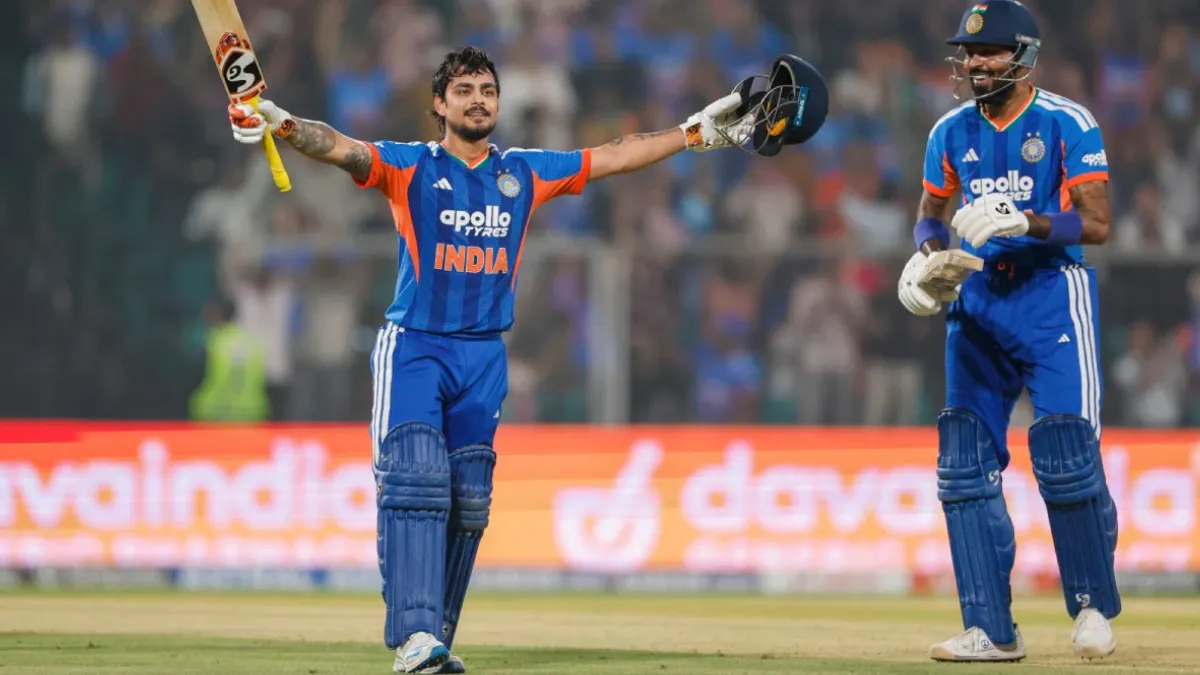
The latest ICC ranking update has brought significant changes following the conclusion of the recent ICC Men’s T20 World Cup. Indian wicketkeeper-batter Ishan Kishan has made a remarkable leap in the ICC T20I batting rankings after delivering an outstanding performance throughout the tournament. Meanwhile, Abhishek Sharma continues to dominate the top position among T20I batters, while the bowling rankings witnessed a major shift as Rashid Khan reclaimed the number one spot.
The newly released ICC ranking list highlights the impact of players who performed consistently during the global tournament, with several Indian and international stars making notable gains.
Ishan Kishan’s Brilliant Run Propels Him to No.2
Indian star Ishan Kishan was one of the standout performers of the T20 World Cup. The aggressive left-handed batter delivered a series of impressive innings, finishing the tournament with a total of 317 runs. His consistent run-scoring and match-winning contributions have pushed him up to the second position in the ICC ranking for T20I batters.
Kishan’s performances included three half-centuries during the tournament, showcasing his ability to anchor the innings as well as accelerate when required. His fearless batting at the top of the order played a crucial role in India’s campaign.
The latest ICC ranking now places Kishan just four rating points behind the top-ranked batter, making the race for the No.1 spot extremely close. With such a small gap, Kishan could potentially claim the top position if he continues his impressive form in upcoming international matches.
Cricket experts and fans alike have praised Kishan for his improved shot selection, consistency, and confidence during the tournament. His ability to dominate both pace and spin bowling has made him one of the most dangerous T20 batters in the world.
Abhishek Sharma Retains the No.1 Spot
While Kishan has surged up the charts, the top position in the ICC ranking for T20I batters remains firmly held by Abhishek Sharma.
The young Indian opener delivered a memorable performance in the T20 World Cup final against New Zealand, smashing a spectacular half-century off just 18 balls. That explosive innings proved decisive in maintaining his lead at the top of the rankings.
Abhishek Sharma’s aggressive batting style, combined with his ability to score quickly during powerplay overs, has made him one of the most exciting talents in modern T20 cricket. His consistency throughout the tournament ensured that he retained the prestigious No.1 spot in the ICC ranking, despite the strong challenge from Kishan.
Other Batters Climb the ICC Ranking
The updated ICC ranking also reflects strong performances from several international players.
New Zealand wicketkeeper-batter Tim Seifert has climbed to sixth position after delivering crucial innings during the tournament. Seifert’s aggressive batting helped New Zealand reach the latter stages of the competition.
Another rising star who made a significant jump in the ICC ranking is England’s young sensation Jacob Bethell. The talented batter has reached the 16th position, which is the highest ranking of his career so far. Bethell impressed cricket fans with his fearless batting approach and ability to perform under pressure.
New Zealand opener Finn Allen is now ranked 20th in the updated ICC list. Allen’s attacking style has made him a key player for New Zealand in the shortest format of the game.
Meanwhile, India’s Sanju Samson, who was named Player of the Tournament, has climbed to 22nd position in the ICC ranking after a highly productive campaign. Samson’s ability to play match-defining innings made him one of the standout performers of the World Cup.
Indian all-rounder Shivam Dube has also improved his standing, reaching 27th position in the batting rankings.
Rashid Khan Returns to No.1 in Bowling Rankings
The bowling charts in the latest ICC ranking saw a major shift. Indian spinner Varun Chakaravarthy, who previously held the top position, has slipped from the No.1 spot.
This change is somewhat surprising considering that Chakaravarthy finished the tournament as one of the joint highest wicket-takers. Despite his impressive performance, the updated ICC ranking calculations have resulted in him dropping from the top spot.
The number one position among T20I bowlers is now once again held by Afghanistan’s star spinner Rashid Khan. Interestingly, Afghanistan did not progress beyond the group stage of the tournament, yet Rashid’s consistent performances and previous record helped him reclaim the top position in the ICC ranking.
Strong Performances from Adil Rashid and Jasprit Bumrah
England’s experienced leg-spinner Adil Rashid has moved up to fourth place in the bowling ICC ranking after an impressive campaign in the World Cup.
Rashid finished the tournament with 13 wickets, playing a key role in England’s bowling attack. His ability to control the middle overs and pick up crucial wickets helped him climb several places in the rankings.
India’s premier fast bowler Jasprit Bumrah has also gained positions in the ICC ranking. Bumrah claimed 14 wickets during the tournament, which has helped him reach sixth place among T20I bowlers.
Another Indian all-rounder, Axar Patel, has climbed to 17th position in the bowling rankings after delivering important spells during the competition.
Also Read: Who is Vanshika? The Woman Who Won Kuldeep Yadav’s Heart Ahead of Their Mussoorie Wedding
All-Rounder Rankings Remain Stable
In the ICC ranking for T20I all-rounders, Zimbabwe captain Sikandar Raza continues to hold the top position, maintaining his reputation as one of the most reliable all-rounders in international cricket.
India’s star all-rounder Hardik Pandya remains in second place, reflecting his consistent contributions with both bat and ball in the shortest format.
New Zealand captain Mitchell Santner has climbed three places to reach ninth position in the all-rounder ICC ranking, thanks to his effective bowling and useful batting performances.
England’s dynamic all-rounder Will Jacks has also improved his standing and now sits at 13th place.
ICC Ranking Reflects Impact of the T20 World Cup
The latest ICC ranking update clearly demonstrates how impactful performances in major tournaments can reshape global standings. The recent T20 World Cup provided several players with the opportunity to showcase their talent on the biggest stage.
For India, the rise of players like Ishan Kishan and the continued dominance of Abhishek Sharma highlight the depth and strength of the country’s batting lineup. Meanwhile, bowlers such as Jasprit Bumrah and Axar Patel continue to reinforce India’s reputation as a team with a well-balanced attack.
With many bilateral series and international tournaments scheduled in the coming months, the ICC ranking could witness further changes as players compete for the prestigious top spots across batting, bowling, and all-rounder categories.