
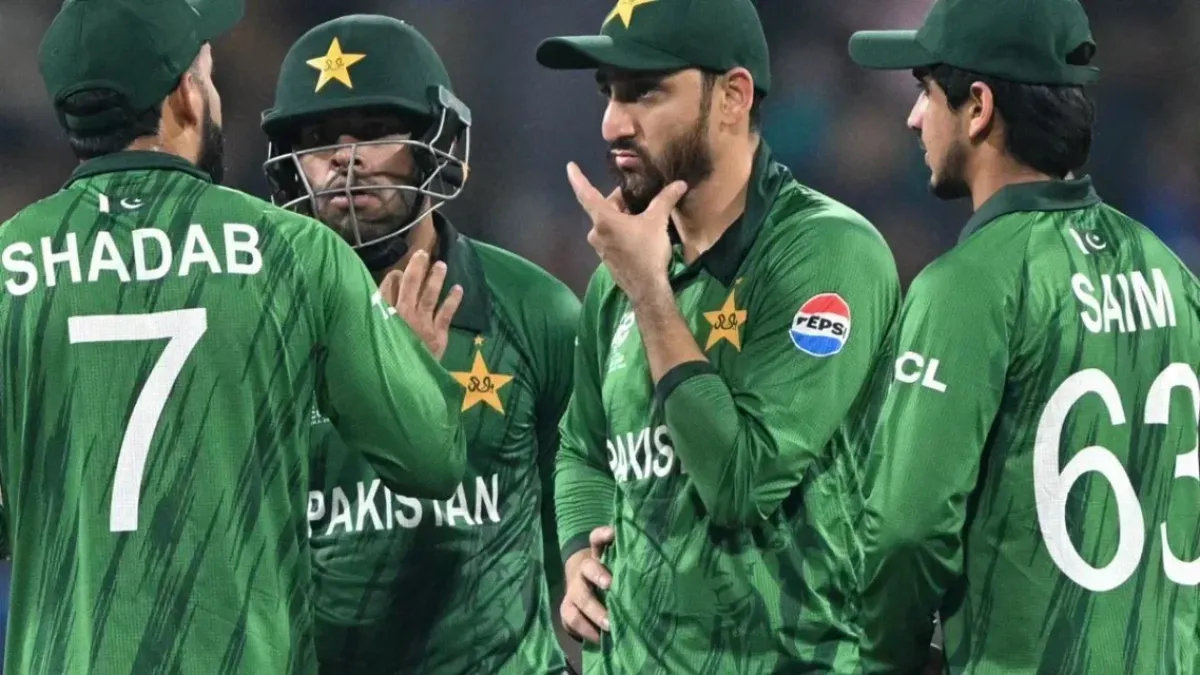
The pakistan qualification scenario has become the biggest talking point ahead of Saturday’s high-pressure T20 World Cup Super Eights clash between Pakistan national cricket team and Sri Lanka national cricket team at the Pallekele International Cricket Stadium.
While Sri Lanka’s campaign has already come to an end, Pakistan remain alive in the race for the semi-finals — but only just. Their hopes were kept afloat after England cricket team defeated New Zealand national cricket team, opening a narrow qualification window. Now, Pakistan must not only win — they must win convincingly.
With net run rate calculations coming into play, the equation is clear but demanding.
Pakistan Qualification Scenario Explained
Pakistan’s route to the semi-finals depends entirely on Saturday’s result and the margin of victory. The equation varies depending on whether they bat first or chase.
If Pakistan Bat First
If Pakistan post a total of 160 runs, they must defeat Sri Lanka by 64 runs or more to advance.
If Pakistan Chase
If Sri Lanka score 160 runs, Pakistan must chase down 161 with at least 40 balls remaining.
Here is a simplified breakdown of the pakistan qualification scenario:
| Match Situation | Requirement for Pakistan |
|---|---|
| Bat first and score 160 | Win by 64+ runs |
| Chase 161 | Finish with 40+ balls remaining |
| Lower target scenarios | Margin adjusted proportionally |
While Pakistan have previously secured a 102-run victory in the tournament, that came against Namibia — a vastly different challenge compared to facing Sri Lanka on a major stage with semi-final stakes attached.
The difficulty lies not just in winning, but in doing so at an aggressive tempo — something Pakistan’s batting lineup has struggled to maintain consistently.
Pallekele Conditions: Spin Likely to Dominate
The surface at the Pallekele International Cricket Stadium is expected to play a significant role in shaping the contest. Among all venues used in the tournament, Pallekele has produced:
- The second-highest average turn for spinners
- The best bowling average for spin
- The best strike rate for slower bowlers
Run-scoring traditionally slows down during the middle overs here, making partnerships and calculated acceleration essential.
This presents a particular challenge because both teams have shown vulnerability against spin bowling in recent times.
Batting Strike Rates Against Spin (Post 2024 T20 World Cup)
| Team | Strike Rate vs Spin |
|---|---|
| Sri Lanka | 112.97 (Lowest among full members) |
| Pakistan | 123.08 (Fourth lowest) |
Individually, nine players across full-member nations have recorded strike rates below 125 against spin (minimum 250 balls faced), including:
- From Pakistan: Usman Khan, Babar Azam, Salman Agha, Fakhar Zaman
- From Sri Lanka: Kusal Mendis, Charith Asalanka
This statistic underscores why Saturday’s match may hinge on how well each side handles spin through the middle overs.
Pakistan’s Tournament So Far: Drifting, Not Collapsing
Pakistan’s campaign has not imploded dramatically — instead, it has drifted.
A washout at the start of the Super Eights forced them into catch-up mode. Their batting has lacked collective consistency, with too much reliance on isolated contributions rather than partnerships.
Sahibzada Farhan has been one of the few bright spots at the top of the order, providing early momentum. However, the middle order — including experienced names — has struggled to convert starts into match-defining totals.
Now, with the pakistan qualification scenario demanding both margin and tempo, Pakistan cannot afford another fragmented batting display.
They need:
- A strong powerplay
- Controlled middle-overs accumulation
- Explosive finishing overs
- Disciplined bowling to protect or chase a target quickly
Anything short of clinical execution could end their semi-final dream.
Sri Lanka Playing for Pride
Sri Lanka return to Pallekele knowing their World Cup journey has already concluded. Yet, pride and direction remain at stake.
Their campaign faltered largely due to batting inconsistency. Over-reliance on Pathum Nissanka for runs, combined with a lack of firepower from Kusal Mendis and instability in the middle order, has cost them control in key matches.
Injuries have compounded their struggles. The absence of Wanindu Hasaranga and Matheesha Pathirana has been significant, particularly in pressure moments.
Captain Dasun Shanaka addressed the issue candidly, emphasizing that fitness must be non-negotiable at international level. While refusing to use injuries as excuses, he acknowledged the impact of missing key players.
Despite elimination, Sri Lanka’s bowling unit has shown flashes of competitiveness. However, they have often failed to capitalize on advantageous positions due to batting shortcomings.
Head-to-Head Record
Historically, Pakistan hold the edge in T20 Internationals.
| Matches Played | Pakistan Wins | Sri Lanka Wins |
|---|---|---|
| 29 | 17 | 12 |
Since 2025, Pakistan lead 4-2 in encounters between the sides.
However, knockout-stage pressure and tournament context often rewrite historical patterns.
Probable XIs
Sri Lanka
Kusal Mendis is expected to miss the match due to a hamstring issue. Kamil Mishara is likely to replace him.
Probable XI:
Pathum Nissanka, Kamil Mishara (wk), Charith Asalanka, Pavan Rathnayake, Kamindu Mendis, Dasun Shanaka (c), Dunith Wellalage, Dushan Hemantha, Dushmantha Chameera, Maheesh Theekshana, Dilshan Madushanka
Pakistan
Pakistan may consider including Naseem Shah or Abrar Ahmed to strengthen their bowling attack.
Probable XI:
Sahibzada Farhan, Saim Ayub, Salman Agha (c), Babar Azam, Fakhar Zaman, Usman Khan (wk), Shadab Khan, Shaheen Afridi, Naseem Shah/Abrar Ahmed, Salman Mirza, Usman Tariq
Tactical Focus Areas
For Pakistan to successfully navigate the pakistan qualification scenario, three tactical pillars stand out:
1. Powerplay Aggression
An explosive start reduces pressure later and sets up the margin equation.
2. Spin Management
Strike rotation against Theekshana and Wellalage will be crucial.
3. Ruthless Bowling
If defending, early wickets are non-negotiable. If chasing, disciplined containment is required to restrict Sri Lanka to a manageable target.
Also read: New zealand vs england: England Seal Four-Wicket Win in T20 World Cup 2026 Super 8 Thriller
What’s at Stake
For Pakistan, Saturday is more than a group-stage fixture — it is effectively a knockout match wrapped inside a mathematical puzzle.
For Sri Lanka, it is about restoring pride in front of home supporters and ending the tournament on a positive note.
The atmosphere at Pallekele is expected to be tense, with fans fully aware of the stakes. Pakistan must locate the “higher gear” that has eluded them throughout the Super Eights. Anything less than a dominant performance will close the door on their semi-final ambitions.
As Salman Mirza put it, players always strive to give their best — but outcomes are not always within control. On Saturday night in Pallekele, Pakistan’s control over their destiny depends entirely on how decisively they execute.
The pakistan qualification scenario is clear. The challenge now is delivering under pressure.