
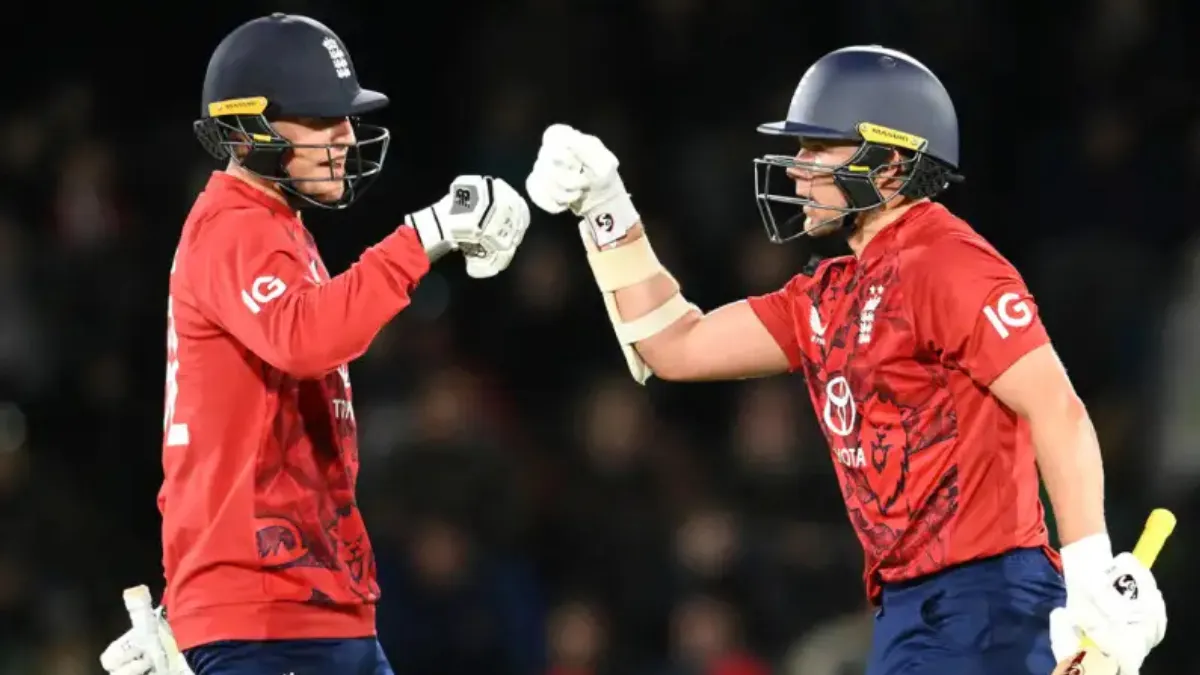
The much-anticipated New zealand vs england clash in the ICC T20 World Cup 2026 Super 8 stage delivered high drama at Colombo’s iconic R. Premadasa Stadium. England held their nerve in a tense run chase, defeating New Zealand by four wickets to keep the Super 8 standings wide open.
Chasing a competitive target of 160 runs, England reached 161 for 6 in 19.3 overs, sealing an important victory while ensuring that both New Zealand and Pakistan remain mathematically alive in the race for the semi-finals.
The contest was packed with momentum swings, explosive batting, and crucial breakthroughs that kept fans on the edge of their seats.
Toss and Match Overview
New Zealand captain Mitchell Santner won the toss and chose to bat first on what appeared to be a batting-friendly surface under lights. The decision paid off early as the Kiwi top order provided a brisk start. However, England’s bowlers pulled things back in the middle overs to restrict New Zealand to 159 for 7 in their allotted 20 overs.
England’s chase was far from straightforward, but calculated partnerships ensured they crossed the line with three balls to spare.
Match Summary Table
| Detail | Information |
|---|---|
| Match | New zealand vs england, Super 8 |
| Tournament | ICC T20 World Cup 2026 |
| Venue | R. Premadasa Stadium, Colombo |
| New Zealand Score | 159/7 (20 overs) |
| England Score | 161/6 (19.3 overs) |
| Result | England won by 4 wickets |
New Zealand Innings: Promising Start, Late Stumble
New Zealand got off to a flying start, racing to 50 runs in just 5.2 overs. Openers Finn Allen and Tim Seifert attacked from the outset, putting pressure on England’s pace attack.
Seifert was particularly impressive, scoring 35 off 25 balls, including three fours and two sixes, before being stumped off Adil Rashid. Finn Allen contributed 29 off 19 deliveries with three towering sixes, but Will Jacks dismissed him at a key moment.
Rachin Ravindra added 11 off 13 balls before falling to a catch, while Mark Chapman chipped in with a quick 15 from 9 balls. Glenn Phillips played a vital knock, scoring 39 off 28 balls with four boundaries and a six. However, just when New Zealand looked set for a total beyond 170, England’s spin attack tightened the screws.
Cole McConchie managed 14 off 12 balls before being bowled by Rehan Ahmed. Captain Mitchell Santner remained unbeaten on 9 off 5 deliveries but could not accelerate enough in the final overs.
New Zealand reached 100 in 11.4 overs but struggled to maintain momentum in the death overs.
Time to bowl in Colombo!
— BLACKCAPS (@BLACKCAPS) February 27, 2026
Glenn Phillips (39) & Tim Seifert (35) led with the bat.
Watch live in NZ on @skysportnz. Live scoring | https://t.co/hZ5jfwbb2e#NZvENG #T20WorldCup 📷 = ICC/Getty pic.twitter.com/ijUc4Pbktd
New Zealand Batting Highlights
| Player | Runs | Balls | 4s | 6s | Dismissal |
|---|---|---|---|---|---|
| Tim Seifert | 35 | 25 | 3 | 2 | Stumped (Rashid) |
| Finn Allen | 29 | 19 | 0 | 3 | Caught (Jacks) |
| Glenn Phillips | 39 | 28 | 4 | 1 | Bowled (Jacks) |
| Mark Chapman | 15 | 9 | 2 | 0 | Caught (Rashid) |
| Cole McConchie | 14 | 12 | 2 | 0 | Bowled (Rehan) |
| Mitchell Santner* | 9* | 5 | 0 | 1 | Not Out |
England’s bowling effort was disciplined. Adil Rashid, Will Jacks, and Rehan Ahmed picked up two wickets each, applying consistent pressure in the middle overs.
England Innings: Composed Chase Under Pressure
Chasing 160 in a high-pressure Super 8 encounter, England needed a solid start. However, early setbacks put them briefly on the back foot.
Phil Salt was dismissed for just 2 runs off 4 balls, caught off Matt Henry. Jos Buttler failed to open his account, falling to Lockie Ferguson for a two-ball duck.
Tom Banton steadied the innings with 33 runs from 24 balls, hitting three fours and a six before being dismissed by Rachin Ravindra. Sam Curran added a useful 24 from 22 balls, also falling to Ravindra.
England reached 100 in 14.2 overs, keeping themselves within striking distance. Jacob Bethell contributed 21 from 16 balls, while Harry Brook played a crucial 26 off 24 deliveries before being caught off Glenn Phillips.
Despite the wickets, England maintained a steady run rate. The lower order showed composure, rotating strike and capitalizing on loose deliveries to close out the chase in the 20th over.
England Batting Highlights
| Player | Runs | Balls | 4s | 6s | Dismissal |
|---|---|---|---|---|---|
| Tom Banton | 33 | 24 | 3 | 1 | Bowled (Ravindra) |
| Sam Curran | 24 | 22 | 2 | 1 | Caught (Ravindra) |
| Jacob Bethell | 21 | 16 | 4 | 0 | Bowled (Ravindra) |
| Harry Brook | 26 | 24 | 3 | 1 | Caught (Phillips) |
| Phil Salt | 2 | 4 | 0 | 0 | Caught (Henry) |
| Jos Buttler | 0 | 2 | 0 | 0 | Bowled (Ferguson) |
Full Playing XI
New Zealand XI
Finn Allen, Tim Seifert, Rachin Ravindra, Glenn Phillips, Daryl Mitchell, Mark Chapman, Mitchell Santner (Captain), Cole McConchie, Matt Henry, Ish Sodhi, Lockie Ferguson.
England XI
Phil Salt, Jos Buttler, Jacob Bethell, Tom Banton, Harry Brook (Captain), Sam Curran, Will Jacks, Liam Dawson, Rehan Ahmed, Jofra Archer, Adil Rashid.
Also read: New Zealand vs England: Black Caps Set 160-Run Target in T20 World Cup 2026 Super 8 Clash
What This Means for the Tournament
This crucial New zealand vs england encounter has significantly impacted the Super 8 standings. England’s victory strengthens their semi-final hopes, while New Zealand’s net run rate and remaining fixtures now become vital. With Pakistan also in contention, the group remains finely balanced heading into the final round of matches.
England will take confidence from their ability to handle pressure in a tight chase, while New Zealand will reflect on missed opportunities in the closing overs.
As the ICC T20 World Cup 2026 intensifies, this Super 8 thriller at Colombo will be remembered as one of the tournament’s most gripping contests so far.