
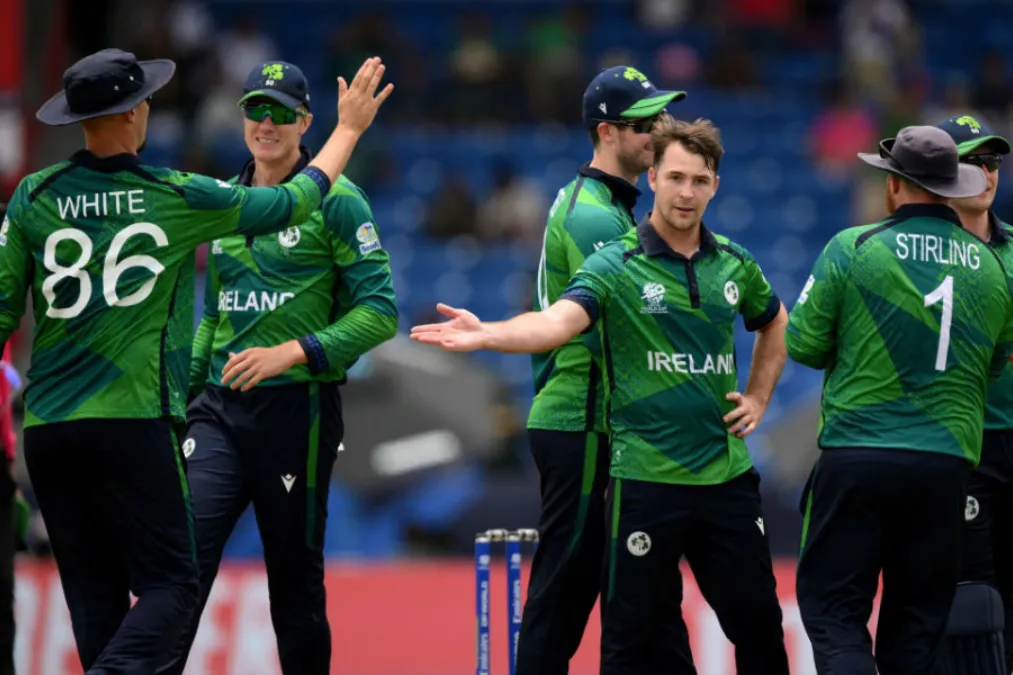
Ireland vs uae first t20 highlights saw the visitors produce a commanding all-round performance as they defeated the United Arab Emirates by 57 runs in the opening match of their three-game T20 International series at the Dubai International Stadium. The win marked an important return to form for Ireland as they continue their build-up towards the ICC Men’s T20 World Cup, where they are set to face Sri Lanka in Colombo on February 8.
After opting to bat first, Ireland posted a competitive total of 178 for six from their 20 overs, powered by useful contributions throughout the batting order. The UAE, despite a promising start in their chase, were eventually bowled out for 121 in 19.5 overs as Ireland’s bowlers tightened their grip on the contest.
Match Summary: Ireland vs UAE, 1st T20I
| Match | 1st T20 International |
|---|---|
| Venue | Dubai International Stadium |
| Result | Ireland won by 57 runs |
| Toss | Ireland won the toss and batted |
| Player of the Match | Yet to be officially announced |
Ireland’s emphatic victory gave them a 1–0 lead in the series and underlined their growing depth and balance ahead of major international assignments.
Ireland’s Innings: Strong Start, Solid Finish
Ireland wasted no time after winning the toss, showing attacking intent right from the opening over. Captain Paul Stirling set the tone early, striking two boundaries before being dismissed for eight in the first over. While Stirling’s stay was brief, his aggressive approach signalled Ireland’s intent to put pressure on the UAE bowlers.
Ross Adair, opening alongside Stirling, looked far more settled and anchored the innings during the early overs. He played with confidence and composure, mixing sensible shot selection with timely aggression. Adair eventually scored 39 before being bowled by Muhammad Arfan, but his knock laid the foundation for Ireland’s total.
Harry Tector, one of Ireland’s key batters, fell cheaply for four, momentarily slowing the scoring rate. However, the partnership between Adair and wicketkeeper-batter Lorcan Tucker restored stability. Tucker played a fluent innings, scoring 38 runs that included two well-struck sixes, before being dismissed by Haider Ali.
Ireland Batting Scorecard
| Batter | Runs | Balls | 4s | 6s |
|---|---|---|---|---|
| Paul Stirling (c) | 8 | 5 | 2 | 0 |
| Ross Adair | 39 | — | — | — |
| Harry Tector | 4 | — | — | — |
| Lorcan Tucker (wk) | 38 | — | — | 2 |
| Ben Calitz | 26* | — | — | — |
| Curtis Campher | 25 | — | — | — |
| Gareth Delany | 8 | — | — | — |
| George Dockrell | 22* | — | — | — |
(Exact balls and boundaries not officially disclosed)
Ireland’s middle order ensured there was no loss of momentum. Ben Calitz remained unbeaten on 26, while Curtis Campher chipped in with a valuable 25. Although Gareth Delany struggled to make a significant impact with the bat, George Dockrell’s unbeaten 22 towards the end gave Ireland a strong finish.
By the end of 20 overs, Ireland had posted 178 for six — a total that proved well beyond the UAE’s reach.
UAE Bowling: Mixed Effort Despite Early Promise
The UAE bowlers showed flashes of discipline but struggled to contain Ireland consistently, especially during the middle and death overs.
UAE Bowling Figures
| Bowler | Overs | Runs | Wickets |
|---|---|---|---|
| Haider Ali | — | 31 | 2 |
| Muhammad Arfan | — | — | 1 |
| Junaid Siddique | — | — | 1 |
Haider Ali was the standout performer with the ball, finishing with figures of 2 for 31. However, a lack of sustained pressure from the other bowlers allowed Ireland to keep the scoreboard ticking.
UAE Chase: Early Hope, Rapid Collapse
Chasing 179, the UAE began their innings on a positive note. Captain Muhammad Waseem led from the front, combining effectively with Aryansh Sharma to build a solid opening partnership. Their intent and confidence suggested that the hosts were prepared to challenge Ireland’s total.
However, the turning point came when Gareth Delany broke through, dismissing wicketkeeper Aryansh Sharma for 23. That breakthrough shifted the momentum decisively in Ireland’s favour.
Sohaib Khan was dismissed soon after, increasing the pressure on the middle order. When Waseem, the UAE’s most influential batter, was removed for 40, the chase began to unravel rapidly.
UAE Batting Scorecard
| Batter | Runs |
|---|---|
| Muhammad Waseem (c) | 40 |
| Aryansh Sharma (wk) | 23 |
| Sohaib Khan | — |
| Others | — |
Despite Waseem’s resistance, the UAE were unable to recover once wickets started falling in quick succession.
Ireland Bowling: Clinical and Controlled
Ireland’s bowlers executed their plans with precision, exploiting the pressure created by the rising required run rate.
Ireland Bowling Figures
| Bowler | Overs | Runs | Wickets |
|---|---|---|---|
| Matthew Humphreys | — | 26 | 3 |
| Gareth Delany | — | 26 | 3 |
| Barry McCarthy | — | — | 2 |
Matthew Humphreys and Gareth Delany were particularly impressive, claiming three wickets each and dismantling the UAE middle order. Barry McCarthy provided excellent support with two key wickets, ensuring the hosts were bowled out for 121 in 19.5 overs.
The disciplined bowling performance sealed a comprehensive 57-run victory for Ireland and underlined their readiness ahead of upcoming international challenges.
Series Outlook: Ireland Eye Clean Sweep
The teams are set to face each other again at the same venue on Saturday, with the match scheduled to begin at 14:00 GMT. Ireland will be aiming to build on their dominant start and secure the series, while the UAE will look to regroup and respond strongly.
With momentum firmly on their side, Ireland’s depth in both batting and bowling gives them a clear advantage heading into the remainder of the series.
Off the Field: Richard Holdsworth to Step Down as Director of Cricket
Away from the on-field action, Cricket Ireland announced a significant administrative change, with Richard Holdsworth confirming that he will step down from his role as director of cricket.
Holdsworth first joined Cricket Ireland in 2011 and spent 13 years as high performance director before taking on the director of cricket role two years ago. His tenure has been widely regarded as transformative for Irish cricket.
During his time with the organisation, Holdsworth played a central role in professionalising Ireland’s elite cricket structure. He oversaw the development and implementation of central player contracts across both men’s and women’s programmes, a move that significantly strengthened the country’s cricketing framework.
He was also instrumental in Ireland’s transition from associate membership to full membership of the International Cricket Council in 2017. That milestone year saw Ireland’s men’s team achieve Test status, marking a historic moment in the nation’s cricketing journey.
Holdsworth further supported the reintroduction of the domestic men’s inter-provincial series and the women’s super series, initiatives that helped deepen the talent pool and enhance competitive standards.
Reflecting on his time at Cricket Ireland, Holdsworth expressed pride in the organisation’s progress and optimism for the future under new leadership.
Conclusion
The Ireland vs uae first t20 highlights showcased Ireland at their clinical best, combining disciplined bowling with composed batting to secure a convincing win in Dubai. The result not only gave Ireland a strong start to the series but also reinforced their credentials ahead of the T20 World Cup.
As the series continues and administrative transitions take place behind the scenes, Irish cricket appears poised for its next phase of growth — both on and off the field.