
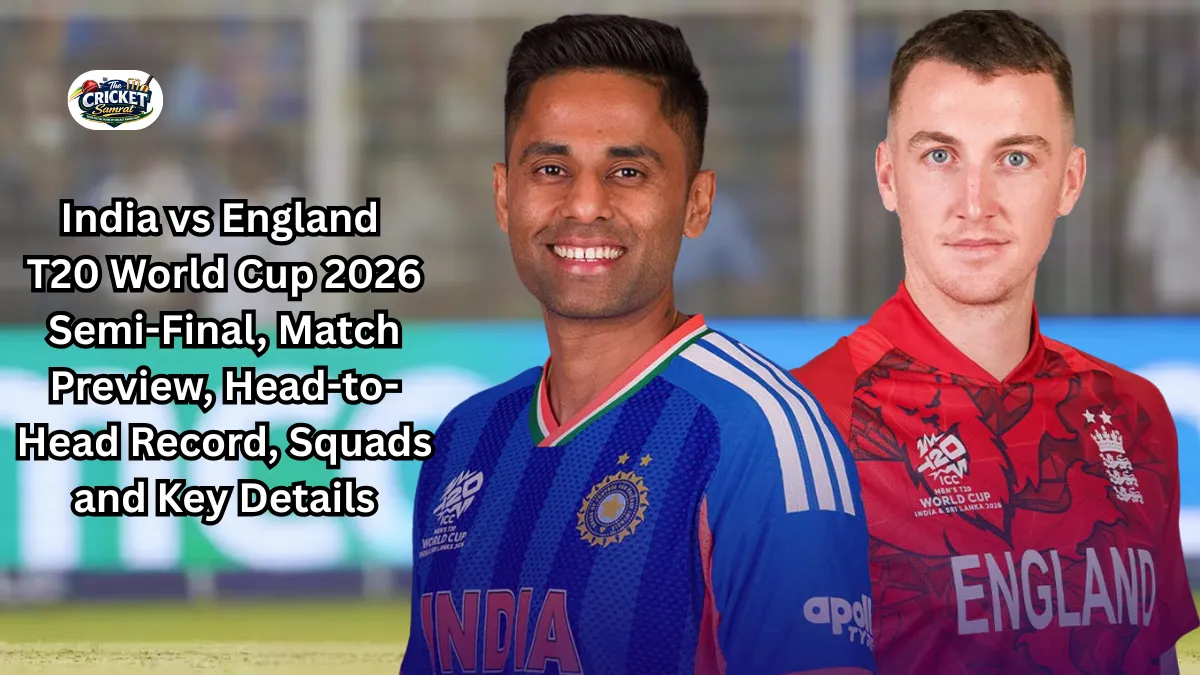
The much-anticipated India vs England clash in the ICC Men’s T20 World Cup 2026 second semi-final turned out to be a breathtaking contest filled with explosive batting and dramatic moments. In a thrilling match played at the historic Wankhede Stadium in Mumbai, India defeated England by 7 runs to secure a place in the final of the tournament.
The match featured remarkable performances from both sides. Sanju Samson produced a brilliant knock of 89 runs, while England’s Jacob Bethell smashed a stunning century during the chase. Despite England’s late fightback, India’s bowlers held their nerve in the final overs to seal a narrow victory.
With this win, India has now qualified for the T20 World Cup final for the second consecutive edition and will take on New Zealand on March 8 at the Narendra Modi Stadium in Ahmedabad.
This memorable India vs England encounter will be remembered as one of the most exciting semi-finals in T20 World Cup history.
Marching towards the #Final 👏
— BCCI (@BCCI) March 5, 2026
A step away from 𝙂𝙡𝙤𝙧𝙮 🏆#TeamIndia is into the #T20WorldCup finale 🥳
Scorecard ▶️ https://t.co/LxSBs3EDPx#MenInBlue | #ENGvIND pic.twitter.com/6BBNkNw2aB
Match Overview
| Match | ICC Men’s T20 World Cup 2026 – Semi Final |
|---|---|
| Teams | India vs England |
| Venue | Wankhede Stadium, Mumbai |
| Date | March 5, 2026 |
| Result | India won by 7 runs |
| India Score | 253/7 (20 overs) |
| England Score | 246/7 (20 overs) |
| Player of the Match | Sanju Samson |
The contest saw both teams combine for 499 runs in 40 overs, making it one of the highest-scoring knockout matches ever seen in the tournament.
England Win Toss and Choose to Field
At the start of this crucial India vs England semi-final, England captain Harry Brook won the toss and elected to bowl first. The decision was aimed at chasing under the lights at Wankhede, a ground known for high-scoring matches.
India began their innings with Sanju Samson and Abhishek Sharma opening the batting. The duo started aggressively, immediately putting pressure on England’s bowling attack.
Early Aggression from India’s Openers
The first over bowled by Jofra Archer already indicated India’s attacking approach. Samson struck a boundary and a six, collecting 12 runs in the opening over.
However, India soon lost their first wicket when Abhishek Sharma was dismissed for 9 runs off 7 balls, caught in the deep off the bowling of Will Jacks.
Despite the early loss, Samson continued his aggressive batting style.
India quickly reached 50 runs in just 4.5 overs, showing clear intent to build a massive total.
Samson and Kishan Build a Strong Partnership
After the early wicket, Ishan Kishan joined Samson, and the pair accelerated the scoring.
Their partnership pushed India past 100 runs in 8.3 overs, placing England’s bowlers under heavy pressure.
Samson brought up his half-century in only 26 balls, smashing boundaries all around the ground.
Kishan also contributed valuable runs, scoring 39 runs from 18 deliveries, including four boundaries and two sixes, before being dismissed by Adil Rashid.
Sanju Samson’s Brilliant Knock
Sanju Samson was the standout performer for India during the India vs England semi-final.
He played an aggressive innings, dominating England’s bowling attack and hitting powerful shots all around the field.
Unfortunately for Samson, he narrowly missed out on a well-deserved century.
| Sanju Samson Batting Performance |
|---|
| Runs |
| Balls |
| Fours |
| Sixes |
He was eventually dismissed for 89 runs from 42 balls, caught off the bowling of Will Jacks, falling just 11 runs short of a century.
Sanju Samson's classy innings provided the platform for India's win against England in the #T20WorldCup semi-final👏
— ICC (@ICC) March 5, 2026
He wins @aramco POTM🏅
📝: https://t.co/w7G9C2FaMw pic.twitter.com/wyh2KWcJIk
India’s Middle Order Keeps the Momentum
After Samson’s departure, India’s middle order ensured the run rate remained high.
Shivam Dube played a crucial innings, scoring 43 runs from 25 balls, hitting four sixes and keeping the scoreboard moving.
India crossed the 200-run mark in 16.5 overs, highlighting the attacking approach taken by the team.
Tilak Varma also played a quick cameo, scoring 21 runs from just 7 balls with three boundaries before being bowled by Jofra Archer.
Towards the end of the innings, Hardik Pandya added a quick 27 runs from 12 balls, including two sixes and three fours, before being run out.
Innings Break!#TeamIndia register the highest team total in ICC Men's T20 World Cup knockouts 🔥👏
— BCCI (@BCCI) March 5, 2026
Over to the bowlers to defend this 🙌
Scorecard ▶️ https://t.co/LxSBs3EDPx#T20WorldCup | #MenInBlue | #ENGvIND pic.twitter.com/IKEpHNKHJT
India Batting Scorecard
| Batter | Runs | Balls | 4s | 6s |
|---|---|---|---|---|
| Sanju Samson | 89 | 42 | 8 | 7 |
| Abhishek Sharma | 9 | 7 | 2 | 0 |
| Ishan Kishan | 39 | 18 | 4 | 2 |
| Suryakumar Yadav | 11 | 6 | 0 | 1 |
| Shivam Dube | 43 | 25 | 1 | 4 |
| Tilak Varma | 21 | 7 | 3 | 0 |
| Hardik Pandya | 27 | 12 | 3 | 2 |
India finished their innings at 253 runs for 7 wickets in 20 overs, setting England a massive target of 254 runs.
England Begin the Chase with Early Wickets
England’s chase began with pressure as they needed a big start to stay in the contest.
However, the early momentum was disrupted when Phil Salt was dismissed for 5 runs by Hardik Pandya, leaving England at 13 for 1.
Soon after, captain Harry Brook was dismissed for 7 runs, caught off the bowling of Jasprit Bumrah.
England then lost Jos Buttler, who scored 25 runs from 17 balls before being bowled by Varun Chakravarthy.
At that stage, England were struggling at 64 for 3.
Tom Banton’s Quickfire Knock
Tom Banton tried to revive England’s innings with an aggressive approach.
He scored 17 runs from just 5 balls, including two sixes and a boundary, before being bowled by Axar Patel.
His quick cameo helped England reach 95 runs, but the team continued to lose wickets at crucial moments.
At the halfway stage of the innings, England had scored 119 runs for 4 wickets in 10 overs.
Jacob Bethell’s Stunning Century
The biggest highlight of England’s innings came from Jacob Bethell, who produced a remarkable batting display.
Bethell played fearless cricket, attacking almost every Indian bowler.
He reached his half-century in just 19 balls, hitting multiple boundaries and sixes.
Continuing his aggressive style, Bethell eventually scored a magnificent century.
| Jacob Bethell Innings |
|---|
| Runs |
| Balls |
| Fours |
| Sixes |
His 105 runs from 48 balls brought England close to an incredible victory.
England Push India to the Limit
As the match approached its final phase, England still had a realistic chance of chasing the target.
At one stage, England required 45 runs from 28 balls, with Bethell leading the charge.
Sam Curran supported him with a steady contribution of 18 runs from 14 balls, hitting two boundaries.
However, Curran was eventually caught off Hardik Pandya, which slowed England’s momentum.
Shortly afterward, the crucial moment arrived when Jacob Bethell was run out for 105 runs, ending England’s hopes of completing the chase.
India’s Bowlers Seal the Victory
Even though England kept fighting until the last over, India’s bowlers managed to defend the total.
Jasprit Bumrah played an important role by delivering tight overs during the crucial stages of the match.
England eventually finished their innings at 246 runs for 7 wickets in 20 overs, falling 7 runs short of the target.
The narrow margin showed just how competitive the India vs England semi-final had been.
Playing XI – India vs England
India Playing XI
| India Players |
|---|
| Sanju Samson |
| Abhishek Sharma |
| Ishan Kishan |
| Suryakumar Yadav (Captain) |
| Hardik Pandya |
| Tilak Varma |
| Shivam Dube |
| Axar Patel |
| Arshdeep Singh |
| Varun Chakravarthy |
| Jasprit Bumrah |
England Playing XI
| England Players |
|---|
| Phil Salt |
| Jos Buttler |
| Jacob Bethell |
| Tom Banton |
| Harry Brook (Captain) |
| Sam Curran |
| Will Jacks |
| Liam Dawson |
| Jamie Overton |
| Jofra Archer |
| Adil Rashid |
India vs England T20 World Cup Head-to-Head Record
India and England have developed a strong rivalry in the T20 World Cup over the years.
| Year | Winner |
|---|---|
| 2007 | India |
| 2009 | England |
| 2012 | India |
| 2022 | England |
| 2024 | India |
| 2026 | India |
India now leads the T20 World Cup head-to-head record against England.
One of the most iconic moments in this rivalry occurred during the 2007 T20 World Cup, when Yuvraj Singh famously hit six sixes in one over against Stuart Broad.
Semi-Final History Between India and England
India and England have faced each other multiple times in T20 World Cup semi-finals.
2022 Semi-Final
England defeated India by 10 wickets, chasing a target of 169 runs in just 16 overs. The opening partnership between Jos Buttler and Alex Hales dominated India’s bowling attack.
England went on to win the tournament that year.
2024 Semi-Final
India responded strongly in the next edition. In the 2024 T20 World Cup, India beat England by 68 runs in the semi-final and later defeated South Africa in the final to lift the trophy.
2026 Semi-Final
The India vs England semi-final in 2026 once again saw India emerge victorious, securing their place in the final of the tournament.
Also read: ICC Announces Elite Match Officials for the T20 Cricket World Cup 2026 Semi-Finals
India to Face New Zealand in the Final
With this victory, India has advanced to the T20 World Cup 2026 final, where they will meet New Zealand.
New Zealand qualified for the final after defeating South Africa in the first semi-final.
The championship match will be played on March 8 at the Narendra Modi Stadium in Ahmedabad, one of the largest cricket venues in the world.
Conclusion
The India vs England semi-final in the T20 World Cup 2026 delivered an unforgettable cricket spectacle.
Sanju Samson’s explosive 89-run innings gave India a strong platform, while Jacob Bethell’s remarkable century almost helped England achieve a historic run chase.
However, India’s bowlers maintained their composure in the final moments to secure a 7-run victory.
With this win, India now moves one step closer to another global title as they prepare to face New Zealand in the final of the T20 World Cup 2026.