
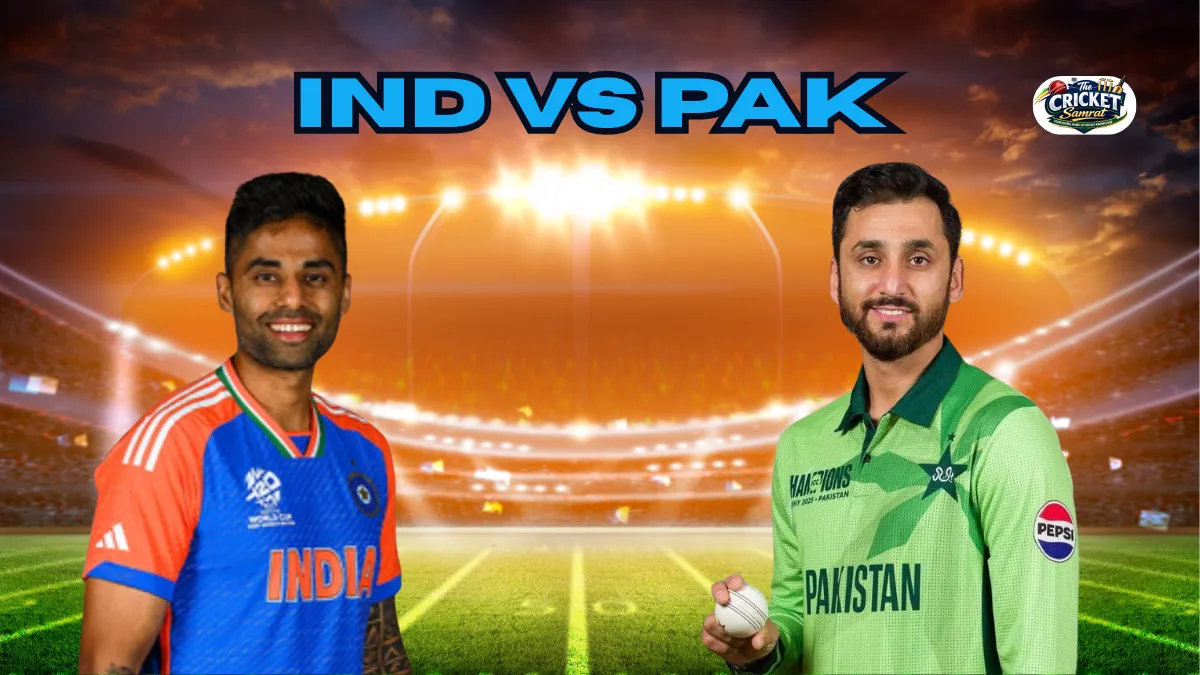
Colombo, Sri Lanka – The cricketing world once again witnessed the fire and frenzy of IND vs PAK as India delivered a commanding performance in Match 27 of the ICC Men’s T20 World Cup 2026, defeating Pakistan by 61 runs at the iconic R. Premadasa Stadium.
In a high-pressure clash that had millions glued to their screens across India, Pakistan, the UK, the US, and beyond, India outplayed their arch-rivals in every department. Powered by a stunning 77-run knock from Ishan Kishan and a clinical bowling effort led by Hardik Pandya, Jasprit Bumrah, Axar Patel, and Varun Chakravarthy, India sealed their place in the Super 8 stage of the tournament in emphatic fashion.
Match Summary: IND vs PAK – T20 World Cup 2026
| Match | IND vs PAK – Match 27 |
|---|---|
| Venue | R. Premadasa Stadium, Colombo |
| India | 175/7 (20 overs) |
| Pakistan | 114 all out (18 overs) |
| Result | India won by 61 runs |
| Player of the Match | Ishan Kishan (77 off 40) |
| Super 8 Qualification | India Qualified |
Toss and Team Changes: A Tense Start
Pakistan captain Salman Agha won the toss and elected to field first, hoping to exploit early moisture in Colombo’s surface. Interestingly, there was noticeable tension during the toss ceremony, as both captains refrained from a customary handshake.
India made two key changes to their playing XI, bringing in Abhishek Sharma and Kuldeep Yadav in place of Sanju Samson and Arshdeep Singh.
Playing XIs – IND vs PAK
India Playing XI
- Abhishek Sharma
- Ishan Kishan
- Tilak Varma
- Suryakumar Yadav (C)
- Shivam Dube
- Hardik Pandya
- Rinku Singh
- Axar Patel
- Varun Chakravarthy
- Kuldeep Yadav
- Jasprit Bumrah
Pakistan Playing XI
- Saim Ayub
- Sahibzada Farhan
- Salman Agha (C)
- Babar Azam
- Usman Khan
- Shadab Khan
- Mohammad Nawaz
- Faheem Ashraf
- Shaheen Shah Afridi
- Usman Tariq
- Abrar Ahmed
India’s Innings: Ishan Kishan Lights Up Colombo
India’s innings got off to a shaky start when Abhishek Sharma was dismissed for a duck in the very first over. However, what followed was an exhibition of fearless stroke play from Ishan Kishan.
Powerplay Dominance
Despite losing an early wicket, India raced to 52/1 in the first six overs. Kishan was in sublime touch, taking on Pakistan’s pace spearhead Shaheen Shah Afridi, smashing 15 runs in his opening over.
By the 11th over, India had crossed the 100-run mark, with Kishan leading the charge.
Ishan Kishan’s Match-Winning Knock
Kishan’s innings was a masterclass in aggressive yet calculated batting.
- 77 runs off 40 balls
- 10 fours
- 3 sixes
- Strike Rate: 192.5
He reached his half-century in just 27 balls, keeping Pakistan’s bowlers under constant pressure. Eventually, he was bowled by Saim Ayub after a breathtaking knock that set the tone for India’s big total.
Middle Order Contributions
| Player | Runs | Balls | Fours | Sixes |
|---|---|---|---|---|
| Tilak Varma | 25 | 24 | 2 | 1 |
| Suryakumar Yadav | 32 | 29 | 3 | 0 |
| Shivam Dube | 27 | 17 | 3 | 1 |
| Hardik Pandya | 0 | 1 | 0 | 0 |
Captain Suryakumar Yadav anchored the innings with a composed 32, while Shivam Dube added crucial late runs.
India finished at a competitive 175/7 in 20 overs, setting Pakistan a challenging target of 176.
Pakistan’s Run Chase: Collapse Under Pressure
The chase began disastrously for Pakistan.
Early Blows
- Sahibzada Farhan dismissed for 0
- Saim Ayub out for 6
- Salman Agha fell cheaply
- Babar Azam bowled for 5
Within eight overs, Pakistan were reeling at 64/4.
The pressure of IND vs PAK was evident as wickets fell in quick succession. Despite Usman Khan’s brief resistance (35 runs), Pakistan never looked in control.
India’s Bowling Brilliance
India’s bowlers delivered a disciplined and relentless performance.
| Bowler | Wickets |
|---|---|
| Hardik Pandya | 2 |
| Jasprit Bumrah | 2 |
| Axar Patel | 2 |
| Varun Chakravarthy | 2 |
Hardik Pandya set the tone early, while Bumrah’s precision dismantled Pakistan’s top order. Axar and Varun dominated the middle overs, exploiting Colombo’s spin-friendly surface.
Pakistan were bowled out for 114 in 18 overs, handing India a resounding 61-run victory.
Colombo Pitch Report and Weather Impact
The R. Premadasa Stadium pitch is traditionally slow and spin-friendly. The surface assisted India’s spinners significantly in the second innings.
Earlier in the day, rain threatened to disrupt the match, with forecasts predicting up to 96% precipitation. According to AccuWeather projections:
| Time | Rain Probability |
|---|---|
| 3 PM | 49% |
| 4 PM | 49% |
| 5 PM | 63% |
| 6 PM | 49% |
| 7 PM | 9% |
| 8 PM | 9% |
| 9 PM | 9% |
Fortunately, the rain stayed away during crucial match hours.
Key Moments That Defined IND vs PAK
- Ishan Kishan’s explosive powerplay batting
- Afridi conceding 15 runs in his first over
- Bumrah dismissing Saim Ayub early
- Axar Patel bowling out Babar Azam
- Pakistan’s middle-order collapse
Player of the Match: Ishan Kishan
There was little debate over the award. Ishan Kishan’s fearless approach shifted momentum entirely in India’s favor. His ability to attack both pace and spin set up the platform for India’s bowlers to defend confidently.
What This Win Means for India
With this victory in IND vs PAK, India have officially qualified for the Super 8 stage of the T20 World Cup 2026.
- Improved Net Run Rate
- Psychological dominance over Pakistan
- Strong momentum heading into knockout rounds
Tactical Analysis: Why India Dominated
1. Intent from Ball One
Kishan attacked from the outset, preventing Pakistan from settling.
2. Spin Utilization
India cleverly introduced spin early, exploiting Colombo’s slow surface.
3. Death Bowling Precision
Bumrah and Pandya ensured Pakistan never built partnerships.
4. Fielding Discipline
India saved crucial runs in the field, increasing scoreboard pressure.
IND vs PAK: A Rivalry That Never Disappoints
The IND vs PAK clash remains the most watched cricket rivalry globally. Each encounter carries history, emotion, and national pride.
This latest chapter further strengthens India’s upper hand in recent T20 World Cup meetings.
Full Match Scorecard Snapshot
India – 175/7 (20 overs)
- Ishan Kishan – 77
- Suryakumar Yadav – 32
- Shivam Dube – 27
Pakistan – 114 all out (18 overs)
- Usman Khan – 35
- Others failed to convert starts
India won by 61 runs.
Global Reaction
Fans across London, Birmingham, Manchester, New York, Toronto, Mumbai, and Karachi witnessed another intense IND vs PAK showdown. Social media exploded with reactions praising Kishan’s fearless batting and India’s bowling unit.
Also read: T20 World Cup 2026: India vs Pakistan Head-to-Head Record, Stats and Match Preview
Conclusion
The IND vs PAK encounter at the ICC Men’s T20 World Cup 2026 lived up to its billing — drama, aggression, skill, and ultimately, Indian dominance.
With a convincing 61-run win, India have not only secured Super 8 qualification but also delivered a strong message to the rest of the tournament contenders.
As the tournament progresses, one thing is certain — when it comes to IND vs PAK, the world watches, history unfolds, and legends rise.