
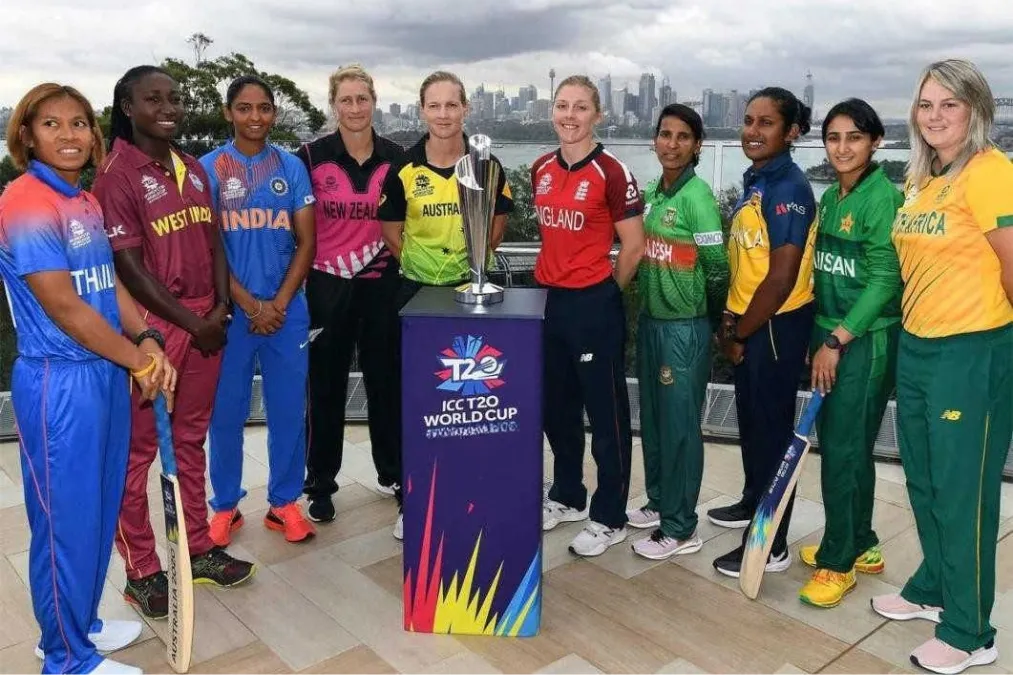
The countdown to one of the biggest events in global women’s cricket has officially begun. The Women’s T20 World Cup 2026 schedule time table has now been revealed, confirming dates, venues, groups, and match timings for what promises to be the most competitive edition in the tournament’s history.
Organised by the International Cricket Council, the 10th edition of the Women’s T20 World Cup will take place in England from 12 June to 5 July 2026. For the first time ever, 12 teams will compete in the tournament, marking a historic expansion that reflects the rapid global growth of women’s cricket.
Hosts England will kick off the competition against Sri Lanka on 12 June at Edgbaston, while India will begin their campaign with a blockbuster clash against Pakistan on 14 June.
Below is a complete, detailed breakdown of the Women’s T20 World Cup 2026 schedule time table, group structure, match list (IST), venue guide, and key tournament storylines.
Tournament Overview: Dates, Format and Expansion
The Women’s T20 World Cup 2026 represents a landmark moment in international cricket. This edition will feature:
- 12 teams
- 33 matches
- Two groups of six teams each
- Semi-finals and Final
- Tournament dates: 12 June – 5 July 2026
- Host country: England
The expansion from previous editions highlights the ICC’s continued investment in women’s cricket, increasing competitiveness, participation, and commercial growth across global markets including the UK and the United States.
Women’s T20 World Cup 2026 Groups
The ICC has divided the 12 teams into two groups of six. The top two teams from each group will qualify for the semi-finals.
Group 1
| Team |
|---|
| India |
| Pakistan |
| South Africa |
| Bangladesh |
| Australia |
| Netherlands |
Group 2
| Team |
|---|
| West Indies |
| Sri Lanka |
| England |
| Ireland |
| New Zealand |
| Scotland |
This group structure guarantees high-profile matchups throughout the group stage, including India vs Pakistan and Australia vs India.
India’s Campaign Begins with High-Stakes Clash
India will open their tournament against Pakistan on 14 June at Edgbaston. The rivalry between India and Pakistan is always one of the most watched events in world cricket, and this match is expected to draw record global viewership.
India’s group also includes heavyweights like Australia and South Africa, making Group 1 arguably the tougher pool.
ICC CEO Statement on the Tournament
ICC Chief Executive Geoff Allardice described the schedule announcement as a significant milestone ahead of the global event. He emphasised that the Women’s T20 World Cup 2026 reflects ICC’s strategic investment in women’s cricket — including improved production standards, increased prize money, stronger media distribution, and expanded commercial partnerships.
The ICC believes this edition will set new benchmarks in attendance, broadcast reach, and global engagement.
Australia: The Most Successful Team in History
Australia remain the most dominant side in Women’s T20 World Cup history, having won the title six times. Their consistency, squad depth, and big-match temperament have made them the benchmark team in the format.
Historically:
- England won the inaugural edition in 2009.
- West Indies lifted the trophy in 2016.
- Australia have dominated multiple editions since.
The 2026 edition will test whether Australia can continue their supremacy or if emerging teams can challenge their dominance.
Women’s T20 World Cup 2026 Schedule Time Table (IST)
Below is the complete Women’s T20 World Cup 2026 schedule time table in Indian Standard Time (IST).
Group Stage Matches
| Match | Date | Fixture | Venue | Time (IST) |
|---|---|---|---|---|
| 1 | 12 June | England vs Sri Lanka | Edgbaston | 11:00 PM |
| 2 | 13 June | Scotland vs Ireland | Old Trafford | 3:00 PM |
| 3 | 13 June | Australia vs South Africa | Old Trafford | 7:00 PM |
| 4 | 13 June | West Indies vs New Zealand | The Oval | 11:00 PM |
| 5 | 14 June | Bangladesh vs Netherlands | Edgbaston | 3:00 PM |
| 6 | 14 June | India vs Pakistan | Edgbaston | 7:00 PM |
| 7 | 16 June | New Zealand vs Sri Lanka | The Oval | 7:00 PM |
| 8 | 16 June | England vs Ireland | The Oval | 11:00 PM |
| 9 | 17 June | Australia vs Bangladesh | Headingley | 3:00 PM |
| 10 | 17 June | India vs Netherlands | Headingley | 7:00 PM |
| 11 | 17 June | South Africa vs Pakistan | Edgbaston | 11:00 PM |
| 12 | 18 June | West Indies vs Scotland | Headingley | 11:00 PM |
| 13 | 19 June | New Zealand vs Ireland | The Oval | 11:00 PM |
| 14 | 20 June | Australia vs Netherlands | The Oval | 3:00 PM |
| 15 | 20 June | Pakistan vs Bangladesh | Hampshire Bowl | 7:00 PM |
| 16 | 20 June | England vs Scotland | Headingley | 11:00 PM |
| 17 | 21 June | West Indies vs Sri Lanka | Bristol County Ground | 3:00 PM |
| 18 | 21 June | India vs South Africa | Old Trafford | 7:00 PM |
| 19 | 23 June | New Zealand vs Scotland | Bristol County Ground | 3:00 PM |
| 20 | 23 June | Sri Lanka vs Ireland | Bristol County Ground | 7:00 PM |
| 21 | 23 June | Australia vs Pakistan | Headingley | 11:00 PM |
| 22 | 24 June | England vs West Indies | Lord’s Cricket Ground | 11:00 PM |
| 23 | 25 June | India vs Bangladesh | Old Trafford | 7:00 PM |
| 24 | 25 June | South Africa vs Netherlands | Bristol County Ground | 11:00 PM |
| 25 | 26 June | Sri Lanka vs Scotland | Old Trafford | 11:00 PM |
| 26 | 27 June | England vs New Zealand | The Oval | 11:00 PM |
| 29 | 28 June | South Africa vs Bangladesh | Lord’s Cricket Ground | 3:00 PM |
| 30 | 28 June | Australia vs India | Lord’s Cricket Ground | 7:00 PM |
Knockout Stage
| Match | Date | Fixture | Venue | Time (IST) |
|---|---|---|---|---|
| 31 | 30 June | First Semi-Final | The Oval | 7:00 PM |
| 32 | 2 July | Second Semi-Final | The Oval | 11:00 PM |
| 33 | 5 July | Final | Lord’s Cricket Ground | 7:00 PM |
The final at Lord’s Cricket Ground is expected to be a historic occasion, with a packed crowd and massive global television audience.
Key Venues Hosting the Tournament
The Women’s T20 World Cup 2026 will be staged across some of England’s most iconic cricket venues:
- Edgbaston
- Old Trafford Cricket Ground
- The Oval
- Headingley Stadium
- Bristol County Ground
- Hampshire Bowl
- Lord’s Cricket Ground
These venues have hosted historic international matches and will provide world-class facilities for players and fans alike.
Why the 2026 Edition Is Historic
Several factors make this edition unique:
- First 12-team Women’s T20 World Cup
- Record number of matches (33)
- Expanded commercial reach in UK & US markets
- Increased media distribution and prize money
- Growing global fan base for women’s cricket
The Women’s T20 World Cup 2026 schedule time table confirms a tightly packed, high-quality tournament structure designed to maximise competitive balance and fan engagement.
Expectations from Top Contenders
Australia
Six-time champions, favourites again.
India
Seeking their first Women’s T20 World Cup title.
England
Home advantage could prove decisive.
South Africa & New Zealand
Consistent semi-final contenders.
Also read: Indian Women Cricket Team for Australia Tour: New Faces and Key Players Announced
Conclusion: Women’s T20 World Cup 2026 schedule time table
The release of theWomen’s T20 World Cup2026 schedule time table marks the official start of preparations for what could be the most competitive women’s cricket tournament ever staged.
With 12 teams, iconic venues, and high-stakes rivalries, the 2026 edition promises world-class cricket, record-breaking viewership, and unforgettable moments.
As the tournament runs from 12 June to 5 July 2026, fans across the UK, US, India, Australia, and beyond will be watching closely to see who lifts the trophy at Lord’s.
The stage is set. The teams are ready. And women’s cricket is poised for its biggest global celebration yet.