
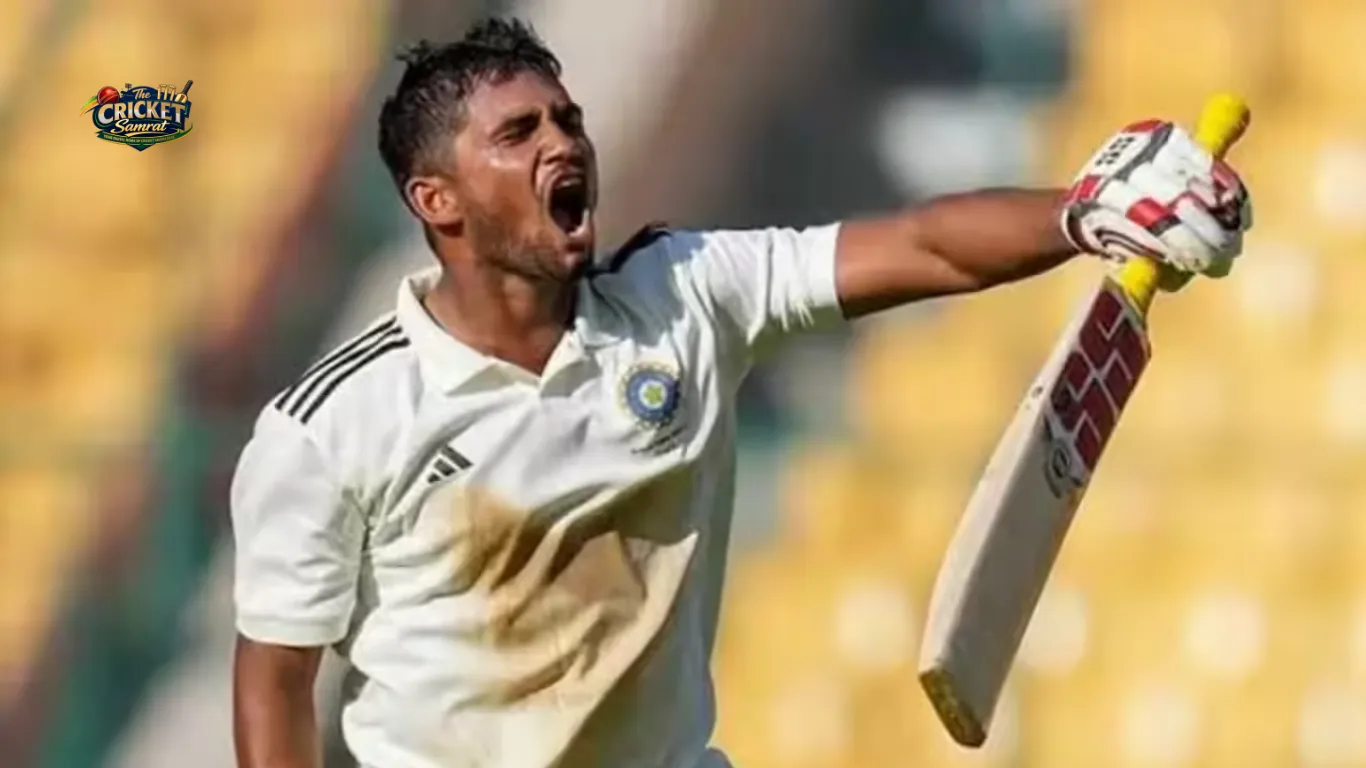
Vijay Hazare Trophy 2026: Mumbai’s latest batting prospect Musheer Khan is steadily carving out a reputation as one of the most promising young cricketers to watch in the domestic circuit, and his latest performance in the Vijay Hazare Trophy 2026 has further underlined his potential. The right-handed batter delivered a composed yet fluent knock of 73 runs off just 51 balls against Himachal Pradesh, playing a pivotal role in Mumbai’s hard-fought victory in a truncated contest.
At a venue where conditions tested both technique and temperament, Musheer displayed maturity well beyond his years. His innings was not only about runs but also about timing, awareness, and partnership-building—qualities that Mumbai’s domestic setup has long valued. Central to his innings was an 82-run stand with stand-in captain Shreyas Iyer, a partnership that provided stability after early challenges and laid the foundation for a competitive total.
Learning Curve in Domestic Cricket
For Musheer Khan, these are still formative years in professional cricket. Despite his growing presence in Mumbai’s senior side, he remains conscious of the steep learning curve that domestic cricket presents. Every match, according to him, is an opportunity to absorb lessons from experienced teammates and refine his approach across formats.
“I am still learning every day,” Musheer admitted after being named Player of the Match. “When you play alongside senior players, especially someone like Shreyas bhai, you automatically grow in confidence. The environment in the Mumbai dressing room allows young players to express themselves without fear.”
That freedom, he believes, has been instrumental in helping him perform under pressure during the Vijay Hazare Trophy 2026. Rather than overthinking situations or trying to meet expectations, Musheer focuses on playing his natural game—an approach consistently encouraged by Mumbai’s leadership group.
Partnership with Shreyas Iyer: Calm Amid Pressure
Mumbai found themselves in a tricky phase when Musheer walked in to bat against Himachal Pradesh. The surface offered uneven bounce early on, and bowlers enjoyed movement during the initial overs. However, Musheer and Shreyas Iyer approached the situation with clarity and patience.
Interestingly, the duo did not engage in frequent mid-pitch conversations. Instead, their understanding came from mutual trust and shared experience.
“While batting, we didn’t talk much,” Musheer revealed. “But during team meetings, Shreyas bhai always tells us to back ourselves and play our own game. That message makes a big difference. When the captain gives you that freedom, half the pressure disappears.”
Musheer’s stroke play reflected that confidence. He rotated strike smartly during the tough early overs and gradually shifted gears once the pitch eased. His ability to judge when to attack and when to consolidate was a key factor in Mumbai’s innings gaining momentum.
Playing Conditions and Tactical Awareness
The Jaipur surface presented its own challenges. With the match starting later than scheduled, both teams knew that the first few overs would be crucial. Musheer’s assessment of conditions highlighted his growing tactical awareness.
“This was our third match at this ground, so we had some idea of how the pitch behaves,” he explained. “When Shardul bhai picked up five wickets here earlier, it was clear that the first five to seven overs could be difficult for batters.”
With that knowledge, Musheer and Iyer adopted a cautious approach early on. Rather than forcing shots, they respected the conditions and allowed the innings to settle.
“Because the match started late, we knew there would be four or five overs that would be challenging. After that, it would become easier to bat,” Musheer added. “So we planned accordingly and played each ball on its merit.”
This calculated approach paid dividends, as Mumbai were able to accelerate later in the innings and put pressure back on Himachal Pradesh’s bowlers.
Trust from Leadership and Team Management
One of the defining features of Musheer Khan’s rise has been the faith shown in him by senior players and team management. Shreyas Iyer’s backing, in particular, has played a significant role in boosting his confidence.
“Shreyas bhai has known me since childhood,” Musheer said with a smile. “He has seen how I play and has also watched my performances in the Ranji Trophy. So there is no point trying to impress him—I just play my game.”
That trust extends beyond domestic cricket. In the Indian Premier League, Musheer is part of the Shreyas-led Punjab Kings setup. Although he featured in just one match last season, the franchise chose to retain him for the 2026 IPL season—a decision Musheer attributes to the captain’s belief in his abilities.
“He already knows what I can do,” Musheer said. “That confidence from the captain means a lot for a young player.”
Balancing Domestic and Franchise Cricket
Balancing expectations across domestic and franchise cricket is no easy task, especially for a young cricketer still finding his footing. Musheer, however, views his experiences in the IPL as valuable exposure rather than pressure.
“Playing in the IPL dressing room helps you understand how top-level players prepare,” he said. “Even if you don’t get many games, the learning is immense. You learn about fitness, mindset, and handling pressure.”
Those lessons are now translating into performances in tournaments like the Vijay Hazare Trophy 2026, where consistency and adaptability are crucial.
Mumbai’s Philosophy: Freedom with Responsibility
Mumbai cricket has long been associated with producing technically sound and mentally strong players. According to Musheer, the current setup continues that tradition by encouraging freedom while demanding accountability.
“In our team, we are told to play freely,” he said. “No one stops you from playing your natural shots. At the same time, you are expected to understand the match situation and take responsibility.”
That balance was evident in Musheer’s innings against Himachal Pradesh. While his strike rate reflected intent, his shot selection showed discipline—an encouraging sign for a player aiming to establish himself across formats.
Eyes on Long-Term Growth
Despite the accolades and praise, Musheer remains grounded. He understands that domestic cricket is a marathon, not a sprint, and that consistency will ultimately determine his future prospects.
“One good innings doesn’t define your career,” he said. “I want to keep improving with every game and contribute to the team whenever I get the opportunity.”
His immediate focus remains on helping Mumbai progress in the Vijay Hazare Trophy 2026, while also preparing for challenges in red-ball cricket and future IPL seasons.
Impact on Mumbai’s Campaign
Musheer Khan’s emergence could not have come at a better time for Mumbai. With the team navigating injuries and workload management among senior players, contributions from young batters have become crucial.
His partnership with Shreyas Iyer not only stabilized the innings but also demonstrated Mumbai’s depth and adaptability—qualities that often separate title contenders from the rest.
As the Vijay Hazare Trophy 2026 progresses, Mumbai will hope that Musheer continues to build on this performance and delivers consistently in pressure situations.
A Promising Road Ahead
Musheer Khan’s knock against Himachal Pradesh was more than just a statistical highlight. It was a statement of intent from a young cricketer eager to make his mark while staying true to his natural game.
In a tournament as competitive as the Vijay Hazare Trophy 2026, performances like these can shape careers. With strong backing from leadership, exposure at the highest level, and a clear understanding of his strengths, Musheer appears well-positioned for a bright future in Indian cricket.
For now, he remains focused on the basics—watching the ball, trusting his instincts, and playing with freedom. And if his latest performance is any indication, Mumbai cricket may have found another dependable name for the years to come.