
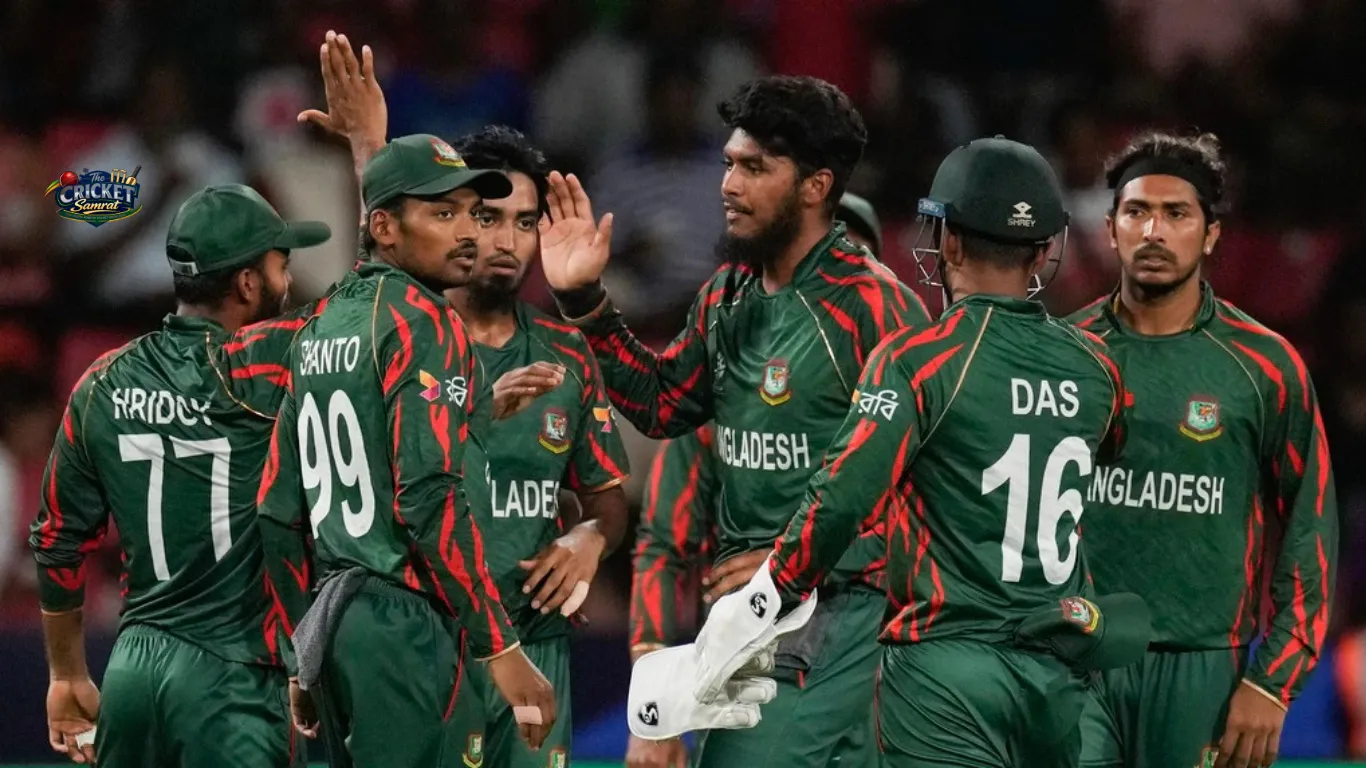
The upcoming T20 World Cup has been thrown into uncertainty after the International Cricket Council (ICC) issued a firm deadline to the Bangladesh Cricket Board (BCB), asking it to confirm by January 21 whether the national team will participate in the tournament and, crucially, whether it is willing to travel to India to play its scheduled matches.
The situation has sparked intense debate across the global cricketing community, raising questions about player safety, tournament logistics, political tensions, and the possible inclusion of another team if Bangladesh ultimately withdraws. According to multiple reports, including information first published by ESPNcricinfo, the ICC communicated its stance during a high-level meeting held in Dhaka on January 17, making it clear that there will be no changes to the tournament’s structure or schedule.
With just days remaining before the deadline, the fate of Bangladesh’s participation in the 2026 T20 World Cup remains undecided.
ICC Issues Clear Ultimatum to Bangladesh Cricket Board
During the meeting in Dhaka, ICC officials reportedly informed the BCB that it must provide a definitive answer by January 21 regarding its involvement in the T20 World Cup. This was the second meeting between the two parties within a week, highlighting the urgency and seriousness of the issue.
While the Bangladesh Cricket Board expressed its desire to take part in the global tournament, it also raised significant concerns about sending its players to India. The board cited security worries as the primary reason behind its hesitation and proposed that Bangladesh be allowed to play its matches outside India.
Specifically, BCB officials suggested that Bangladesh’s games be shifted to Sri Lanka, which is one of the co-hosts of the tournament. However, the ICC rejected this proposal outright.
ICC Refuses to Alter T20 World Cup Schedule or Groups
The ICC has taken a firm position, stating that the T20 World Cup schedule will not be changed under any circumstances. Officials emphasized that the tournament’s planning process has been completed well in advance and involves multiple stakeholders, broadcasters, sponsors, and host boards.
Bangladesh has been placed in Group C, and the ICC has made it clear that the team must compete within that group and at the designated venues in India. Any request to alter group placements or venues has been categorically denied.
According to sources familiar with the discussions, ICC representatives assured the BCB that there is no specific or credible security threat to the Bangladesh team in India and that comprehensive security arrangements are already in place for all participating nations.
Bangladesh Requests Group Change, ICC Rejects Proposal
In addition to requesting a venue change, the Bangladesh Cricket Board also asked the ICC to consider moving the team from Group C to Group B. The BCB argued that such a move would allow Bangladesh to play all its group-stage matches in Sri Lanka, reducing travel and alleviating safety concerns.
However, the ICC rejected this request as well.
Officials explained that reshuffling groups at this stage would disrupt the competitive balance of the tournament and undermine the integrity of the qualification process. Group placements were determined based on rankings, seedings, and long-term planning, and making exceptions for one team would set an unwanted precedent.
Bangladesh’s Group C Schedule in the T20 World Cup
Under the current and unchanged schedule, Bangladesh is set to compete in Group C of the T20 World Cup. The team’s fixtures are as follows:
- February 7: Bangladesh vs West Indies – Eden Gardens, Kolkata
- February 9: Bangladesh vs Italy – Eden Gardens, Kolkata
- February 14: Bangladesh vs England – Eden Gardens, Kolkata
- February 17: Bangladesh vs Nepal – Wankhede Stadium, Mumbai
The first three matches are scheduled to take place at the iconic Eden Gardens Stadium in Kolkata, one of India’s most historic cricket venues. Bangladesh’s final group-stage match is set for Mumbai.
ICC Prepares Backup Plan if Bangladesh Withdraws
With the deadline approaching, the ICC has reportedly begun preparing contingency plans in case Bangladesh decides not to participate in the tournament.
If the BCB formally refuses to send its team to India, the ICC reserves the right to replace Bangladesh with another eligible team. According to media reports, Scotland is currently the leading candidate to take Bangladesh’s place, based on the latest ICC T20 international rankings.
While no official announcement has been made, sources suggest that Scotland’s strong recent performances and ranking position make it the most suitable replacement should a vacancy arise in the T20 World Cup lineup.
Rising Political Tensions Add Complexity to the Issue
The controversy surrounding Bangladesh’s participation in the T20 World Cup cannot be viewed in isolation from broader political developments. Relations between cricketing authorities have become strained following a series of incidents that have spilled over into the sporting arena.
One major flashpoint has been the controversy surrounding Bangladesh fast bowler Mustafizur Rahman and his involvement in the Indian Premier League (IPL).
Mustafizur Rahman IPL Controversy Sparks Diplomatic Fallout
In December, Mustafizur Rahman was purchased by Kolkata Knight Riders (KKR) for ₹9.20 crore during the IPL mini-auction, making him one of the most expensive overseas buys of the event.
However, the signing soon became controversial amid reports of violence against Hindu minorities in Bangladesh. Following growing public pressure and security concerns, the Board of Control for Cricket in India (BCCI) reportedly decided not to grant Mustafizur permission to participate in the IPL.
As a result, KKR released the Bangladeshi pacer from their squad on January 3, acting on BCCI’s directive.
Bangladesh Government Responds With Broadcast Ban
The decision to bar Mustafizur Rahman from the IPL triggered a strong reaction in Bangladesh. In response, the Bangladeshi government imposed a ban on the broadcast of IPL matches within the country.
This move significantly escalated tensions and added a political dimension to what had initially been a cricketing decision. Soon after, concerns about player safety were cited as justification for requesting venue changes in the T20 World Cup, further complicating matters.
Security Concerns Take Centre Stage
The Bangladesh Cricket Board has repeatedly stated that its primary concern is the safety and well-being of its players. Officials have emphasized that the board does not wish to expose the team to any unnecessary risk, particularly during a high-profile international tournament like the T20 World Cup.
However, the ICC has countered these claims by pointing to India’s extensive experience in hosting major global sporting events. Officials noted that India has successfully staged previous editions of the T20 World Cup, ODI World Cup matches, IPL seasons, and other international tournaments without incident.
The ICC also reaffirmed that all participating teams will receive equal and robust security arrangements, coordinated in partnership with local authorities and international security agencies.
No Special Treatment, Says ICC
One of the key messages from the ICC has been its insistence on fairness and consistency. Officials have made it clear that no team will receive special treatment, whether in terms of group placement, venues, or scheduling.
Allowing Bangladesh to play all its matches outside India, ICC sources argue, would undermine the tournament’s credibility and open the door to similar requests from other teams in the future.
Impact on Tournament Integrity and Fans
The uncertainty surrounding Bangladesh’s participation has also raised concerns about the overall integrity of the T20 World Cup. Fans, broadcasters, and sponsors are closely monitoring the situation, as any last-minute changes could affect ticket sales, broadcast schedules, and commercial agreements.
Cricket analysts have warned that withdrawing from the tournament could have long-term consequences for Bangladesh cricket, including potential sanctions, loss of ranking points, and strained relations with the ICC.
Bangladesh’s Position: Participation, But Not in India
Despite the mounting pressure, the Bangladesh Cricket Board has maintained a consistent stance. BCB officials have reiterated that Bangladesh wants to participate in the T20 World Cup, but not at the cost of player safety.
The board has urged the ICC to reconsider its position and explore alternative arrangements, even though the governing body has already ruled out any changes.
Also read: ISPL Points Table 2026: Complete Team Standings, Match Results, and Qualification Guide
Countdown to January 21 Decision
As January 21 approaches, all eyes are on the Bangladesh Cricket Board. The decision it makes will not only determine Bangladesh’s immediate future in the T20 World Cup but could also set a precedent for how international cricket handles security concerns amid geopolitical tensions.
If Bangladesh agrees to travel to India, the issue may be resolved swiftly. If not, the ICC is expected to act quickly to confirm a replacement team and ensure that the tournament proceeds without disruption.
What Happens Next?
Should Bangladesh withdraw, Scotland is widely expected to step in, bringing a fresh dynamic to Group C. Such a move would be historic for Scottish cricket and significantly alter the competitive balance of the group.
On the other hand, Bangladesh’s participation would preserve the original structure of the T20 World Cup and avoid further controversy.
Conclusion
The unfolding situation serves as a reminder that modern international sport often exists at the intersection of politics, security, and competition. The T20 World Cup, one of cricket’s most prestigious tournaments, now finds itself navigating challenges far beyond the boundary ropes.
With just days remaining before the ICC’s deadline, the cricketing world awaits a decision that could reshape the tournament and leave a lasting impact on global cricket governance.
Whether Bangladesh ultimately takes the field in India or bows out under extraordinary circumstances, this episode will be remembered as one of the most complex and contentious moments in the history of the T20 World Cup.