
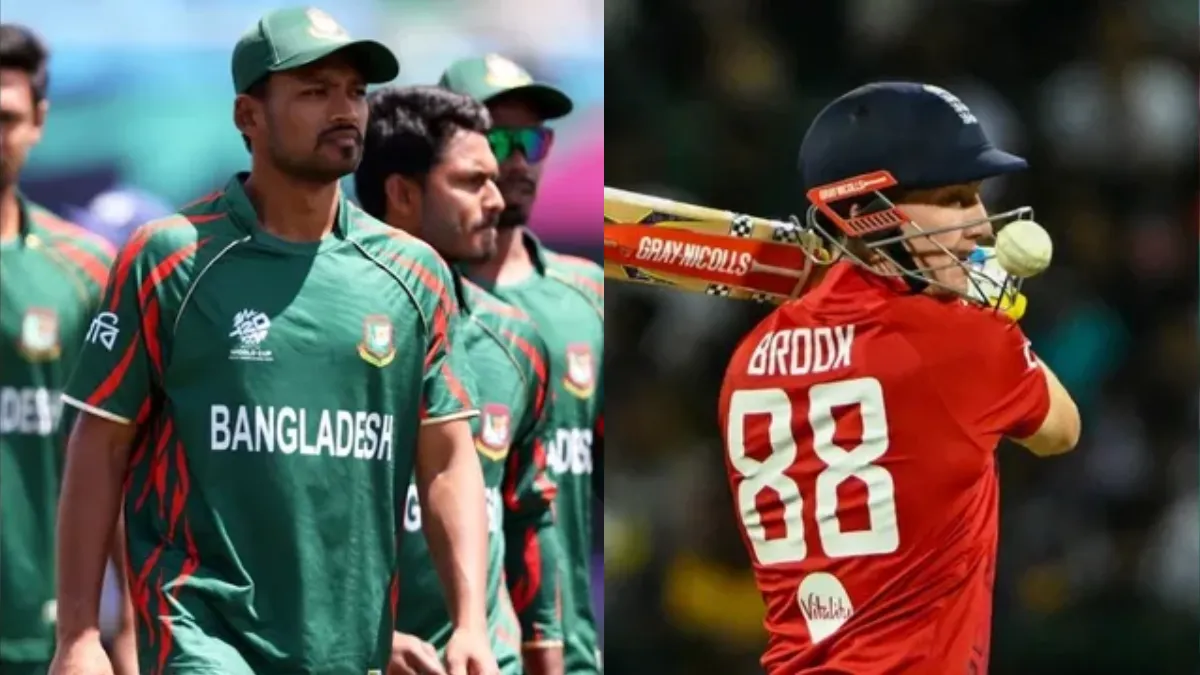
The T20 World Cup 2026 is set to begin on 7 February, and even before the first ball is bowled, the tournament has already witnessed a major shake-up. A late change to Group C, following Bangladesh’s withdrawal and Scotland’s inclusion, has significantly altered the balance of power and the overall narrative of the competition.
Initially labelled the “Group of Death”, Group C was expected to be one of the toughest pools in the tournament. However, Bangladesh’s decision not to participate in matches scheduled in India prompted the International Cricket Council (ICC) to revise the group composition. With Scotland stepping in as a replacement, the equation has shifted — making qualification prospects considerably brighter for England and West Indies, both two-time T20 World Cup champions.
Yet, while the road may appear smoother on paper, the presence of ambitious underdogs like Nepal, Italy, and Scotland ensures that Group C remains unpredictable, competitive, and rich in potential upsets.
Why Group C Was Once Called the ‘Group of Death’
At the time of the official draw, Group C was widely viewed as one of the most demanding groups of the T20 World Cup 2026. Bangladesh’s inclusion made it particularly dangerous.
Bangladesh have historically been a challenging side in subcontinental conditions, where slower pitches, spin-friendly surfaces, and humid weather often negate the advantages of power-heavy teams. Their ability to choke opponents with spin bowling and disciplined batting made them a serious threat to even the strongest sides.
With Bangladesh in the mix alongside England and West Indies — two former champions — analysts believed that qualification would go down to fine margins. Every match was expected to matter, and even a single poor performance could have proven fatal.
However, circumstances changed dramatically following Bangladesh’s decision to opt out.
Bangladesh Withdrawal: A Turning Point in Group Dynamics
The ICC confirmed Bangladesh’s removal from Group C after the team expressed unwillingness to play matches in India. In response, Scotland were added to the group, reshaping the competitive landscape.
While Scotland are no pushovers, their inclusion has undeniably reduced the overall difficulty level of the group — at least for the traditional heavyweights.
Revised Group C Teams
| Team | Status | T20 World Cup Titles |
|---|---|---|
| England | Direct qualifier | 2010, 2022 |
| West Indies | Direct qualifier | 2012, 2016 |
| Nepal | Qualified | — |
| Italy | First-time qualifier | — |
| Scotland | Replacement entrant | — |
With this lineup, England and West Indies now enter the group as clear favourites, though T20 cricket has a long history of unexpected results.
England: Strong Squad, Big Expectations, Lingering Questions
England arrive at the T20 World Cup 2026 carrying both pedigree and pressure. Twice champions, they remain one of the most aggressive and innovative sides in modern T20 cricket.
New Leadership Under Harry Brook
For the first time in a global tournament, Harry Brook will lead England as captain. Having taken over limited-overs leadership from Jos Buttler last year, Brook’s appointment marks a generational shift.
While Brook is widely respected for his batting brilliance and tactical awareness, his leadership credentials are still being tested on the world stage.
England’s recent tournament record has been mixed:
- 2023 ODI World Cup: Eliminated at the group stage
- 2024 T20 World Cup: Lost in the semi-finals
- Champions Trophy 2025: Early exit
These results underline the need for consistency and adaptability — especially in Indian conditions.
England Squad for T20 World Cup 2026
| Player | Role |
|---|---|
| Harry Brook (Captain) | Batter |
| Jos Buttler | Wicketkeeper-batter |
| Phil Salt | Batter |
| Ben Duckett | Batter |
| Tom Banton | Batter |
| Jacob Bethell | All-rounder |
| Sam Curran | All-rounder |
| Liam Dawson | Spin all-rounder |
| Will Jacks | All-rounder |
| Adil Rashid | Leg-spinner |
| Jofra Archer | Fast bowler |
| Rehan Ahmed | Spinner |
| Jamie Overton | Fast bowler |
| Josh Tongue | Fast bowler |
| Luke Wood | Fast bowler |
Key Strengths and Weaknesses
Strengths
- Explosive top order
- Flexible middle order
- World-class spin option in Adil Rashid
Concerns
- Pace bowling depth due to injuries
- Jofra Archer’s fitness after recent comeback
- Absence of Mark Wood due to injury
Despite these concerns, England remain favourites to top Group C.
West Indies: T20 Specialists With a Point to Prove
If there is one team synonymous with T20 cricket, it is the West Indies. Champions in 2012 and 2016, they were the first team to lift the T20 World Cup twice — including a memorable final victory over England in India in 2016.
Now, in the T20 World Cup 2026, history comes full circle.
Shai Hope Takes the Helm
West Indies will be led by Shai Hope, a player known more for his composure than flamboyance. His calm leadership style is expected to bring balance to a squad filled with power hitters and dynamic all-rounders.
A large portion of the West Indies squad actively participates in global T20 leagues, including the IPL, SA20, and Caribbean Premier League — giving them valuable experience in Indian conditions.
West Indies Squad for T20 World Cup 2026
| Player | Role |
|---|---|
| Shai Hope (Captain) | Batter |
| Nicholas Pooran | Batter |
| Shimron Hetmyer | Batter |
| Brandon King | Batter |
| Rovman Powell | Batter |
| Jason Holder | All-rounder |
| Romario Shepherd | All-rounder |
| Sherfane Rutherford | Batter |
| Roston Chase | All-rounder |
| Akeal Hosein | Spinner |
| Alzarri Joseph | Fast bowler |
| Gudakesh Motie | Spinner |
| Jayden Seales | Fast bowler |
| Andre Russell* | All-rounder (if selected) |
(*subject to final confirmation)
Recent form has been encouraging, with Sherfane Rutherford standing out after a prolific SA20 campaign.
West Indies will begin their campaign on 7 February in Kolkata against Scotland — a fixture they will expect to win comfortably.
Nepal: Carrying a Nation’s Dreams
Nepal’s qualification for the T20 World Cup 2026 for the second consecutive time is nothing short of remarkable.
With a population exceeding 30 million, Nepal’s cricketing infrastructure has long lagged behind established nations. Yet, through resilience and talent, they have emerged as one of the most exciting associate teams in world cricket.
Leadership and Fan Support
Under captain Rohit Paudel, Nepal are expected to enjoy massive crowd support — especially during their opening match against England at Wankhede Stadium on 8 February.
Nepal possess enough quality to challenge:
- Italy
- Scotland
And if they manage one major upset against either England or West Indies, qualification to the knockout stage could become a reality.
Nepal Squad
| Player |
|---|
| Rohit Paudel (Captain) |
| Dipendra Singh Airee |
| Sandeep Lamichhane |
| Kushal Bhurtel |
| Aasif Sheikh |
| Arif Sheikh |
| Sompal Kami |
| Karan KC |
| Gulshan Jha |
| Lalit Rajbanshi |
| Lokesh Bam |
| Bashir Ahmad |
| Nandan Yadav |
| Sandeep Jora |
| Sher Malla |
Italy: First Appearance, Big Ambitions
Italy will make their maiden appearance at the T20 World Cup 2026, marking a historic milestone for European cricket.
Their rise has been driven largely by structured development and the influence of former Australian international Joe Burns, whose experience has helped shape Italy into a competitive unit.
While expectations are modest, Italy’s disciplined approach and unfamiliar playing style make them a dangerous opponent for complacent teams.
Scotland: Late Entry, Real Opportunity
Scotland earned their place after Bangladesh’s exit, but their inclusion is far from symbolic.
A well-balanced side with seasoned campaigners, Scotland have previously troubled full-member nations and will aim to do so again.
Scotland Squad
| Player |
|---|
| Richie Berrington (Captain) |
| George Munsey |
| Michael Leask |
| Chris Greaves |
| Safyaan Sharif |
| Mark Watt |
| Brandon McMullen |
| Brad Wheal |
| Matthew Cross |
| Tom Bruce |
| Oliver Davidson |
| Bradley Currie |
| Michael Jones |
| Finlay McCreath |
| Zainullah Ehsan |
Also read: T20 World Cup Captains Day to Be Held in Mumbai and Colombo Ahead of February 7 Tournament Opener
Group C Match Outlook and Key Dates
| Date | Match | Venue |
|---|---|---|
| 7 Feb | West Indies vs Scotland | Kolkata |
| 8 Feb | England vs Nepal | Mumbai |
| 10 Feb | England vs Italy | — |
| 12 Feb | Nepal vs Scotland | — |
| 14 Feb | West Indies vs Nepal | — |
(Venues subject to official confirmation)
Also read: Sri Lanka T20 World Cup Squad 2026 Announced: Kamindu Mendis Returns, Shanaka Named Captain
Final Analysis: Easier on Paper, Dangerous in Reality
While the removal of Bangladesh has undoubtedly eased qualification prospects for England and West Indies, the T20 World Cup 2026 remains a format where reputations offer no guarantees.
Nepal’s fearless cricket, Italy’s unpredictability, and Scotland’s experience ensure that Group C retains its competitive edge. For England and West Indies, complacency could be costly.
As the tournament kicks off on 7 February, Group C promises drama, passion, and possibly one of the biggest upsets of the T20 World Cup 2026.
Cricket fans across the UK, US, and the rest of the world should buckle up — the road to the knockout stage is anything but routine.