Advertisement
Advertisement
Erp Manufacturing Transforming Industry Efficiency

Insurance Industry Transforming Financial Security and Risk Management

Starting with the insurance industry, it represents one of the most critical pillars of global financial stability. Insurance services provide protection against financial losses arising from health emergencies, accidents, natural disasters, property damage, and business risks. With rising economic uncertainty and increasing awareness of financial planning, the insurance sector has become an essential component of personal and corporate financial strategies.

The modern insurance ecosystem has evolved far beyond traditional policy issuance. Today, insurance companies rely on advanced digital platforms, data analytics, and automated underwriting systems to deliver faster services, accurate risk assessment, and improved customer experience. This transformation has positioned the insurance industry as a high-value financial sector with long-term growth potential.

Introduction to the Insurance Industry

The insurance industry operates on the principle of risk transfer, where individuals or businesses pay premiums to insurance providers in exchange for financial protection against uncertain future events. These events may include medical expenses, vehicle accidents, property damage, liability claims, or loss of income.

Insurance companies not only safeguard individuals but also support economic growth by enabling businesses to operate with reduced financial risk. From life insurance and health insurance to motor, home, travel, and commercial insurance, the industry covers a wide spectrum of financial protection needs.

Evolution of the Insurance Sector

The insurance industry has undergone significant transformation over the decades, shaped by regulatory changes, technological innovation, and evolving consumer expectations.

1. Traditional Insurance Models

Earlier insurance systems relied on manual documentation, agent-driven sales, and lengthy claim settlement processes. Policy issuance and customer communication were largely paper-based.

2. Digitization of Insurance Operations

The introduction of digital record-keeping and management software improved efficiency, reduced errors, and enabled better customer data management.

3. Online and Direct-to-Consumer Insurance

With the growth of the internet, insurance companies introduced online policy purchases, premium calculators, and digital claim submissions, significantly enhancing accessibility.

4. InsurTech Innovation

The emergence of InsurTech startups introduced AI-driven underwriting, automated claims processing, fraud detection, and personalized insurance products.

5. Data-Driven and Predictive Insurance

Modern insurance companies leverage big data, machine learning, and predictive analytics to assess risk accurately and offer customized premium pricing.

Key Features of Modern Insurance Systems

Insurance management systems today are designed to handle complex operations efficiently while ensuring regulatory compliance and customer satisfaction. These systems integrate multiple business functions into a unified platform, improving transparency and operational control.

Advanced insurance platforms enable real-time data access, automated workflows, and secure customer interactions, making them essential for competitive insurance providers.

Core Modules in Insurance Management Systems

Leading Insurance Software Platforms

Benefits of Digital Transformation in Insurance

Digital transformation has significantly improved efficiency and profitability in the insurance industry. Automation reduces operational costs while improving service speed and accuracy.

By integrating data analytics and AI, insurers can design personalized insurance products, improve underwriting accuracy, and enhance fraud prevention mechanisms.

Improved Decision-Making Through Insurance Analytics

📥 Download Now

Insurance Industry Performance Improvements

A global health insurance provider implemented automated claims processing and reduced settlement time by over 35%. Similarly, a motor insurance company adopted telematics-based pricing models, improving customer retention and underwriting profitability.

"Data-driven insurance models are redefining risk management and financial protection worldwide."

Challenges in Insurance Industry Modernization

Despite technological advancements, insurance companies face multiple challenges during digital adoption and system modernization.

Key Challenges

Future Trends in the Insurance Industry

The insurance sector is expected to experience rapid innovation driven by AI, IoT, and cloud computing.

AI and IoT in Insurance

AI enables automated underwriting and personalized pricing, while IoT devices support usage-based insurance models for health, motor, and property coverage.

Cloud-Based Insurance Platforms

Cloud infrastructure allows insurers to scale operations, reduce IT costs, and launch products faster while ensuring high availability and security.

Upcoming Innovations

Successful Insurance Implementation Strategies

Strategic planning and execution are essential for successful insurance system implementation.

Implementation Roadmap

Business assessment, objective definition, platform selection, data migration, testing, deployment, and continuous optimization.

Insurance Vendor Evaluation Checklist

Case Studies of Insurance Industry Success

Allianz leveraged predictive analytics to improve underwriting accuracy and profitability.

AXA adopted cloud-based platforms to enhance customer engagement and operational efficiency.

Last Word

In conclusion, the insurance industry continues to evolve as a high-value financial sector driven by technology, data analytics, and customer-centric innovation. Digital insurance platforms not only improve operational efficiency but also strengthen financial protection and trust. For insurers, embracing modernization is no longer optional—it is essential for long-term growth and competitiveness.

Advertisement
Advertisement
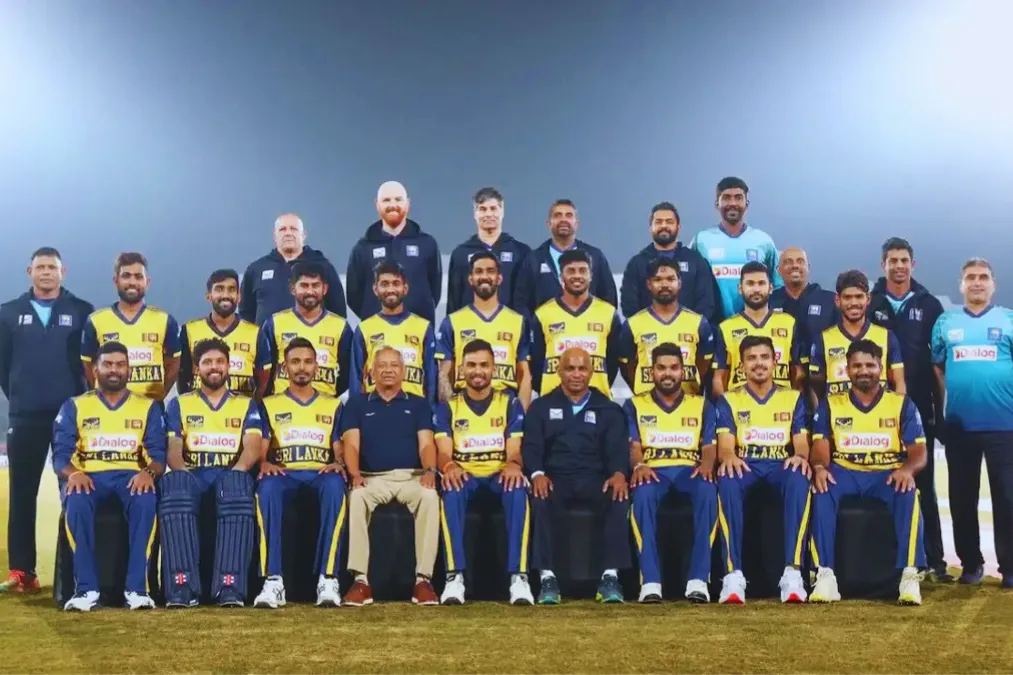
Sri Lanka T20 World Cup Squad 2026 Announced: Kamindu Mendis Returns, Shanaka Named Captain

Sri Lanka T20 World Cup Squad 2026 Announced: Kamindu Mendis Returns, Shanaka Named Captain

Sri Lanka Cricket has officially announced the Sri Lanka T20 World Cup squad 2026, confirming several notable selection calls ahead of the global tournament scheduled to begin on February 7 in India and Sri Lanka. The biggest headline from the squad announcement is the return of Kamindu Mendis, while experienced all-rounder Dhananjaya de Silva has been left out. Former skipper Dasun Shanaka will lead the side as captain.

The squad also includes injured fast bowler Ishan Malinga, a decision that has sparked debate among fans and experts alike. Sri Lanka’s selectors appear focused on experience, versatility, and familiarity with subcontinent conditions as the team prepares for a challenging tournament.

Kamindu Mendis Makes a Surprise Comeback

One of the most discussed decisions in the Sri Lanka T20 World Cup squad 2026 is the recall of Kamindu Mendis, despite his modest recent performances. Mendis was not part of Sri Lanka’s last T20 series against England and Pakistan, and his numbers in 2025 have been underwhelming.

In the previous year, Kamindu scored only 159 runs at an average of 19.87, with a strike rate of 130.32. His bowling contribution was also limited, delivering just six overs across 12 matches. However, what continues to work in his favour is his rare ability to bowl spin with both arms, offering tactical flexibility in T20 cricket.

Selectors seem to value his all-round skill set and adaptability, especially on slow, turning pitches expected during the tournament.

Potential Opportunity for Dunith Wellalage in Playing XI

With Dhananjaya de Silva omitted from the squad, attention has shifted to 23-year-old left-arm spin all-rounder Dunith Wellalage. While Wellalage has played only six T20 internationals, he is a regular feature in Sri Lanka’s ODI setup and has impressed in franchise leagues.

Wellalage also captained Sri Lanka A in the Emerging Asia Cup, showcasing leadership qualities. His ability to contribute with both bat and ball could earn him a place in the playing XI, especially on spin-friendly surfaces.

Though his T20 international experience is limited, selectors appear confident in his temperament and exposure to high-pressure matches.

Pathum Nissanka and Pavith Ratnayake Add Batting Depth

Batter Pavith Ratnayake, who recently scored a century in the ODI series against England, has also been included in the Sri Lanka T20 World Cup squad 2026. While his T20 numbers remain modest—45 runs in four matches—his strike rate of over 145 indicates aggressive intent, a key requirement in modern T20 cricket.

Meanwhile, established names such as Pathum Nissanka, Kusal Mendis, Kusal Perera, and Charith Asalanka provide stability and experience at the top and middle order. The exclusion of fast bowler Pramod Madushan was another tough call, suggesting the selectors preferred variety over raw pace.

Sri Lanka’s Group and Match Schedule

Sri Lanka have been placed in Group B, alongside Australia, Ireland, Oman, and Zimbabwe. A major advantage for the island nation is that all group-stage matches will be played at home, offering familiarity with conditions.

Below is Sri Lanka’s group-stage schedule:

DateMatchVenue
February 8Sri Lanka vs IrelandColombo
February 12Sri Lanka vs OmanPallekele
February 16Sri Lanka vs AustraliaColombo
February 19Sri Lanka vs ZimbabwePallekele

Two matches will be held in Colombo, while the remaining two will take place in Pallekele, both known for spin-friendly wickets.

Full Sri Lanka T20 World Cup Squad 2026

Here is the complete squad announced by Sri Lanka Cricket:

PlayerRole
Dasun Shanaka (Captain)All-rounder
Pathum NissankaBatter
Kamil MisharaBatter
Kusal MendisBatter
Kusal PereraWicketkeeper-Batter
Charith AsalankaBatter
Kamindu MendisAll-rounder
Janith LiyanageBatter
Pavith RatnayakeBatter
Dunith WellalageSpin All-rounder
Wanindu HasarangaAll-rounder
Maheesh TheekshanaSpinner
Dushmantha ChameeraFast Bowler
Matheesha PathiranaFast Bowler
Ishan MalingaFast Bowler

Also read: T20 World Cup Captains Day to Be Held in Mumbai and Colombo Ahead of February 7 Tournament Opener

Expectations Ahead of the Tournament

With a balanced mix of youth and experience, the Sri Lanka T20 World Cup squad 2026 reflects a strategy built around adaptability, spin strength, and leadership stability. The return of Shanaka as captain provides continuity, while the inclusion of players like Hasaranga and Theekshana ensures wicket-taking options in the middle overs.

Playing on home soil could give Sri Lanka a crucial edge, but consistency—especially in batting—will be key if they aim to progress deep into the tournament.

As the countdown to the T20 World Cup begins, all eyes will be on how this squad performs under pressure and whether the bold selection calls pay off on the global stage.