
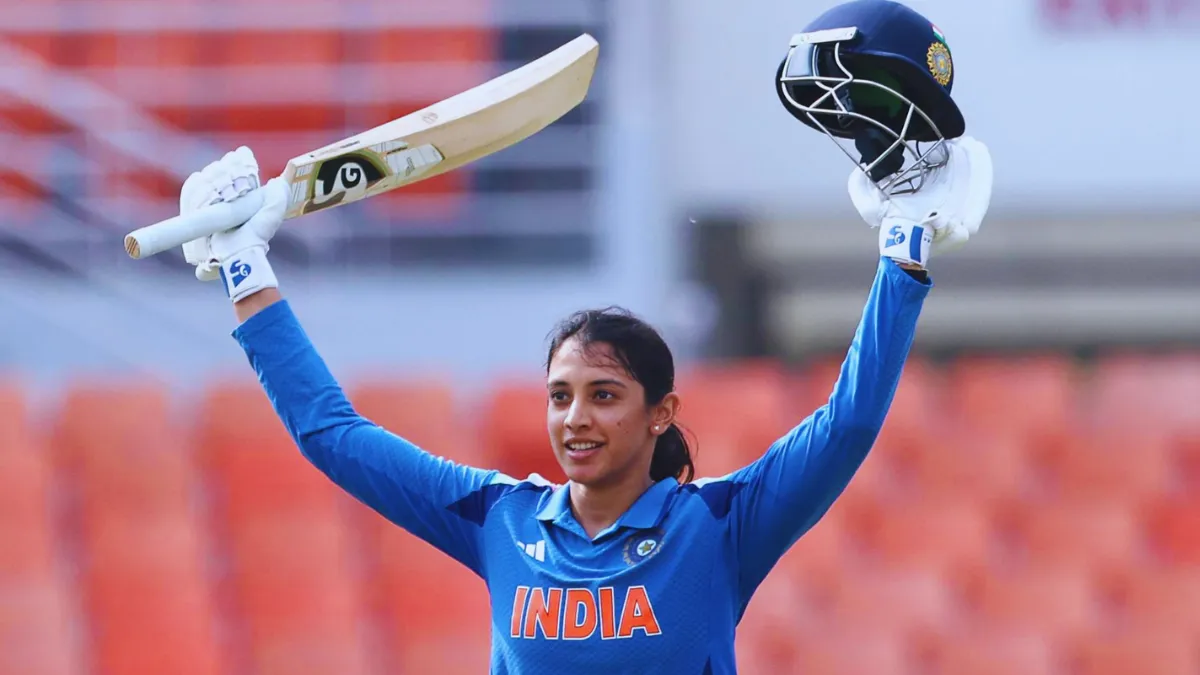
Indian cricket star Smriti Mandhana continues to dominate the international stage after retaining the No.1 position in the latest ICC Women’s ODI batting rankings released on Tuesday. The stylish left-handed opener remains the highest-ranked batter in the 50-over format, underlining her consistency and importance to India women’s national cricket team.
While Mandhana held on to the top spot, other Indian batters experienced mixed fortunes following the team’s recent ODI series against Australia women’s national cricket team, where India suffered a 0–3 series defeat. The rankings update also saw notable movements from players representing New Zealand women’s national cricket team, Sri Lanka women’s national cricket team, and West Indies women’s national cricket team, highlighting the ever-changing dynamics in women’s international cricket.
Smriti Mandhana Maintains No.1 ODI Batting Ranking
Despite India’s recent ODI struggles, Smriti Mandhana continues to hold the top position among ODI batters globally, a reflection of her sustained excellence across international tournaments. Mandhana’s elegant stroke play and ability to anchor innings have made her one of the most dependable performers in women’s cricket.
Over the past few years, Mandhana has been a key pillar of India’s batting line-up, delivering impactful performances in major series and ICC tournaments. Her consistency has allowed her to stay ahead of several top international players in the ICC rankings.
India’s Other Batters in the ODI Rankings
Alongside Smriti Mandhana, India captain Harmanpreet Kaur maintained her place in the top 10 of the ODI batting rankings. Harmanpreet remained eighth overall, showing stability despite India’s recent losses.
However, young batter Jemimah Rodrigues slipped slightly in the rankings. Rodrigues dropped one position to 12th, largely influenced by India’s disappointing series against Australia.
Indian Batters’ Latest ODI Rankings
| Player | Country | Latest ODI Batting Rank | Change |
|---|---|---|---|
| Smriti Mandhana | India | 1 | No Change |
| Harmanpreet Kaur | India | 8 | No Change |
| Jemimah Rodrigues | India | 12 | ↓ 1 Spot |
Even with the series loss, the continued presence of Indian batters near the top of the rankings highlights the depth of talent within the Indian women’s team.
New Zealand Players Shine in Latest ICC Rankings Update
While Smriti Mandhana held her ground at the top, players from New Zealand emerged as some of the biggest movers in the latest rankings.
The White Ferns have been in outstanding form at home, taking an unassailable 2–0 lead in their ongoing three-match ODI series against Zimbabwe women’s national cricket team.
Leading the charge for New Zealand has been their newly appointed captain Amelia Kerr, who produced exceptional performances with both bat and ball.
Amelia Kerr’s Record-Breaking Bowling Performance
Kerr delivered an extraordinary bowling display during the second ODI in Dunedin, claiming seven wickets in a single match. This remarkable achievement placed her among a select group of players who have taken seven or more wickets in a women’s ODI match.
Her impressive performances included:
- 4 wickets in the first ODI
- 7 wickets in the second ODI
These efforts helped Kerr climb five places in the ODI bowling rankings, moving up to 11th overall. She also improved her standing in the ODI all-rounder rankings, rising one place to fifth.
Amelia Kerr Rankings Update
| Category | Previous Rank | Current Rank | Change |
|---|---|---|---|
| ODI Bowler | 16 | 11 | ↑ 5 Spots |
| ODI All-Rounder | 6 | 5 | ↑ 1 Spot |
Kerr’s all-round brilliance continues to establish her as one of the most complete players in modern women’s cricket.
Brooke Halliday and Maddy Green Make Major Batting Gains
New Zealand’s batting lineup also produced standout performances in the opening match of the series.
Brooke Halliday delivered one of the most memorable innings of the series, smashing an unbeaten 157 runs from just 117 balls. Her extraordinary knock demonstrated both power and control, helping New Zealand dominate the match.
As a result, Halliday climbed eight places in the ODI batting rankings, reaching 11th position overall.
Meanwhile, teammate Maddy Green also impressed with the bat. She scored 67 runs in the first ODI and followed it up with an unbeaten 27 in the second match, earning a four-place jump to joint 22nd in the batting rankings.
New Zealand Batters’ Ranking Movements
| Player | Performance Highlights | Ranking Change |
|---|---|---|
| Brooke Halliday | 157* off 117 balls | ↑ 8 Spots (11th) |
| Maddy Green | 67 and 27* | ↑ 4 Spots (Joint 22nd) |
Their performances have strengthened New Zealand’s position in the ODI series and boosted their presence in global rankings.
Changes in Women’s T20I Rankings
Apart from ODI rankings, the latest update also reflected movements in the T20 International rankings following the recently concluded series between West Indies and Sri Lanka.
Sri Lanka clinched the three-match T20I series after winning the final match in St. George’s.
Sri Lanka Players Rise in T20I Rankings
Opening batter Hasini Perera played a crucial role in the series victory. She scored an unbeaten half-century in the final match, helping Sri Lanka secure the series win.
Her performance earned her a 15-place jump in the T20I batting rankings, moving up to 28th overall.
Another rising player, Imesha Dulani, also made significant progress after scoring 34 not out in the final game. She climbed 17 spots to joint 72nd in the batting rankings.
Meanwhile, all-rounder Kavisha Dilhari improved her rankings in two categories:
- T20I Bowlers: Up 3 places to 21st
- T20I All-Rounders: Up 2 places to 11th
Sri Lanka Ranking Improvements
| Player | Category | New Rank | Change |
|---|---|---|---|
| Hasini Perera | T20I Batter | 28 | ↑ 15 |
| Imesha Dulani | T20I Batter | 72 | ↑ 17 |
| Kavisha Dilhari | T20I Bowler | 21 | ↑ 3 |
| Kavisha Dilhari | T20I All-Rounder | 11 | ↑ 2 |
West Indies Spinner Afy Fletcher Climbs Bowling Rankings
For the West Indies, experienced leg-spinner Afy Fletcher was the standout performer in the rankings update.
Fletcher picked up three wickets across the final two matches of the T20I series against Sri Lanka. Her efforts helped her move four places up the T20I bowling rankings, reaching seventh overall.
Afy Fletcher Ranking Update
| Category | Current Rank | Change |
|---|---|---|
| T20I Bowler | 7 | ↑ 4 |
Smriti Mandhana Continues to Lead the Global Batting Chart
As international women’s cricket becomes increasingly competitive, Smriti Mandhana’s position at the top of the ODI batting rankings highlights her remarkable consistency and skill. Even as players from New Zealand, Sri Lanka, and the West Indies rise in the rankings, Mandhana continues to set the benchmark for batting excellence in the 50-over format.
With major tournaments approaching, including global ICC events, Mandhana’s form will remain crucial for India’s ambitions on the international stage. Her ability to deliver under pressure and dominate bowling attacks ensures that she remains one of the most influential players in women’s cricket today.