
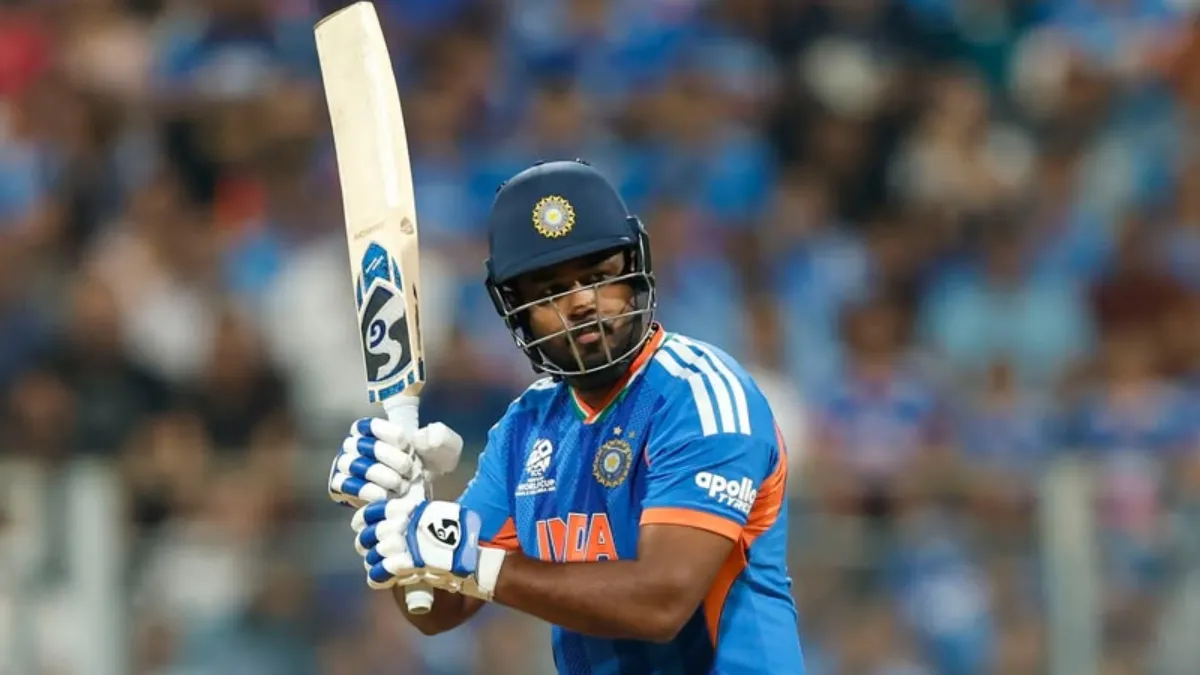
The T20 World Cup 2026 final turned into a historic night for Indian cricket as Sanju Samson delivered one of the most memorable performances ever seen on the biggest stage. Playing against New Zealand in the championship clash, Samson produced a stunning innings of 89 runs off just 46 balls, helping India post a massive total and etching his name into the record books.
The aggressive knock not only powered India to a dominant position in the final but also helped Sanju Samson break several long-standing records, including one previously held by Virat Kohli. With this performance, Samson created three major world records, making his innings one of the most talked-about moments of the T20 World Cup.
Cricket fans around the world witnessed an extraordinary display of attacking batting, fearless stroke play, and match-winning temperament from the talented Indian wicketkeeper-batsman.
Sanju Samson’s Remarkable Journey in T20 World Cup 2026
The story of Sanju Samson in this tournament is nothing short of inspirational. At the beginning of the competition, Samson was not even a regular member of the playing XI and was left out of the team combination.
However, when India struggled with their opening partnership and the team management searched for solutions, Samson was brought back into the lineup. From that moment, he transformed India’s campaign.
Once given the opportunity, Sanju Samson delivered consistent and impactful performances. He played crucial innings in the Super 8 stage, the semifinal, and finally the grand final, proving his value as a dependable match-winner.
By the time the tournament reached its climax, Samson had already established himself as one of India’s most dangerous batters in the competition.
Explosive 89 in the T20 World Cup Final
The final against New Zealand witnessed an extraordinary batting display from Sanju Samson. Opening the innings, he attacked the Kiwi bowlers right from the start, hitting powerful boundaries and towering sixes across the stadium.
His innings of 89 runs from 46 balls included several breathtaking shots that kept the scoreboard moving at an incredible pace. Samson dominated both pace and spin bowlers, playing innovative strokes and maintaining a high strike rate throughout the innings.
This knock turned out to be the highest individual score ever recorded in a T20 World Cup final, surpassing previous records held by some of the greatest players in the game.
Record 1: Most Sixes in a T20 World Cup 2026
One of the biggest highlights of the tournament was Samson’s incredible power-hitting. Sanju Samson smashed a total of 24 sixes in the T20 World Cup 2026, the highest by any player in the tournament.
This achievement also became the most sixes hit by an Indian player in any T20 tournament or bilateral series.
For comparison, Indian opener Abhishek Sharma had hit 22 sixes in the 2025 England series, which previously stood as a major benchmark.
New Zealand’s Finn Allen also impressed during the tournament with 20 sixes, but Samson remained ahead in the six-hitting race.
Most Sixes in T20 World Cup 2026
| Player | Sixes |
|---|---|
| Sanju Samson | 24 |
| Finn Allen | 20 |
| Others | Below 20 |
This remarkable power-hitting ability played a huge role in India’s attacking approach throughout the tournament.
Record 2: Third Player to Score 50+ in Both Semifinal and Final
Another historic milestone achieved by Sanju Samson is joining an elite list of players who scored half-centuries in both the semifinal and final of a T20 World Cup.
Only two players had achieved this rare feat before Samson.
Players with 50+ in T20 World Cup Semifinal and Final
| Player | Tournament |
|---|---|
| Shahid Afridi | 2009 T20 World Cup |
| Virat Kohli | 2014 T20 World Cup |
| Sanju Samson | 2026 T20 World Cup |
This achievement highlights Samson’s ability to perform under pressure and deliver when it matters the most.
Record 3: Highest Individual Score in a T20 World Cup Final
With his explosive innings of 89 runs, Sanju Samson now holds the record for the highest individual score in a T20 World Cup final.
He surpassed several legendary performances in the process.
Highest Scores in T20 World Cup Finals
| Runs | Player | Opponent |
|---|---|---|
| 89 | Sanju Samson | New Zealand |
| 85* | Marlon Samuels | England |
| 85 | Kane Williamson | Australia |
| 78 | Marlon Samuels | Sri Lanka |
| 77* | Mitchell Marsh | New Zealand |
| 77 | Virat Kohli | Sri Lanka |
| 76 | Virat Kohli | South Africa |
| 75 | Gautam Gambhir | Pakistan |
Breaking Virat Kohli’s record on such a big stage made the moment even more special for Samson.
India Posts Massive Total in the Final
Thanks to the powerful start provided by Sanju Samson, India managed to post a massive total against New Zealand in the final.
Batting first, Team India scored 255 runs for the loss of 5 wickets in 20 overs, one of the highest totals in a T20 World Cup final.
Several Indian batters contributed important runs to strengthen the total.
India’s Key Contributions in the Final
| Player | Runs | Balls |
|---|---|---|
| Sanju Samson | 89 | 46 |
| Abhishek Sharma | Important contribution | — |
| Ishan Kishan | Valuable support | — |
| Shivam Dube | 26 | 8 |
| Hardik Pandya | 18 | 13 |
Shivam Dube played an explosive cameo, smashing three boundaries and two sixes in just eight balls to score 26 runs.
Hardik Pandya also chipped in with a quick 18 runs from 13 balls, helping India push the total beyond the 250 mark.
Can New Zealand Chase the Massive Target?
With India setting a massive target of 256 runs, the pressure shifted onto the New Zealand batting lineup. Chasing such a huge total in a World Cup final is never easy, and the Kiwi team faced a challenging task.
The Indian bowlers now had the responsibility to defend the total and bring the trophy home.
However, regardless of the final result, the performance of Sanju Samson had already become the highlight of the night. His fearless batting and record-breaking innings ensured that the T20 World Cup 2026 final would be remembered for years to come.
A Historic Night for Sanju Samson
The T20 World Cup 2026 final marked a defining moment in the career of Sanju Samson. From being initially left out of the playing XI to becoming the star of the tournament’s biggest match, his journey reflected resilience, determination, and immense talent.
By smashing 89 runs in the final and setting multiple records, Sanju Samson proved that he belongs among the elite players of modern T20 cricket.
Cricket fans across the world will remember this innings not just as a match-winning performance, but as a historic moment that showcased the brilliance of one of India’s most exciting cricketers.