
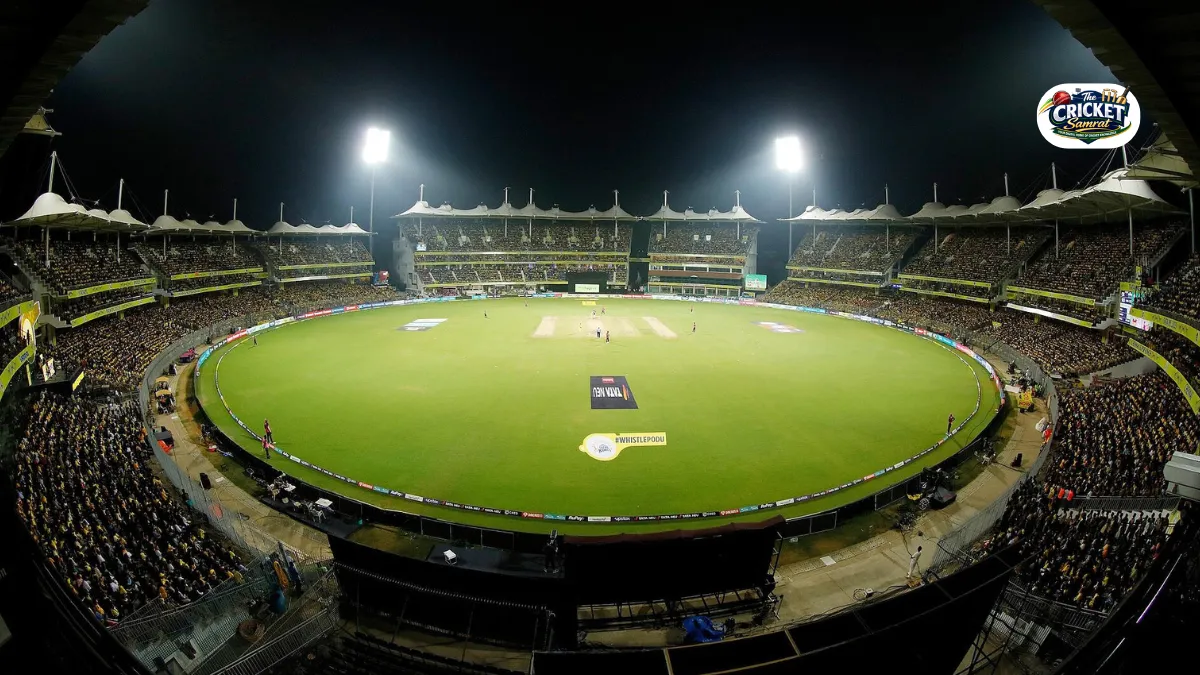
The MA Chidambaram Stadium Pitch Report is one of the most closely followed topics in world cricket. Whenever an international match, IPL fixture, or domestic game is scheduled in Chennai, fans, analysts, and players immediately turn their attention to this iconic venue. Popularly known as Chepauk, the MA Chidambaram Stadium is not just a cricket ground—it is a living chapter of cricket history, famous for its demanding pitch, knowledgeable crowd, and unforgettable moments.
Located in the heart of Chennai, Tamil Nadu, the stadium has been the spiritual home of cricket in the region for more than a century. From historic Test matches to modern-day T20 thrillers, the pitch at Chepauk has consistently shaped the outcome of games. Understanding the MA Chidambaram Stadium pitch report is essential for predicting match results, team combinations, and individual performances.
This in-depth article provides a complete and updated analysis of the MA Chidambaram Stadium Pitch Report, including pitch nature, batting and bowling behavior, format-wise performance, historical records, toss impact, weather influence, and team strategies.
MA Chidambaram Stadium: Basic Information
Before diving into the pitch behavior, it is important to understand the venue itself. The MA Chidambaram Stadium is one of the oldest and most respected cricket grounds in the world.
MA Chidambaram Stadium Overview Table
| Detail | Information |
|---|---|
| Stadium Name | MA Chidambaram Stadium |
| Also Known As | Chepauk, Madras Cricket Club Ground |
| Location | Chennai, Tamil Nadu, India |
| Named After | Former BCCI and TNCA President M.A. Chidambaram |
| Seating Capacity | Approx. 38,000 |
| Home Team | Tamil Nadu |
| Pitch Type | Grass (Red Soil Base) |
| Floodlights | Installed since 1996 World Cup |
| Ends | Anna Pavilion End, V. Pattabhiraman Gate End |
Chepauk has hosted cricket since the early 20th century and continues to be one of India’s most influential venues.
Historical Significance of MA Chidambaram Stadium
The MA Chidambaram Stadium is deeply rooted in cricket history. Presidency matches were played here as early as 1916, making it one of the earliest major cricket venues in India.
The first-ever Test match at this ground was played in the 1933–34 season between England, led by Douglas Jardine, and India, captained by C.K. Nayudu. Since then, Chepauk has been associated with landmark moments that shaped Indian and world cricket.
Some of the most memorable milestones include:
- India’s first Test victory (1951–52) against England by an innings and eight runs
- The first Ranji Trophy match, where A.G. Ram Singh claimed 11 wickets in a single day
- Sunil Gavaskar’s historic 30th Test century during the 1983–84 season
- The famous tied Test between India and Australia in 1986–87
- Narendra Hirwani’s magical debut, taking 16 wickets for 136 runs
However, Chepauk is not remembered only for records. It is also known for its unique cricket culture and one of the most respectful crowds in the world.
The Chepauk Crowd: A Unique Cricket Culture
One of the defining features of the MA Chidambaram Stadium is its audience. The crowd here is widely regarded as among the most knowledgeable and sporting in global cricket.
This reputation was firmly established in 1997 when Pakistan’s Saeed Anwar received a standing ovation after scoring a record-breaking 194 against India. It was reinforced again in 1999 when the Chennai crowd applauded Pakistan after their Test victory and even witnessed the visiting team take a lap of honour in appreciation.
This spirit of cricket adds a special atmosphere that players from around the world remember long after they leave Chennai.
MA Chidambaram Stadium Pitch Report: Overall Nature
The MA Chidambaram Stadium pitch report is best summarized as slow, dry, and spin-friendly. Unlike high-scoring venues where pace and bounce dominate, Chepauk demands technical skill, patience, and tactical awareness.
The pitch is traditionally prepared using red soil, which naturally aids spin bowling. As matches progress, the surface dries out, footmarks appear, and the ball begins to grip and turn more sharply.
Key characteristics of the pitch include:
- Low to medium bounce
- Significant assistance to spinners
- Slower pace as the game progresses
- Difficulty in chasing large totals
Batting Conditions at MA Chidambaram Stadium
MA Chidambaram Stadium Pitch Report for Batters
From a batting perspective, the MA Chidambaram Stadium pitch report advises discipline over aggression. Batting here is about timing, placement, and strike rotation rather than brute force.
Top-order batters generally enjoy the best conditions when the pitch is fresh. The ball comes onto the bat reasonably well in the early overs, allowing players who apply themselves to score runs.
However, once the pitch starts slowing down, stroke-making becomes challenging. Spinners begin to dominate, and mistimed shots often lead to dismissals.
Batting Behavior by Match Phase
| Match Phase | Batting Difficulty |
|---|---|
| Early Overs | Moderate, good for set batters |
| Middle Overs | Difficult due to spin |
| Late Overs | Very challenging, low bounce |
Sweep shots, soft hands, and intelligent shot selection are essential for success at Chepauk.
Fast Bowling at MA Chidambaram Stadium
Fast bowlers rarely dominate matches at Chepauk purely through pace. The MA Chidambaram Stadium pitch report shows that seamers must rely on variation rather than speed.
Effective strategies for pacers include:
- Slower balls
- Cutters and cross-seam deliveries
- Bowling into the pitch
- Maintaining tight lines
New-ball bowlers may get slight movement early, especially during morning or day matches, but overall, fast bowlers must be patient and tactically sharp.
Spin Bowling: The Soul of Chepauk
Spin bowling defines the MA Chidambaram Stadium pitch report. This is a venue where spinners often control the tempo of the game across all formats.
Finger spinners, particularly off-spinners, have traditionally enjoyed great success here due to the red soil surface. As the pitch deteriorates, the ball grips more, producing sharp turn and unpredictable bounce.
Leg-spinners can also be effective, especially those who vary pace and flight. Even part-time spinners frequently play crucial roles in limited-overs matches at this ground.
MA Chidambaram Stadium Pitch Report by Format
Test Matches at Chepauk
In Test cricket, the MA Chidambaram Stadium pitch report heavily favors teams batting first.
- Day 1: Best time to bat
- Day 2: Pitch begins to slow
- Day 3 onward: Strong spin assistance
Many Test matches at Chepauk finish within four days due to rapid pitch deterioration.
ODI Matches at Chepauk
ODI pitches at Chepauk are prepared to last the full 100 overs but still retain spin-friendly characteristics.
| Aspect | ODI Behavior |
|---|---|
| Preferred Innings | Batting first |
| Competitive Score | 270–290 |
| Key Bowlers | Spinners |
Chasing becomes difficult as the pitch slows down in the second innings.
T20 Matches at Chepauk
T20 cricket at Chepauk is tactical rather than explosive.
| Factor | T20 Impact |
|---|---|
| Average First-Innings Score | 160–180 |
| Boundary Hitting | Difficult |
| Match Winners | Spinners, variation bowlers |
Smart batting and bowling discipline often decide T20 results here.
Toss Impact at MA Chidambaram Stadium
The toss plays a crucial role according to the MA Chidambaram Stadium pitch report.
- Tests: Teams almost always choose to bat first
- ODIs: Bat first is usually preferred
- T20s: Decision depends on dew and pitch dryness
Understanding weather and match timing is essential when making toss decisions at Chepauk.
Average Scores at MA Chidambaram Stadium
Format-Wise Average Scores Table
| Format | Strong First-Innings Score |
|---|---|
| Test | 350–400 |
| ODI | 270–290 |
| T20 | 160–180 |
These figures highlight why defending totals is often easier than chasing at this venue.
Weather Conditions and Their Impact
Chennai’s hot and humid climate plays a major role in the MA Chidambaram Stadium pitch report.
- High temperatures dry out the pitch quickly
- Humidity helps the ball grip for spinners
- Evening dew can slightly assist chasing teams
Day matches are especially demanding for players, accelerating pitch wear and tear.
Team Strategies for Success at Chepauk
Teams that succeed at MA Chidambaram Stadium usually follow clear strategies:
- Select multiple quality spinners
- Bat first whenever possible
- Focus on partnerships, not power-hitting
- Use bowling variations intelligently
Adaptability is the biggest key to winning matches at Chepauk.
Also read: Arun jaitley stadium pitch report: History, Records, Conditions, and Complete Format-Wise Analysis
Conclusion: on MA Chidambaram Stadium Pitch Report
The MA Chidambaram Stadium Pitch Report confirms why Chepauk remains one of the most challenging and respected cricket venues in the world. It rewards skill, patience, and tactical intelligence while punishing recklessness.
From historic Test battles to modern T20 clashes, the pitch continues to influence outcomes more than almost any other ground. For fans, fantasy players, and analysts, understanding the MA Chidambaram Stadium pitch report offers a clear advantage when predicting performances and match results.
Chepauk is not just a stadium—it is a true test of cricketing excellence.