
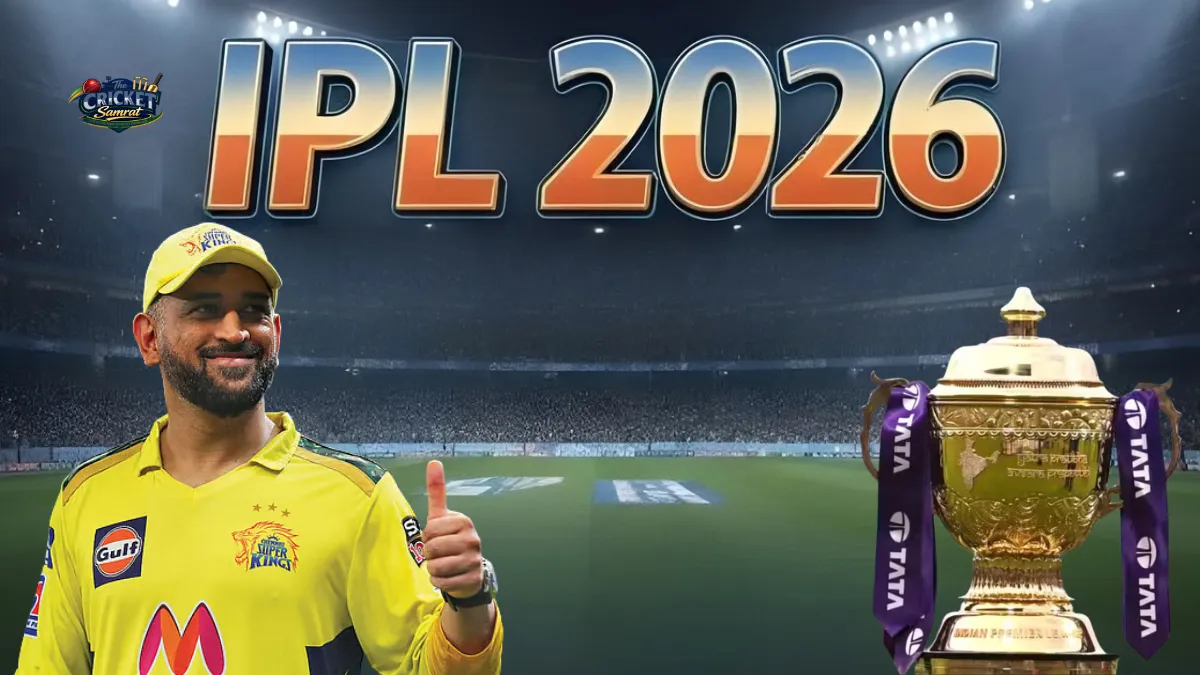
The excitement around IPL 2026 has already begun to build, and one of the biggest talking points ahead of the new season is the future of MS Dhoni with Chennai Super Kings (CSK). According to reports, the legendary former India captain will once again don the yellow jersey. However, whether he plays every match this season will depend on workload management and his physical condition during the tournament.
Dhoni, who is set to turn 45 in July this year, has confirmed his availability for IPL 2026. While that news has delighted fans across India and globally, team management is carefully assessing how best to use the veteran wicketkeeper-batter throughout the season.
CSK Confirms Dhoni’s Availability for IPL 2026
As per a report citing a senior CSK source, Dhoni has made it clear that he will be available for IPL 2026. The franchise has acknowledged his commitment but stopped short of confirming whether he will feature in every single fixture.
A top team insider told a news agency that Dhoni is expected to arrive in Chennai soon and has clearly communicated his readiness for the upcoming season. However, the source also admitted that it is too early to confirm if he will participate in all matches, as the final call will depend on how his body responds during the tournament.
Given Dhoni’s age and recent injury concerns, CSK’s management is likely to adopt a strategic approach to ensure he remains fit for crucial games.
Sanju Samson’s Inclusion Strengthens Wicketkeeping Options
One of the major developments ahead of IPL 2026 is the inclusion of Sanju Samson in the CSK squad. His arrival provides the franchise with a strong wicketkeeping alternative, allowing the team to rotate players when required.
If Dhoni is rested for certain matches, Samson is expected to take over wicketkeeping duties. This move gives CSK much-needed flexibility, especially considering the physical demands of keeping wickets in a fast-paced T20 league.
Apart from Samson, CSK also have young wicketkeeping options like Urvil Patel and Karthik Sharma in their squad. Notably, Karthik Sharma was bought for a significant ₹14.20 crore and is being groomed as a finisher alongside Shivam Dube. The depth in wicketkeeping and finishing roles could prove crucial in IPL 2026.
Injury Concerns and Workload Management
In recent seasons, Dhoni has been dealing with knee and back issues. Although he underwent treatment and managed his fitness effectively last year, keeping wickets in every match at the age of 45 is a significant physical challenge.
To manage his workload, CSK may once again use him strategically-possibly limiting his batting to the final overs or utilising him as an “Impact Player” when necessary. The Impact Player rule, which proved effective in previous seasons, allows teams to bring in a specialist during crucial moments of the match.
This tactical flexibility could enable Dhoni to focus on finishing games without bearing the full physical strain of wicketkeeping in every encounter. His experience and match awareness remain invaluable assets, even if he plays a reduced on-field role.
Expected to Feature in All Chepauk Home Matches
Dhoni shares a deep emotional connection with Chennai’s iconic home ground, the MA Chidambaram Stadium, popularly known as Chepauk. The stadium has witnessed countless memorable moments under his leadership.
Sources suggest that Dhoni will likely try to feature in all home matches at Chepauk during IPL 2026. The bond between Dhoni and CSK fans remains as strong as ever. Every time he steps onto the field, chants of “Dhoni, Dhoni” echo across the stadium.
For supporters, his presence at Chepauk is more than just about cricket — it is about loyalty, legacy, and leadership.
Retirement Speculation in the Previous Season
During the last IPL season, speculation about Dhoni’s retirement gained momentum when his parents were seen attending a match in the stands — a rare occurrence. His father Pan Singh and mother Devaki Devi were present along with his wife Sakshi and daughter Ziva.
The sight of his family watching from the stadium led many to believe it might be his farewell season. However, CSK head coach Stephen Fleming clarified after the match that he had no information regarding Dhoni’s retirement plans.
Interestingly, it was reported that Dhoni’s parents had not attended one of his matches in nearly two decades, adding emotional weight to the occasion.
Dhoni’s Remarkable International Legacy
Dhoni made his international debut in 2004 and went on to become one of India’s most successful captains. He led India to victory in the inaugural ICC T20 World Cup in 2007 and later guided the team to a historic ODI World Cup triumph in 2011.
Despite his enormous success, his parents rarely travelled to watch him play in international matches. That detail once again highlights the emotional significance of their recent stadium appearance.
MS Dhoni’s IPL Career in Numbers
Dhoni’s record in the Indian Premier League speaks for itself. He remains one of the most decorated and consistent performers in the tournament’s history.
IPL Career Statistics – MS Dhoni
| Category | Record |
|---|---|
| Matches Played | 278 |
| Runs Scored | 5,439 |
| Batting Average | 38.30 |
| Half-Centuries | 24 |
| Catches (Wicketkeeping) | 158 |
| Stumpings | 47 |
| IPL Titles with CSK | 5 |
Dhoni has led CSK to five IPL titles, making them one of the most successful franchises in the league.
Only Captain with 100 IPL Wins
Dhoni holds another remarkable record in IPL history. He is the only captain to have won 100 matches in the league.
Also read: IPL 2026 IPL auction: Three Players CSK Could Have Considered Instead of Sarfaraz Khan
Captaincy Record in IPL
| Captain | Matches as Captain | Wins |
|---|---|---|
| MS Dhoni | 226 | 133 |
| Rohit Sharma | 158 | — |
Dhoni captained CSK in 226 matches — the most by any player in IPL history. Under his leadership, CSK secured 133 wins and suffered 91 losses.
His last season as captain came in 2023, when he guided CSK to yet another IPL title before handing over leadership responsibilities.
Also read: RCB vs PBKS: A Detailed Chronicle of One of the IPL’s Most Intriguing Rivalries
What IPL 2026 Means for Dhoni and CSK
As IPL 2026 approaches, Dhoni’s role may evolve, but his importance to CSK remains unchanged. Whether as a finisher, wicketkeeper, mentor, or tactical mastermind, his presence continues to inspire teammates and intimidate opponents.
While it remains uncertain how many matches he will play, one thing is clear — as long as MS Dhoni walks onto the field in yellow, the IPL will continue to carry a touch of magic.
And for CSK supporters, that magic is priceless.