
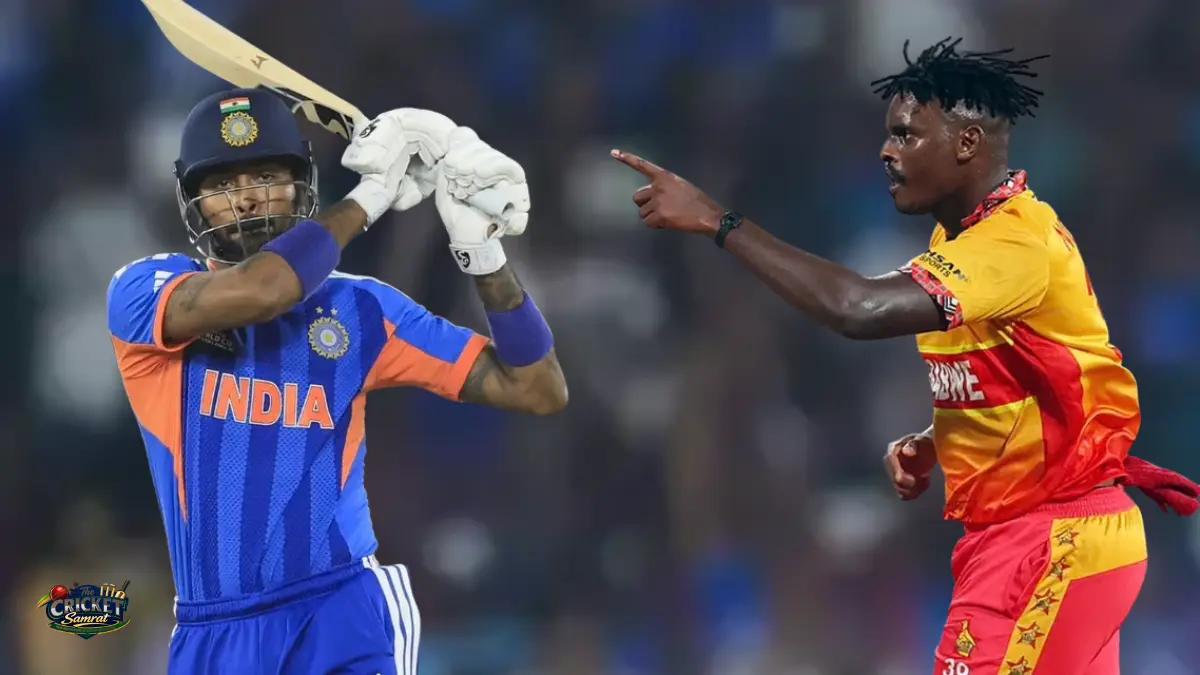
The high-stakes India vs Zimbabwe encounter in the Super 8 stage of the ICC Men’s T20 World Cup 2026 delivered exactly what fans expect from a knockout-style contest — explosive batting, individual brilliance, and dramatic shifts in momentum. Played under the lights at Chennai’s iconic M. A. Chidambaram Stadium, the match saw India produce one of their most commanding batting displays of the tournament to secure a 72-run victory.
With this emphatic win, India kept their semi-final hopes alive, while Zimbabwe’s campaign came to an end after suffering their second consecutive defeat in the Super 8 round. The result now sets up a decisive showdown between India and the West Indies on March 1, a fixture that could determine the final semi-final lineup.
India vs Zimbabwe: Match Summary
| Match | India vs Zimbabwe |
|---|---|
| Tournament | ICC Men’s T20 World Cup 2026 |
| Stage | Super 8 |
| Venue | M. A. Chidambaram Stadium, Chennai |
| Result | India won by 72 runs |
| India Score | 256/4 (20 overs) |
| Zimbabwe Score | 184/6 (20 overs) |
| Player of the Match | Hardik Pandya |
India posted a massive 256 for 4 in their allotted 20 overs. Zimbabwe, despite a valiant effort from Brian Bennett, managed 184 for 6.
Toss and Team Strategy
Zimbabwe captain Sikandar Raza won the toss and chose to field first. Given Chennai’s history of assisting spinners later in the innings, the decision appeared tactical. However, India’s aggressive start quickly put that strategy under pressure.
Both teams entered the match under immense pressure. India had suffered a defeat to South Africa in their opening Super 8 fixture, while Zimbabwe had been comprehensively beaten by the West Indies. With qualification scenarios tightening, victory was non-negotiable.
Playing XI – India vs Zimbabwe
India Playing XI
| Player |
|---|
| Abhishek Sharma |
| Sanju Samson |
| Ishan Kishan |
| Tilak Varma |
| Suryakumar Yadav (C) |
| Hardik Pandya |
| Shivam Dube |
| Axar Patel |
| Arshdeep Singh |
| Jasprit Bumrah |
| Varun Chakaravarthy |
Zimbabwe Playing XI
| Player |
|---|
| Brian Bennett |
| Tadiwanashe Marumani |
| Ryan Burl |
| Dion Myers |
| Sikandar Raza (C) |
| Tashinga Musekiwa |
| Tony Munyonga |
| Brad Evans |
| Tinotenda Maposa |
| Richard Ngarava |
| Blessing Muzarabani |
India made key adjustments before this crucial India vs Zimbabwe fixture. Sanju Samson returned to the XI, while Axar Patel replaced Washington Sundar, strengthening the spin department.
India’s Explosive Batting Display
India’s innings began with immediate intent. Sanju Samson announced himself by launching a six off just the second ball he faced. Although Samson departed for 24 off 15 balls, the momentum had been established.
Abhishek Sharma’s Return to Form
Young opener Abhishek Sharma delivered a confidence-boosting knock, smashing 55 off just 30 balls. His innings included four boundaries and four sixes. He reached his half-century in just 26 deliveries, giving India the platform for a record-breaking total.
His aggressive approach neutralised Zimbabwe’s new-ball bowlers and ensured India crossed 120 inside 11 overs.
Middle-Order Acceleration
Ishan Kishan contributed 38 from 24 balls, while captain Suryakumar Yadav added a brisk 33 off 13 deliveries, peppering the boundary ropes with three fours and two sixes.
However, the true game-changer came in the final overs.
Hardik Pandya’s Power Surge
Hardik Pandya played a breathtaking innings, hammering a half-century off just 23 balls. His knock included two fours and four towering sixes. Alongside Tilak Varma’s unbeaten 44 from 16 balls, Pandya ensured India crossed the 200-run mark in just 16.4 overs.
India’s Final Batting Scorecard
| Batsman | Runs | Balls | 4s | 6s |
|---|---|---|---|---|
| Abhishek Sharma | 55 | 30 | 4 | 4 |
| Sanju Samson | 24 | 15 | 1 | 2 |
| Ishan Kishan | 38 | 24 | 4 | 1 |
| Suryakumar Yadav | 33 | 13 | 3 | 2 |
| Hardik Pandya | 52 | 23 | 2 | 4 |
| Tilak Varma* | 44 | 16 | 3 | 4 |
Total: 256/4 in 20 overs
The total of 256 was among the highest in the tournament’s history and left Zimbabwe chasing a daunting 257.
Zimbabwe’s Response: Bennett’s Lone Battle
Zimbabwe’s chase began steadily. Openers Brian Bennett and Tadiwanashe Marumani added 44 runs for the first wicket. Marumani scored 20 off 20 before being dismissed by Axar Patel.
Dion Myers struggled to accelerate and fell for 6, caught off Varun Chakaravarthy.
Brian Bennett’s Fighting 97*
Brian Bennett produced one of the finest individual performances of the India vs Zimbabwe contest. He remained unbeaten on 97 from 59 balls, striking eight fours and six sixes. His powerful strokeplay kept Zimbabwe’s hopes alive briefly.
At the 15-over mark, Zimbabwe stood at 131/2, but the required rate had climbed beyond reach.
Arshdeep’s Double Strike
Arshdeep Singh changed the game with two wickets in a single over. He dismissed captain Sikandar Raza for 31 and Ryan Burl for a duck, pushing Zimbabwe to 144/4.
Tony Munyonga (11) and Tashinga Musekiwa (7) fell soon after, sealing Zimbabwe’s fate.
Zimbabwe’s Final Batting Scorecard
| Batsman | Runs | Balls | 4s | 6s |
|---|---|---|---|---|
| Brian Bennett* | 97 | 59 | 8 | 6 |
| Tadiwanashe Marumani | 20 | 20 | 0 | 2 |
| Dion Myers | 6 | 9 | 0 | 0 |
| Sikandar Raza | 31 | 21 | 2 | 2 |
| Tony Munyonga | 11 | 6 | 2 | 0 |
| Tashinga Musekiwa | 7 | 4 | 0 | 1 |
Total: 184/6 in 20 overs
Key Turning Points in India vs Zimbabwe
- Abhishek Sharma’s aggressive powerplay assault.
- Hardik Pandya’s late-overs acceleration.
- Arshdeep Singh’s double wicket over.
- Zimbabwe’s inability to capitalise during middle overs.
What This Win Means for India
The India vs Zimbabwe result significantly improved India’s net run rate and kept their semi-final hopes alive. With one Super 8 match remaining against the West Indies, qualification now depends on that decisive encounter.
India must not only win but potentially monitor net run rate scenarios, depending on other group results.
Zimbabwe’s Tournament Ends
For Zimbabwe, the defeat marked the end of a spirited campaign. While their Super 8 journey concluded, individual performances — particularly Brian Bennett’s consistency — offered positives for the future.
Statistical Highlights – India vs Zimbabwe
| Category | Record |
|---|---|
| Highest Score | 256/4 (India) |
| Best Individual Score | Brian Bennett – 97* |
| Fastest Fifty | Hardik Pandya (23 balls) |
| Most Wickets | Arshdeep Singh – 2 |
Conclusion
TheIndia vs Zimbabwe clash at Chennai will be remembered as a showcase of fearless T20 batting. India delivered when it mattered most, posting a mammoth total and defending it comfortably. Zimbabwe fought hard, especially through Brian Bennett’s brilliant unbeaten 97, but the target proved insurmountable.
With the semi-finals now within reach, India’s journey in the ICC Men’s T20 World Cup 2026 continues with renewed belief. The upcoming clash against the West Indies promises to be one of the defining matches of the tournament.
For fans across the UK, US, and around the cricketing world, this India vs Zimbabwe encounter reinforced why T20 cricket remains one of the most thrilling formats in global sport.