
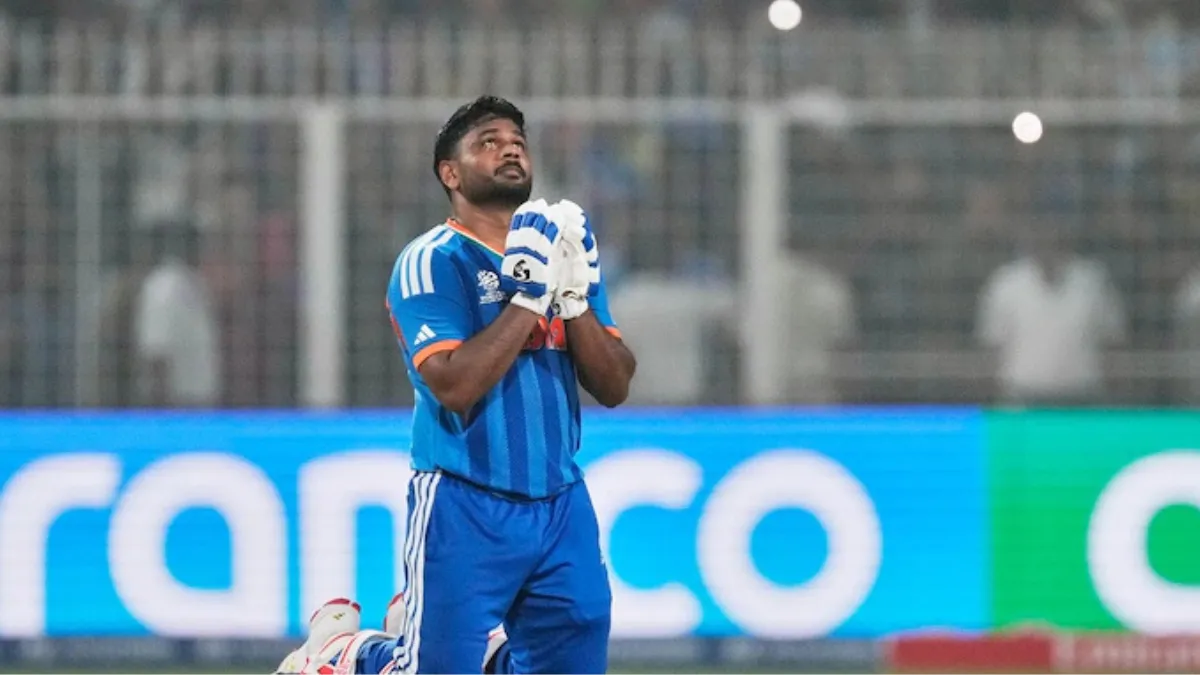
The high-voltage India vs West Indies Super 8 clash at the ICC T20 World Cup 2026 delivered everything cricket fans hoped for — drama, big hits, momentum swings, and a match-winning masterclass from Sanju Samson. In a virtual knockout encounter at the iconic Eden Gardens, India chased down a challenging 196-run target to book their place in the semi-finals in emphatic fashion.
With both teams eyeing the final semi-final berth, the stakes could not have been higher. South Africa, England, and New Zealand had already secured qualification. That left one spot up for grabs — and it came down to this electrifying India vs West Indies showdown in Kolkata.
By the end of the night, it was India celebrating, powered by a breathtaking 97 from Sanju Samson and a collective bowling effort that kept the Caribbean power-hitters in check just enough to set up a thrilling chase.
𝗧𝗵𝗲 𝘁𝗶𝘁𝗹𝗲 𝗱𝗲𝗳𝗲𝗻𝗰𝗲 𝗰𝗼𝗻𝘁𝗶𝗻𝘂𝗲𝘀 🇮🇳#TeamIndia are semi-finals bound in the #T20WorldCup 👏
— BCCI (@BCCI) March 1, 2026
Updates ▶️ https://t.co/ur4pr8Bi3K#MenInBlue | #INDvWI pic.twitter.com/45sjJydel9
Match Overview: India vs West Indies Super 8 Decider
| Match | India vs West Indies – Super 8, T20 World Cup 2026 |
|---|---|
| Venue | Eden Gardens, Kolkata |
| Toss | India won and chose to bowl |
| West Indies | 195/4 (20 overs) |
| India | 196/5 (19.4 overs) |
| Result | India won by 5 wickets |
| Player of the Match | Sanju Samson |
India seal the #T20WorldCup 2026 semi-final spot with an emphatic victory over West Indies 👏
— ICC (@ICC) March 1, 2026
📝: https://t.co/NqHEWKEn3o pic.twitter.com/65lPlOmjkm
The match began at 7:00 PM local time, with India captain Suryakumar Yadav winning the toss and opting to field first — a decision influenced by the expectation of dew and the traditionally good chasing conditions at Eden Gardens.
West Indies Post 195/4 After Strong Finish
Batting first, West Indies started cautiously but steadily. Openers Shai Hope and Roston Chase ensured a stable platform, rotating strike effectively and punishing loose deliveries.
West Indies Powerplay and Middle Overs
At the end of:
- 2 overs: 13/0
- 4 overs: 28/0
- 6 overs: 45/0
- 8 overs: 66/0
India struggled initially to find breakthroughs. Arshdeep Singh delivered a disciplined opening over conceding just three runs, but the West Indies batters gradually increased the tempo.
The first breakthrough came when Varun Chakravarthy dismissed Shai Hope for 32 off 33 balls. However, the momentum shifted dramatically in the middle overs thanks to Shimron Hetmyer and Roston Chase.
Innings Break!#TeamIndia have been set a target of 196 🎯
— BCCI (@BCCI) March 1, 2026
Chase on the other side 👉
Scorecard ▶️ https://t.co/ur4pr8Bi3K#T20WorldCup | #MenInBlue | #INDvWI pic.twitter.com/YEhcmj2Anq
Bumrah’s Crucial Double Strike
Jasprit Bumrah turned the game momentarily in India’s favour with a brilliant spell. He removed Hetmyer, who had scored 27 off just 12 balls, and followed it up by dismissing Chase for a well-made 40 from 25 deliveries.
| West Indies Top Scorers | Runs | Balls |
|---|---|---|
| Roston Chase | 40 | 25 |
| Shimron Hetmyer | 27 | 12 |
| Jason Holder | 42* | 23 |
| Rovman Powell | 38* | 20 |
The turning point of the innings came during the final five overs. Jason Holder and Rovman Powell stitched together a stunning 76-run partnership off just 35 balls for the fifth wicket. Their late assault propelled West Indies to a competitive 195/4.
Hardik Pandya picked up one wicket but conceded 40 runs in his four overs, while Bumrah finished with two crucial scalps.
India’s Chase: Early Jitters, Then Samson Storm
Chasing 196 in a knockout-style contest is never easy, but India’s batting line-up inspired confidence. The team sheet reflected depth and firepower:
India Playing XI
Suryakumar Yadav (Captain), Sanju Samson (Wicketkeeper), Abhishek Sharma, Ishan Kishan, Hardik Pandya, Tilak Varma, Shivam Dube, Axar Patel, Arshdeep Singh, Varun Chakravarthy, Jasprit Bumrah.
Early Overs: Mixed Fortunes
Abhishek Sharma opened with a boundary but was dismissed for 10 in a crucial encounter. He had earlier received medical attention after being struck on the helmet but passed a concussion test and continued.
India’s score after:
- 3 overs: 29/1
- 8 overs: 78/2
- 10 overs: 97/2
Sanju Samson, however, looked in complete control from the start.
Sanju Samson’s Explosive 97 Changes the Game
The India vs West Indies contest will be remembered for Sanju Samson’s breathtaking innings. He brought up his half-century in just 26 balls, smashing six fours and three sixes.
At one stage, Samson was striking at nearly 200, dismantling both pace and spin with equal authority. His ability to pick gaps and clear the ropes shifted pressure squarely onto the West Indies bowlers.
| Sanju Samson Innings | 97 Runs |
|---|---|
| Balls Faced | 49 |
| Fours | 9 |
| Sixes | 6 |
| Strike Rate | 198+ |
He narrowly missed a century, falling for 97 while attempting to finish the match in style. Though disappointed at missing the milestone, his knock had already put India on the brink of victory.
Key Moments in India’s Chase
- Tilak Varma scored 27 off 15 before being dismissed by Jason Holder.
- Captain Suryakumar Yadav managed 18 off 16 before falling to Shamar Joseph.
- Hardik Pandya contributed 17 off 14 before getting out at 183/5.
After 16 overs, India stood at 160/4, needing 36 runs from 24 balls — a manageable equation thanks to Samson’s earlier fireworks.
India eventually crossed the finish line with two balls to spare, sealing a famous victory in this crucial India vs West Indies encounter.
T20 World Cup Head-to-Head: India vs West Indies
Historically, West Indies have enjoyed the upper hand in T20 World Cup meetings.
| Year | Result |
|---|---|
| 2009 | West Indies won by 7 wickets |
| 2010 | West Indies won by 14 runs |
| 2014 | India won by 7 wickets |
| 2016 | West Indies won by 7 wickets |
The 2016 semi-final defeat at Wankhede Stadium still lingered in Indian fans’ memories. This win in Kolkata felt like redemption — a chance to settle a 10-year-old score.
Eden Gardens: A Fortress for India
India’s record against West Indies at Eden Gardens remained impeccable. Before this game, India had won all four previous matches against the Caribbean side at this venue. With this win, the dominance continued.
The pitch, made of black soil, offered true bounce and later assisted spinners — exactly as predicted by the team management ahead of the match.
Weather and Conditions
Despite earlier concerns, there was virtually no rain threat in Kolkata. Fans enjoyed a full, uninterrupted contest under clear skies. Dew played a minor role in the second innings but not enough to significantly tilt conditions.
Tactical Insights: Bowlers Made the Difference
While both teams boasted powerful batting units, the difference ultimately lay in the bowling departments.
- Bumrah’s disciplined death overs prevented West Indies from crossing 210.
- Varun Chakravarthy’s breakthrough ended a threatening opening stand.
- India managed the chase smartly despite losing wickets at intervals.
West Indies strengthened their spin attack by including Akeal Hosein in place of Brandon King, but Samson’s fearless approach neutralised their plans.
What This Means for the Semi-Finals
With this win in the India vs West Indies Super 8 clash, India confirmed their semi-final berth. West Indies, despite a strong campaign, were knocked out of the tournament.
If West Indies had won, they would have faced England in the semi-finals. Instead, India now moves forward with momentum and confidence.
The team will take heart from the performance of their middle order, especially Samson’s match-winning knock. With big matches ahead, this victory could prove to be a defining moment in their campaign.
Final Scorecard Summary
West Indies – 195/4 (20 Overs)
| Batter | Runs |
|---|---|
| Shai Hope | 32 |
| Roston Chase | 40 |
| Shimron Hetmyer | 27 |
| Jason Holder | 42* |
| Rovman Powell | 38* |
India – 196/5 (19.4 Overs)
| Batter | Runs |
|---|---|
| Sanju Samson | 97 |
| Tilak Varma | 27 |
| Hardik Pandya | 17 |
| Suryakumar Yadav | 18 |
Also read: Eden Gardens Hosts High-Stakes India vs West Indies Super 8 Clash
Conclusion: A Night to Remember in India vs West Indies Rivalry
The India vs West Indies clash at Eden Gardens lived up to its billing as a knockout thriller. It had historical context, semi-final stakes, and individual brilliance — particularly from Sanju Samson, whose 97-run knock will be remembered as one of the finest under-pressure innings in T20 World Cup history.
India not only avenged their 2016 heartbreak but also demonstrated composure in a high-pressure chase. As the tournament moves toward its climax, this performance sends a strong message to the remaining contenders.