
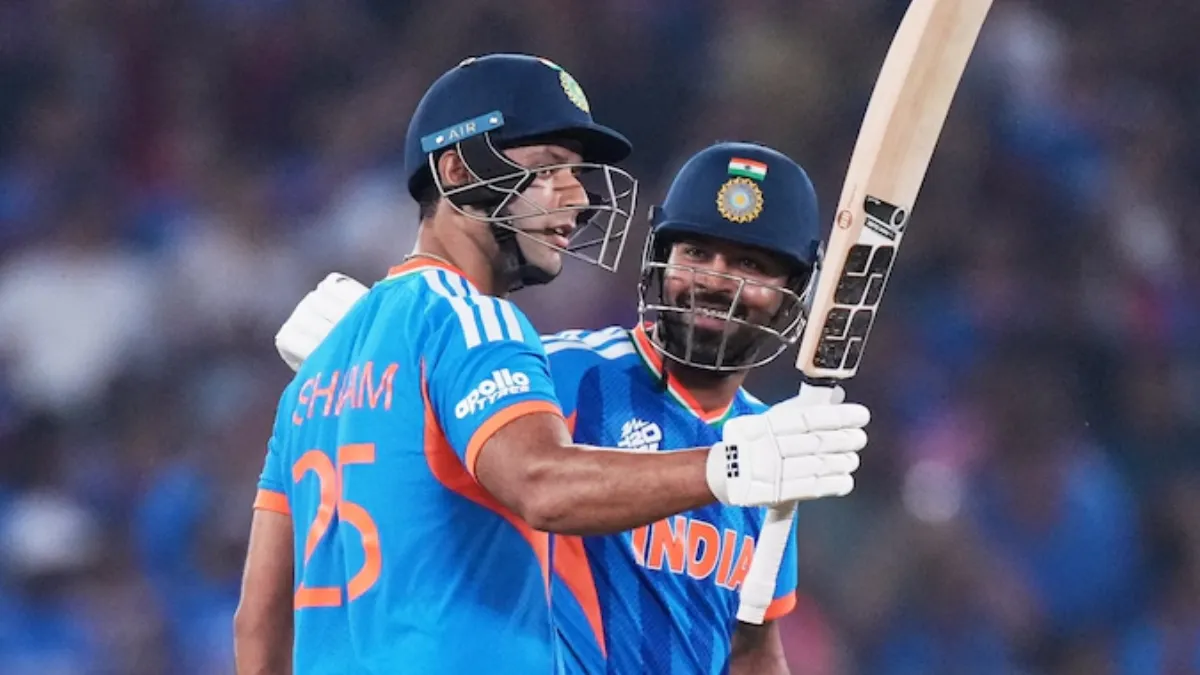
India vs Netherlands delivered an electrifying contest in Match 36 of the ICC Men’s T20 World Cup 2026, as India registered a commanding victory at the iconic Narendra Modi Stadium in Ahmedabad. Powered by a sensational all-round performance from Shivam Dube, India posted an imposing total of 193/6 and successfully defended it despite a spirited response from the Dutch side.
With this win, India maintained their unbeaten run in the group stage, while the Netherlands fought hard but ultimately fell short under pressure in the second innings.
India vs Netherlands: Match Summary
| Match | India vs Netherlands – T20 World Cup 2026 |
|---|---|
| Venue | Narendra Modi Stadium, Ahmedabad |
| Match Number | 36 |
| India Total | 193/6 (20 overs) |
| Netherlands Target | 194 runs |
| Netherlands Score (14 overs) | 112/5 |
| Result | India won |
| Player of the Match (Unofficial Highlight) | Shivam Dube |
Toss and Pitch Report: Batting-Friendly Conditions in Ahmedabad
India captain Suryakumar Yadav won the toss and opted to bat first, taking advantage of the batting-friendly conditions under lights.
The surface at the Narendra Modi Stadium has traditionally supported high-scoring games, particularly in night matches. In previous fixtures at this venue, teams have frequently crossed the 170-run mark. While early swing can assist pacers during the evening, the pitch largely favors aggressive stroke play.
Spinners were not expected to extract significant turn, though bowlers relying on variation had a chance to make an impact. Dew was anticipated later in the evening, potentially troubling the side bowling second.
Weather Conditions in Ahmedabad
- Temperature: 30–32°C during the day
- Clear skies
- No rain forecast
- Dew expected in the second innings
The match proceeded without interruption, offering ideal conditions for a thrilling contest.
First Innings: India Post 193/6 in 20 Overs
India’s innings began on a shaky note in the India vs Netherlands clash.
Early Blow: Abhishek Sharma Departs for Another Duck
Abhishek Sharma was dismissed for zero once again, bowled by Aryan Dutt after facing just three deliveries. India lost their first wicket without scoring, putting early pressure on the batting unit.
Ishan Kishan’s Quick Cameo Ends Early
Ishan Kishan looked aggressive, smashing 18 runs off 7 balls with two boundaries and a six. However, he was bowled by Aryan Dutt, leaving India at 39/2.
Tilak Varma and Suryakumar Stabilize
Tilak Varma (31 off 27 balls) and captain Suryakumar Yadav (34 off 28 balls) built a crucial partnership to steady the innings.
India reached:
- 35/1 in 4 overs
- 60/2 in 8 overs
- 100/3 in 12.4 overs
However, both batters fell shortly after crossing promising milestones.
Shivam Dube Takes Control
The turning point of the India vs Netherlands encounter came when Shivam Dube walked in.
Explosive Half-Century
Dube hammered a breathtaking 66 off just 31 balls, smashing:
- 4 fours
- 6 sixes
He brought up his half-century in just 25 deliveries, accelerating India’s scoring rate dramatically in the death overs.
At the 17-over mark, India had reached 150 runs, and Dube ensured the momentum never dipped.
Hardik Pandya’s Support
Hardik Pandya contributed 30 runs from 21 balls, including three massive sixes. His partnership with Dube added crucial late runs.
Late Overs Boost
Rinku Singh remained unbeaten on 6 off 3 balls, helping India finish at 193/6.
Top Indian Batting Performances
| Player | Runs | Balls | Fours | Sixes |
|---|---|---|---|---|
| Shivam Dube | 66 | 31 | 4 | 6 |
| Suryakumar Yadav | 34 | 28 | 2 | 1 |
| Tilak Varma | 31 | 27 | 3 | 1 |
| Hardik Pandya | 30 | 21 | 0 | 3 |
| Ishan Kishan | 18 | 7 | 2 | 1 |
For the Netherlands, Logan van Beek was the standout bowler, claiming three wickets.
Second Innings: Netherlands’ Chase Begins Confidently
Chasing 194 in the India vs Netherlands contest, the Dutch openers Michael Levitt and Max O’Dowd started positively.
Strong Start
- 33/0 in 5 overs
- 35/1 after 6 overs
Max O’Dowd scored 20 off 18 balls before being bowled by Varun Chakaravarthy. Michael Levitt made 24 before falling to Hardik Pandya.
At 72/2 in 10 overs, the Netherlands were still in the hunt.
Middle Overs Collapse
India’s bowlers turned the tide with disciplined bowling.
Varun Chakaravarthy’s Double Strike
Varun dismissed Colin Ackermann (23) and Aryan Dutt in the same over, shifting momentum decisively.
Shivam Dube Strikes with the Ball
Adding to his batting brilliance, Dube dismissed:
- Bas de Leede (33 off 23 balls)
- Zach Lion-Cachet (26 off 16 balls)
The Netherlands slipped to 112/5 after 14 overs.
Bumrah Removes Dutch Captain
Scott Edwards scored 15 off 10 balls before being bowled by Jasprit Bumrah, leaving the Netherlands at 125/6.
India’s bowling attack maintained relentless pressure, preventing any comeback.
Netherlands Batting Highlights
| Player | Runs | Balls | Fours | Sixes |
|---|---|---|---|---|
| Bas de Leede | 33 | 23 | 3 | 1 |
| Colin Ackermann | 23 | 15 | 1 | 2 |
| Zach Lion-Cachet | 26 | 16 | 1 | 1 |
| Michael Levitt | 24 | 23 | 4 | 0 |
| Scott Edwards | 15 | 10 | 2 | 0 |
Despite individual contributions, the mounting required run rate proved too much.
Full Playing XIs
India Playing XI
| India |
|---|
| Abhishek Sharma |
| Ishan Kishan |
| Tilak Varma |
| Suryakumar Yadav (C) |
| Shivam Dube |
| Hardik Pandya |
| Rinku Singh |
| Washington Sundar |
| Varun Chakaravarthy |
| Arshdeep Singh |
| Jasprit Bumrah |
Netherlands Playing XI
| Netherlands |
|---|
| Michael Levitt |
| Max O’Dowd |
| Bas de Leede |
| Colin Ackermann |
| Scott Edwards (C) |
| Zach Lion-Cachet |
| Logan van Beek |
| Noah Croes |
| Aryan Dutt |
| Roelof van der Merwe |
| Kyle Klein |
Key Takeaways from India vs Netherlands
1. Shivam Dube’s All-Round Excellence
Dube was unquestionably the star of the India vs Netherlands clash. His explosive 66 and key wickets broke the back of the Dutch challenge.
2. India’s Depth in Batting
Even after early setbacks, India managed to approach the 200-run mark thanks to their strong middle order.
3. Spin Dominance
Varun Chakaravarthy’s variations and control in middle overs shifted momentum dramatically.
4. Dutch Resistance but Lack of Finish
The Netherlands showed promise but failed to maintain partnerships under pressure.
Group Stage Scenario
This India vs Netherlands fixture marked the final group match for both sides.
- India had already qualified for the Super 8 stage with three consecutive wins.
- The Netherlands entered the match with 2 points and were placed fourth in the standings.
India’s victory further strengthened their position heading into the next phase of the tournament.
Also read: ICC Men’s T20 World Cup: India vs Netherlands Clash Set for High-Stakes Finish in Ahmedabad
Conclusion: India March Ahead with Confidence
The India vs Netherlands encounter in the T20 World Cup 2026 showcased India’s firepower, composure, and depth. From early setbacks to a commanding finish, the team demonstrated why they remain one of the tournament favorites.
Shivam Dube’s explosive batting and impactful bowling defined the night in Ahmedabad, thrilling fans at the world’s largest cricket stadium.
With momentum firmly on their side, India now advance to the Super 8 stage brimming with confidence, while the Netherlands reflect on a spirited but ultimately unsuccessful campaign.
As the T20 World Cup 2026 intensifies, performances like this reinforce why the India vs Netherlands clash will be remembered as one of the standout games of the group stage.