
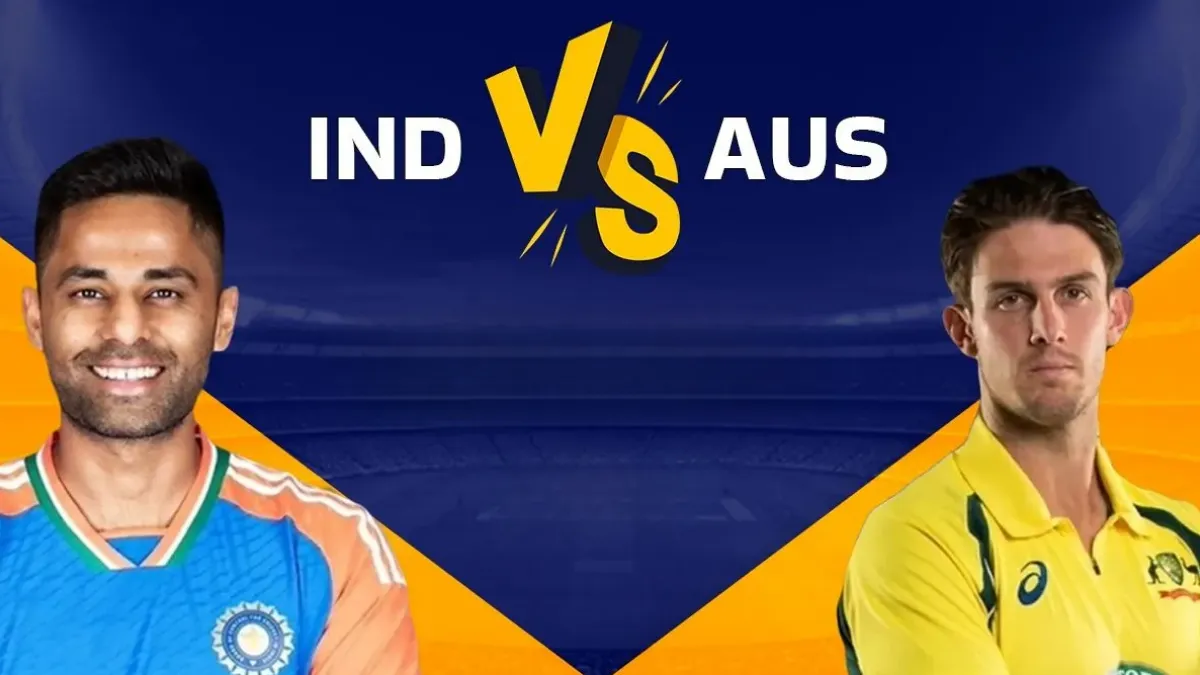
India National Cricket Team Vs Australian Mens Cricket Team Match Scorecard: The rivalry between the India National Cricket Team and the Australian Men’s Cricket Team stands as one of the most influential and closely followed contests in the history of international cricket. Few sporting rivalries carry the same intensity, emotional weight, and global attention as India versus Australia. Whether played in packed stadiums in India, under the harsh Australian sun, or on neutral grounds during ICC tournaments, encounters between these two teams have consistently delivered drama, skill, controversy, and unforgettable moments.
Over the decades, this rivalry has evolved far beyond a simple contest between bat and ball. It represents a deeper clash of cricketing ideologies-Australia’s traditionally aggressive, uncompromising approach versus India’s blend of technical excellence, resilience, and growing fearlessness. Each series, match, and individual performance adds a new chapter to a rivalry that has shaped modern cricket.
This detailed report presents a comprehensive breakdown of the India National Cricket Team Vs Australian Men’s Cricket Team Match Scorecard, covering both a high-intensity T20 encounter and a gripping Test match. Alongside the scorecards, this article explores the broader significance of these matches, key individual performances, tactical battles, and what they reveal about the current state of both teams.
A Rivalry Forged Through History and High Stakes
The roots of the India-Australia rivalry can be traced back to the early days of India’s Test cricket journey. Australia, long regarded as one of cricket’s most dominant nations, set benchmarks that emerging teams aspired to reach. For decades, India struggled on Australian soil, often overwhelmed by pace, bounce, and relentless pressure.
However, the relationship between these teams began to change dramatically from the late 1990s and early 2000s. India’s growing confidence, driven by players such as Sachin Tendulkar, Rahul Dravid, Sourav Ganguly, and Anil Kumble, challenged Australia’s dominance. Memorable moments such as India’s iconic victory at Eden Gardens in 2001 and Tendulkar’s masterclass in Sharjah helped redefine the balance between the two sides.
World Cup encounters further intensified the rivalry. Australia’s victory over India in the 2003 World Cup final was a crushing moment for Indian fans, while India’s historic triumph in the 1983 final laid the foundation for their cricketing rise. Each ICC event since has added another layer of anticipation whenever these two teams meet.
In recent years, the Border-Gavaskar Trophy has become one of the most fiercely contested Test series in the world. India’s consecutive series victories in Australia, including the remarkable comeback in 2020–21 despite multiple injuries, have permanently altered perceptions about India’s ability to dominate in hostile conditions.
Against this rich historical backdrop, the recent T20 and Test encounters further reinforced why this rivalry remains central to global cricket.
India National Cricket Team Vs Australian Mens Cricket Team Match Scorecard (T20 Match)
The T20 format often magnifies pressure, demanding quick decisions, explosive batting, and precise bowling. When India and Australia face each other in this format, the intensity is amplified, as both teams possess world-class power hitters and tactically astute bowlers.
In this closely fought T20 match, India emerged victorious by a narrow margin, showcasing depth, composure, and effective bowling under pressure.
India’s First Innings: 160/8 in 20 Overs
Batting first, the India National Cricket Team posted a competitive total of 160 runs for the loss of eight wickets in their allotted 20 overs. The innings was built around a measured yet aggressive approach, balancing early momentum with middle-order stability.
Young opener Yashasvi Jaiswal provided a brisk start, scoring 21 runs off just 15 balls. His innings included a boundary and two towering sixes, reflecting his natural attacking instincts. However, he fell early, and India lost momentum when Ruturaj Gaikwad struggled to find fluency, managing only 10 runs from 12 deliveries.
The innings was steadied by Shreyas Iyer, who played a crucial knock of 53 runs from 37 balls. His innings was a blend of calculated aggression and composure, featuring five boundaries and two sixes. Iyer’s ability to rotate the strike while punishing loose deliveries proved vital in keeping India on track.
India’s middle order experienced brief setbacks as Suryakumar Yadav and Rinku Singh were dismissed cheaply. However, Jitesh Sharma injected momentum with an energetic 24 off 16 balls, striking three fours and a six at a brisk pace.
The finishing responsibility fell to Axar Patel, who delivered an impactful 31 runs from 21 balls. His contribution ensured India crossed the 150-run mark, a psychologically important milestone in T20 cricket. Late contributions from the lower order helped India reach 160/8, a total that was competitive but required disciplined bowling.
Indian Batting Scorecard (T20)
- Yashasvi Jaiswal: 21 (15)
- Ruturaj Gaikwad: 10 (12)
- Shreyas Iyer: 53 (37)
- Suryakumar Yadav: 5 (7)
- Rinku Singh: 6 (8)
- Jitesh Sharma: 24 (16)
- Axar Patel: 31 (21)
- Ravi Bishnoi: 2 (2)
- Arshdeep Singh: 2* (2)
Australian Bowling Performance
Australia’s bowlers displayed discipline, especially in the middle overs. Jason Behrendorff and Ben Dwarshuis picked up two wickets each, while Aaron Hardie, Nathan Ellis, and Tanveer Sangha contributed with crucial breakthroughs. Despite a few expensive overs, Australia restricted India to a manageable total.
Australia’s Second Innings: 154/8 in 20 Overs
Chasing 161, Australia began positively, with Travis Head playing an aggressive cameo of 28 off 18 balls. His intent set the tone, but his dismissal slowed the chase.
The innings revolved around Ben McDermott, who top-scored with a powerful 54 from 36 balls. His innings featured five sixes and kept Australia within striking distance. However, lack of consistent support from the other end proved costly.
Middle-order contributions from Tim David, Matt Short, and Matthew Wade kept the chase alive, but regular wickets prevented Australia from building a decisive partnership. The required run rate steadily climbed as India tightened their grip on the match.
India’s Bowling Under Pressure
India’s bowlers delivered a disciplined performance in the death overs. Mukesh Kumar emerged as the standout performer, claiming three wickets for 32 runs. His ability to hit the right lengths disrupted Australia’s momentum.
Axar Patel once again proved his value, conceding just 14 runs in four overs while picking up a key wicket. Ravi Bishnoi and Arshdeep Singh supported effectively, ensuring Australia fell short by six runs.
T20 Match Result
India defeated Australia by 6 runs in a closely contested T20 match, underlining their depth and ability to handle pressure situations.
India National Cricket Team Vs Australian Mens Cricket Team Match Scorecard (Test Match)
The Test match between India and Australia offered a stark contrast to the fast-paced T20 encounter. Played under challenging conditions, the match tested patience, technique, and mental resilience-hallmarks of traditional Test cricket.
Australia emerged victorious by six wickets, but the match featured multiple momentum swings and standout individual performances from both sides.
India First Innings: 185 All Out
India’s first innings proved challenging, as Australia’s disciplined bowling exposed technical vulnerabilities. Openers struggled against movement and bounce, with early wickets putting India on the back foot.
Rishabh Pant top-scored with a gritty 40 runs, displaying resistance during a difficult phase. Contributions from Ravindra Jadeja and Jasprit Bumrah added some respectability, but India was eventually dismissed for 185.
Australian pacer Scott Boland delivered a masterclass in seam bowling, claiming four wickets and maintaining relentless accuracy.
Australia First Innings: 181 All Out
Australia responded with a competitive but modest total. Beau Webster anchored the innings with a patient 57, while Travis Head provided a counter-attacking 43. India’s bowlers, led by Prasidh Krishna and Mohammed Siraj, ensured the deficit remained minimal.
The innings ended at 181, giving Australia a slender lead and setting up a tense contest.
India Second Innings: 157 All Out
India’s second innings saw moments of brilliance, particularly from Rishabh Pant, who played an explosive knock of 61 off 33 balls. His aggressive approach briefly shifted momentum in India’s favor.
However, consistent support was lacking, and once Pant was dismissed, the innings collapsed. Scott Boland was again the chief tormentor, claiming five wickets and dismantling India’s batting lineup.
Australia Second Innings: 162/4
Chasing 162, Australia adopted a calm and controlled approach. Beau Webster remained unbeaten on 39, while Travis Head contributed a steady 34*. Despite a few early wickets, Australia comfortably reached the target, sealing a six-wicket victory.
What These Matches Reveal About Both Teams
The India National Cricket Team Vs Australian Men’s Cricket Team Match Scorecard highlights contrasting strengths across formats. India’s depth and adaptability shone in the T20 match, while Australia’s discipline and experience proved decisive in the Test encounter.
India’s young talent continues to impress, particularly in limited-overs cricket, while Australia’s ability to execute plans in Test matches remains formidable. Both teams are in phases of transition, blending experienced campaigners with emerging stars.
Conclusion: A Rivalry That Defines Modern Cricket
The rivalry between India and Australia remains one of cricket’s greatest spectacles. Each match adds new layers to a story defined by resilience, rivalry, and respect. Whether in the explosive T20 format or the traditional Test arena, these contests capture the imagination of fans worldwide.
As future series and ICC tournaments loom, the cricketing world can be certain of one thing-the India National Cricket Team Vs Australian Mens Cricket Team Match Scorecard will continue to be studied, debated, and celebrated as a symbol of cricket at its very best.