Advertisement
Advertisement
Erp Manufacturing Transforming Industry Efficiency

Insurance Industry Transforming Financial Security and Risk Management

Starting with the insurance industry, it represents one of the most critical pillars of global financial stability. Insurance services provide protection against financial losses arising from health emergencies, accidents, natural disasters, property damage, and business risks. With rising economic uncertainty and increasing awareness of financial planning, the insurance sector has become an essential component of personal and corporate financial strategies.

The modern insurance ecosystem has evolved far beyond traditional policy issuance. Today, insurance companies rely on advanced digital platforms, data analytics, and automated underwriting systems to deliver faster services, accurate risk assessment, and improved customer experience. This transformation has positioned the insurance industry as a high-value financial sector with long-term growth potential.

Introduction to the Insurance Industry

The insurance industry operates on the principle of risk transfer, where individuals or businesses pay premiums to insurance providers in exchange for financial protection against uncertain future events. These events may include medical expenses, vehicle accidents, property damage, liability claims, or loss of income.

Insurance companies not only safeguard individuals but also support economic growth by enabling businesses to operate with reduced financial risk. From life insurance and health insurance to motor, home, travel, and commercial insurance, the industry covers a wide spectrum of financial protection needs.

Evolution of the Insurance Sector

The insurance industry has undergone significant transformation over the decades, shaped by regulatory changes, technological innovation, and evolving consumer expectations.

1. Traditional Insurance Models

Earlier insurance systems relied on manual documentation, agent-driven sales, and lengthy claim settlement processes. Policy issuance and customer communication were largely paper-based.

2. Digitization of Insurance Operations

The introduction of digital record-keeping and management software improved efficiency, reduced errors, and enabled better customer data management.

3. Online and Direct-to-Consumer Insurance

With the growth of the internet, insurance companies introduced online policy purchases, premium calculators, and digital claim submissions, significantly enhancing accessibility.

4. InsurTech Innovation

The emergence of InsurTech startups introduced AI-driven underwriting, automated claims processing, fraud detection, and personalized insurance products.

5. Data-Driven and Predictive Insurance

Modern insurance companies leverage big data, machine learning, and predictive analytics to assess risk accurately and offer customized premium pricing.

Key Features of Modern Insurance Systems

Insurance management systems today are designed to handle complex operations efficiently while ensuring regulatory compliance and customer satisfaction. These systems integrate multiple business functions into a unified platform, improving transparency and operational control.

Advanced insurance platforms enable real-time data access, automated workflows, and secure customer interactions, making them essential for competitive insurance providers.

Core Modules in Insurance Management Systems

Leading Insurance Software Platforms

Benefits of Digital Transformation in Insurance

Digital transformation has significantly improved efficiency and profitability in the insurance industry. Automation reduces operational costs while improving service speed and accuracy.

By integrating data analytics and AI, insurers can design personalized insurance products, improve underwriting accuracy, and enhance fraud prevention mechanisms.

Improved Decision-Making Through Insurance Analytics

📥 Download Now

Insurance Industry Performance Improvements

A global health insurance provider implemented automated claims processing and reduced settlement time by over 35%. Similarly, a motor insurance company adopted telematics-based pricing models, improving customer retention and underwriting profitability.

"Data-driven insurance models are redefining risk management and financial protection worldwide."

Challenges in Insurance Industry Modernization

Despite technological advancements, insurance companies face multiple challenges during digital adoption and system modernization.

Key Challenges

Future Trends in the Insurance Industry

The insurance sector is expected to experience rapid innovation driven by AI, IoT, and cloud computing.

AI and IoT in Insurance

AI enables automated underwriting and personalized pricing, while IoT devices support usage-based insurance models for health, motor, and property coverage.

Cloud-Based Insurance Platforms

Cloud infrastructure allows insurers to scale operations, reduce IT costs, and launch products faster while ensuring high availability and security.

Upcoming Innovations

Successful Insurance Implementation Strategies

Strategic planning and execution are essential for successful insurance system implementation.

Implementation Roadmap

Business assessment, objective definition, platform selection, data migration, testing, deployment, and continuous optimization.

Insurance Vendor Evaluation Checklist

Case Studies of Insurance Industry Success

Allianz leveraged predictive analytics to improve underwriting accuracy and profitability.

AXA adopted cloud-based platforms to enhance customer engagement and operational efficiency.

Last Word

In conclusion, the insurance industry continues to evolve as a high-value financial sector driven by technology, data analytics, and customer-centric innovation. Digital insurance platforms not only improve operational efficiency but also strengthen financial protection and trust. For insurers, embracing modernization is no longer optional—it is essential for long-term growth and competitiveness.

Advertisement
Advertisement
Ind vs SL Women 5th T20: India Women Seal Historic 5-0 Series Win with 15-Run Victory Over Sri Lanka

Ind vs SL Women 5th T20: India Women Seal Historic 5-0 Series Win with 15-Run Victory Over Sri Lanka

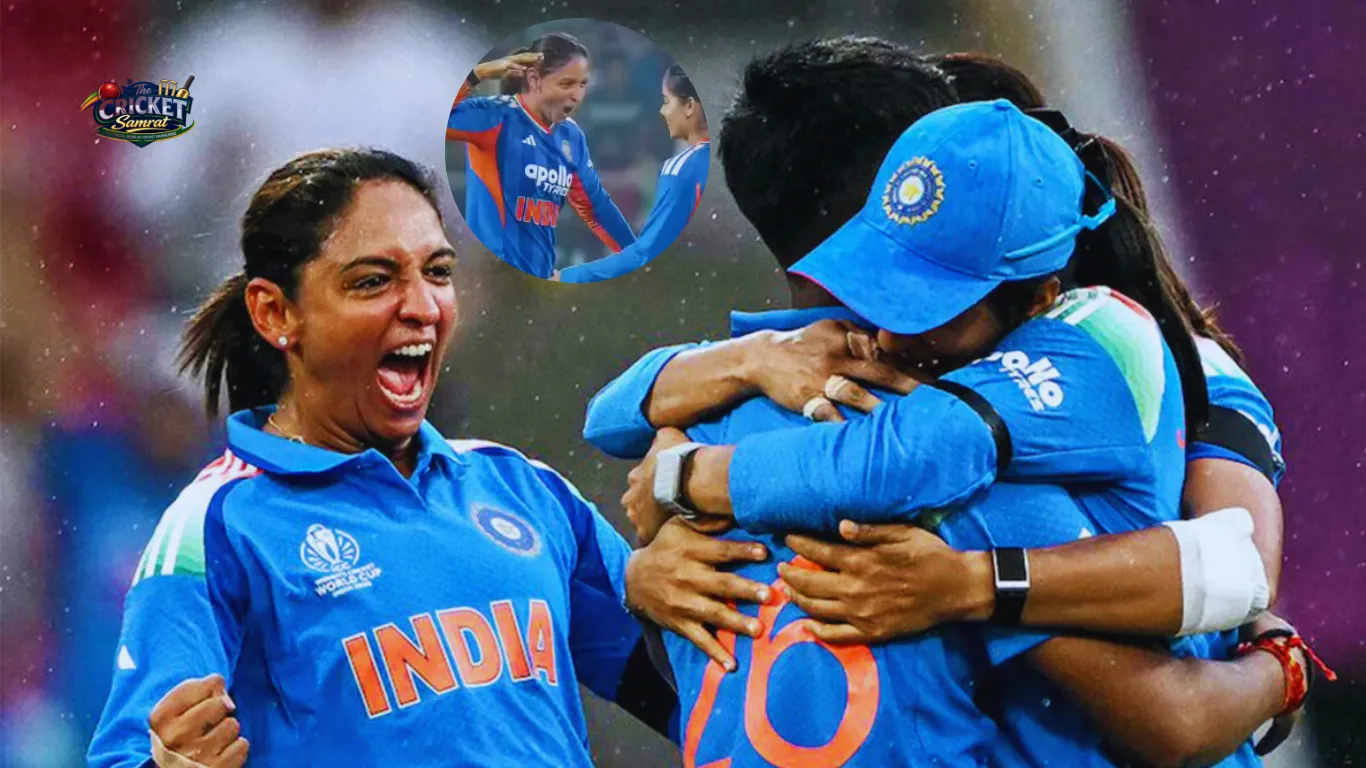
Ind vs SL Women 5th T20: The Indian women’s cricket team delivered yet another dominant performance as they defeated Sri Lanka Women by 15 runs in the fifth and final T20 International, completing a comprehensive 5-0 clean sweep in the series. The Ind vs SL Women 5th T20, played at the Greenfield International Stadium in Thiruvananthapuram, underlined India’s growing strength in the shortest format and marked the third time the team has won a women’s T20 series by a 5-0 margin.

Previously, India Women had achieved similar whitewash victories against the West Indies and Bangladesh. This latest result further cements their status as one of the most consistent and formidable teams in women’s international cricket.

Ind vs SL Women 5th T20: Match Summary

Sri Lanka Women won the toss and opted to bowl first, hoping to apply early pressure on the Indian batting line-up. India, however, responded with a composed and calculated batting effort, posting a competitive total despite losing wickets at regular intervals.

Match Details at a Glance

MatchInd vs SL Women 5th T20
VenueGreenfield Stadium, Thiruvananthapuram
TossSri Lanka Women won, chose to bowl
India Women Score175/7 (20 overs)
Sri Lanka Women Score160/7 (20 overs)
ResultIndia Women won by 15 runs
Series ResultIndia Women won 5-0

Harmanpreet Kaur Leads from the Front

India captain Harmanpreet Kaur played a captain’s knock, anchoring the innings with a well-crafted half-century. She scored 68 runs off 43 balls, striking nine boundaries and one six, showcasing both power and control.

Her innings proved crucial in giving India a strong platform, especially as wickets fell at the other end. Harmanpreet paced her innings smartly, accelerating during the middle and death overs to push India beyond the 170-run mark.

She received valuable support from:

  • Arundhati Reddy, who chipped in with 27 runs
  • Amanjot Kaur, who added a quick 21 runs

For Sri Lanka, the bowling effort was shared, with Chamari Athapaththu, Kavisha Dilhari, and Rashmika Sewandi picking up two wickets each.

Sri Lanka’s Chase Falters After Strong Start

Sri Lanka’s run chase suffered an early blow when skipper Chamari Athapaththu was dismissed in just the second over. Despite the setback, the visitors staged a brief recovery through a solid partnership between Hasini Perera and Imesha Dulani.

The duo added 79 runs, keeping Sri Lanka in contention. Dulani scored a fluent 50, while Hasini Perera top-scored for her side with a determined 65 runs. However, once Dulani was dismissed, Sri Lanka lost momentum and struggled to keep up with the required run rate.

India’s bowlers maintained discipline and applied pressure in the final overs, ensuring Sri Lanka fell short by 15 runs.

India Women Bowling Figures (Key Wickets)

BowlerWickets
Shree Charani1
Sneh Rana1
Vaishnavi Sharma1
Deepti Sharma1
Arundhati Reddy1
Amanjot Kaur1
Run Out1

Series Recap: India’s Complete Dominance

The five-match T20 series showcased India’s superiority across all departments. The first two matches were held in Visakhapatnam, while the remaining three, including the Ind vs SL Women 5th T20, took place in Thiruvananthapuram.

Match-wise Results

MatchResult
1st T20India won by 8 wickets
2nd T20India won by 7 wickets
3rd T20India won by 8 wickets
4th T20India won by 30 runs
5th T20India won by 15 runs

Shafali Verma Shines as Series’ Top Scorer

Young opener Shafali Verma emerged as the leading run-scorer of the series. Across five matches, she amassed 241 runs at an impressive average of 80.33, including 36 fours and 5 sixes. Her aggressive starts gave India early momentum throughout the series.

For Sri Lanka, Hasini Perera topped the batting charts, scoring 165 runs at an average of 33, showing resilience despite her team’s struggles.

Top Performers – Batting

PlayerTeamRunsAverage
Shafali VermaIndia24180.33
Hasini PereraSri Lanka16533.00

Bowlers Make a Strong Impact

India’s bowling unit was equally impressive, with Deepti Sharma, Vaishnavi Sharma, and Shree Charani finishing as joint top wicket-takers for the hosts, each claiming five wickets in the series.

For Sri Lanka, Kavisha Dilhari stood out as their leading wicket-taker, also picking up five wickets.

Read also: Smriti Mandhana Reaches 10,000 International Runs, Etches Her Name Deeper in Women’s Cricket History

Playing XI: Ind vs SL Women 5th T20

India Women (IND)

Harmanpreet Kaur (Captain), Shafali Verma, G Kamalini, Harleen Deol, Richa Ghosh (Wicketkeeper), Deepti Sharma, Amanjot Kaur, Sneh Rana, Arundhati Reddy, Vaishnavi Sharma, Shree Charani

Sri Lanka Women (SL)

Chamari Athapaththu (Captain), Hasini Perera, Harshitha Samarawickrama, Imesha Dulani, Kavisha Dilhari, Nilakshi de Silva, Kushini Nuthyangana, Rashmika Sewandi, Malki Madara, Inoka Ranweera, Nimasha Meepage

Read also: Vaibhav Suryavanshi Named India U-19 Captain for South Africa Tour; Four Gujarat Players Selected for U-19 World Cup

Conclusion

The Ind vs SL Women 5th T20 was a fitting end to a one-sided series, highlighting India Women’s depth, leadership, and consistency. With a 5-0 clean sweep, India have sent a strong message ahead of upcoming international assignments, while Sri Lanka will look to regroup and rebuild. This series not only showcased established stars but also underlined India’s bright future in women’s cricket.