
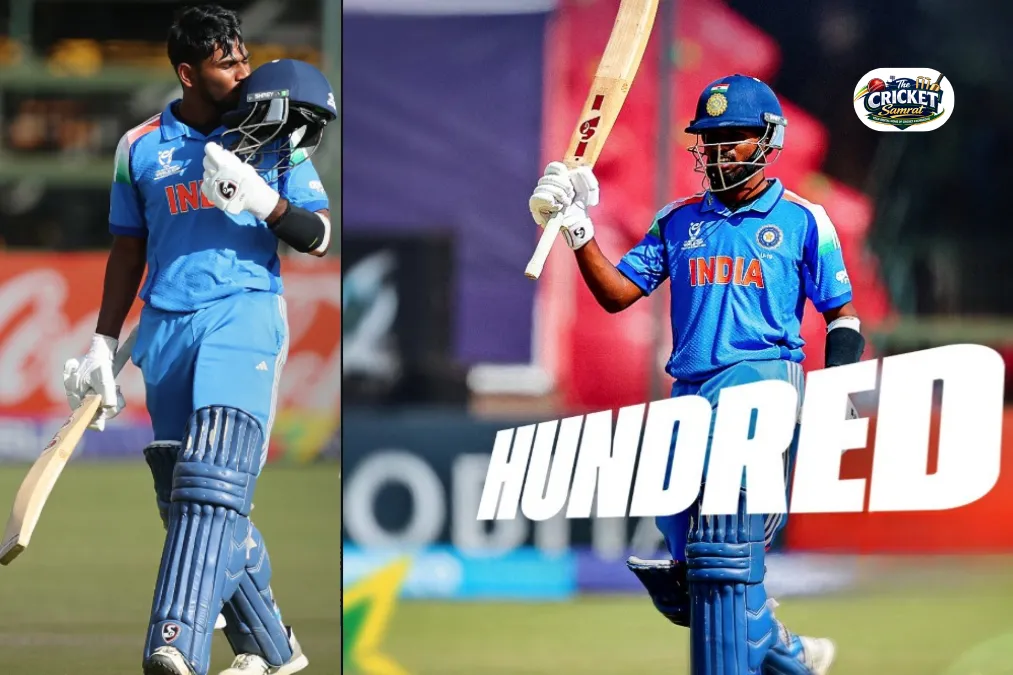
Ind vs Afg U19 Semifinal: Indian cricket history witnessed a remarkable new chapter on Wednesday as the India Under-19 team pulled off the largest run chase ever recorded in U-19 World Cup history, defeating Afghanistan by seven wickets in the Ind vs afg u19 semifinal. Chasing a daunting target of 311 runs, India reached the total in just 41.1 overs, sealing their 10th appearance in an ICC Under-19 World Cup final.
Powered by a magnificent century from opener Aaron George and vital half-centuries from Vaibhav Suryavanshi and captain Ayush Mhatre, India not only booked a final showdown against England on February 6, but also rewrote multiple youth cricket records in one extraordinary afternoon.
Match Overview: Ind vs Afg U19 Semifinal at a Glance
| Match | Ind vs Afg U19 Semifinal |
|---|---|
| Tournament | ICC Under-19 World Cup |
| Venue | Harare Sports Club, Zimbabwe |
| Result | India won by 7 wickets |
| Target | 311 runs |
| India Score | 311/3 in 41.1 overs |
| Afghanistan Score | 310/4 in 50 overs |
| Player of the Match | Aaron George (India) |
| Final Opponent | England |
| Date of Final | February 6 |
Afghanistan’s Commanding Batting Display Sets the Stage
Winning the toss at the Harare Sports Club, Afghanistan opted to bat first—and they made full use of the conditions. Displaying maturity beyond their years, the Afghan batters constructed a formidable total of 310 for 4 in 50 overs, one of the highest scores ever recorded in a U-19 World Cup knockout match.
Centuries That Shook the Indian Camp
Afghanistan’s innings revolved around two brilliant centuries:
- Faizal Shinazada – 110 runs
- Uzairellah Niazi – 101* runs (not out)
Both batters dominated the Indian bowling attack with controlled aggression, rotating strike effectively and punishing loose deliveries.
| Top Afghanistan Batting Performances |
|---|
| Player |
| Faizal Shinazada |
| Uzairellah Niazi |
India’s bowlers found breakthroughs hard to come by, though Deepesh Devendran and Kanishk Chauhan provided some relief, picking up two wickets each to prevent the total from going even higher.
India Faces the Ultimate Test: Chasing 311 in a World Cup Semifinal
A target of 311 runs in a World Cup semifinal would test any team, especially at the U-19 level. Before this match, no team had ever chased more than 300 runs in U-19 World Cup history.
But the Indian camp remained calm, confident, and fearless.
From the very first over, it was clear that India were not intimidated.
Aaron George is the Player of the Match for his superb knock 👌
— BCCI (@BCCI) February 4, 2026
India U19 register the highest successful run-chase in ICC Men's U19 World Cups to clinch a 7️⃣-wicket win over Afghanistan U19 in the semi-final 🔝
Scorecard ▶️ https://t.co/rM2IsqdXXr#U19WorldCup pic.twitter.com/dHww5uf3iw
Explosive Start: Vaibhav Suryavanshi and Aaron George Set the Tone
India’s chase began with intent. Opener Aaron George wasted no time, striking a boundary off the very first over to open India’s account. At the other end, Vaibhav Suryavanshi looked unstoppable from the moment he settled in.
Powerplay Carnage
Suryavanshi unleashed a breathtaking assault, smashing boundaries and sixes at will. He reached his half-century in just 24 balls, sending a strong message that India were fully in control of the chase.
| Powerplay Highlights |
|---|
| India crossed 50 runs |
| Opening partnership |
| Suryavanshi 50 |
Despite a couple of dropped catches early on, Afghanistan struggled to stem the flow of runs.
First Blow, But Momentum Stays With India
India lost their first wicket in the final over of the powerplay when Vaibhav Suryavanshi was dismissed for a blazing 68 off 33 balls. His innings included a flurry of boundaries and sixes that laid the perfect platform.
Even after his departure, India were firmly ahead of the required run rate.
Captain Ayush Mhatre Takes Charge
With the fall of the first wicket, captain Ayush Mhatre joined Aaron George at the crease—and what followed was a masterclass in controlled aggression.
The duo stitched together a crucial partnership, rotating strike smartly and punishing Afghanistan’s bowlers whenever they missed their lengths.
Key Partnership Milestones
| Over | Event |
|---|---|
| 12th Over | India crossed 100 runs |
| 18th Over | 50-run partnership between George & Mhatre |
| 19th Over | India crossed 150 runs |
| 23rd Over | Mhatre reached his half-century |
Mhatre brought up his second fifty of the tournament, reaching the milestone in just 43 balls.
Aaron George Reaches Top Gear
While partnerships flourished around him, Aaron George quietly built one of the finest innings in U-19 World Cup knockout history.
- 50 runs came in just 37 balls
- 100 runs arrived in 95 balls
His innings was a perfect blend of patience, placement, and power.
Aaron George’s Milestone Timeline
| Milestone | Balls Taken |
|---|---|
| 50 runs | 37 balls |
| 100 runs | 95 balls |
| Final Score | 115 runs |
Take a bow, Aaron George! 🙌
— BCCI (@BCCI) February 4, 2026
A magnificent century from the opening batter in a big game 👏
India U19 need 32 more runs to win.
Updates ▶️ https://t.co/rM2IsqdXXr#U19WorldCup pic.twitter.com/EKcNRpE3UK
George’s century was his first of the tournament, and it could not have come at a more crucial moment.
Record After Record Falls in the Ind vs Afg U19 Semifinal
As India surged ahead, history continued to tumble.
Major Records Broken
- Highest successful run chase in U-19 World Cup history
- Highest successful chase in Youth One-Day Internationals
- Most combined runs (620) in an India vs Afghanistan U-19 ODI
- Broke the previous record of 521 runs, set in Dubai in 2021
| Record Summary |
|---|
| Highest U-19 WC Chase |
| Highest Youth ODI Chase |
| Highest IND vs AFG U-19 total |
Afghanistan Fight Back Briefly
Afghanistan did manage a brief fightback.
Captain Ayush Mhatre was dismissed for 62, ending a 114-run partnership. Soon after, Aaron George was finally dismissed for 115, caught in the deep.
But by then, the result was all but decided.
Calm Finish as India Seals Victory in Style
With just a handful of runs needed, India showed maturity beyond their age. The winning runs were scored in the 42nd over, as India completed the chase at 311/3, winning by 7 wickets.
The crowd at Harare Sports Club witnessed one of the greatest chases ever seen in youth cricket.
Playing XIs: Ind vs Afg U19 Semifinal
India U-19 Playing XI
| Player |
|---|
| Ayush Mhatre (Captain) |
| Aaron George |
| Vaibhav Suryavanshi |
| Vihan Malhotra |
| Abhigyan Kundu (WK) |
| Vedant Trivedi |
| R.S. Ambarish |
| Kanishk Chauhan |
| Khilan Patel |
| Henil Patel |
| Deepesh Devendran |
Afghanistan U-19 Playing XI
| Player |
|---|
| Mahebub Khan (Captain & WK) |
| Osman Sadat |
| Khalid Ahmadzai |
| Faizal Shinazada |
| Uzairellah Niazi |
| Azizullah Miyakhil |
| Abdul Aziz |
| Khatir Stanikzai |
| Ruhullah Arab |
| Nooristani Omarzai |
| Waheedullah Zadran |
Player of the Match: Aaron George
There was no doubt about the standout performer of the Ind vs afg u19 semifinal.
Aaron George was named Player of the Match for his match-winning 115-run knock, anchoring the biggest chase the tournament has ever seen.
India Marches Into Its 10th U-19 World Cup Final
With this victory, India reached the U-19 World Cup final for the 10th time, further cementing their dominance in youth cricket.
They will now face England in the final on February 6, carrying immense confidence and momentum after this historic semifinal triumph.
Also read:
What This Win Means for Indian Cricket
This match will be remembered as more than just a semifinal win. It showcased:
- Fearless batting under pressure
- Tactical maturity from young players
- Depth and resilience in India’s U-19 system
The Ind vs afg u19 semifinal will go down as a defining moment in youth cricket history.
Conclusion:
From Afghanistan’s twin centuries to India’s record-breaking chase, this semifinal had everything a cricket fan could ask for. But in the end, it was India’s composure, firepower, and belief that carried them into yet another World Cup final.
The stage is now set. England awaits. History beckons again.