
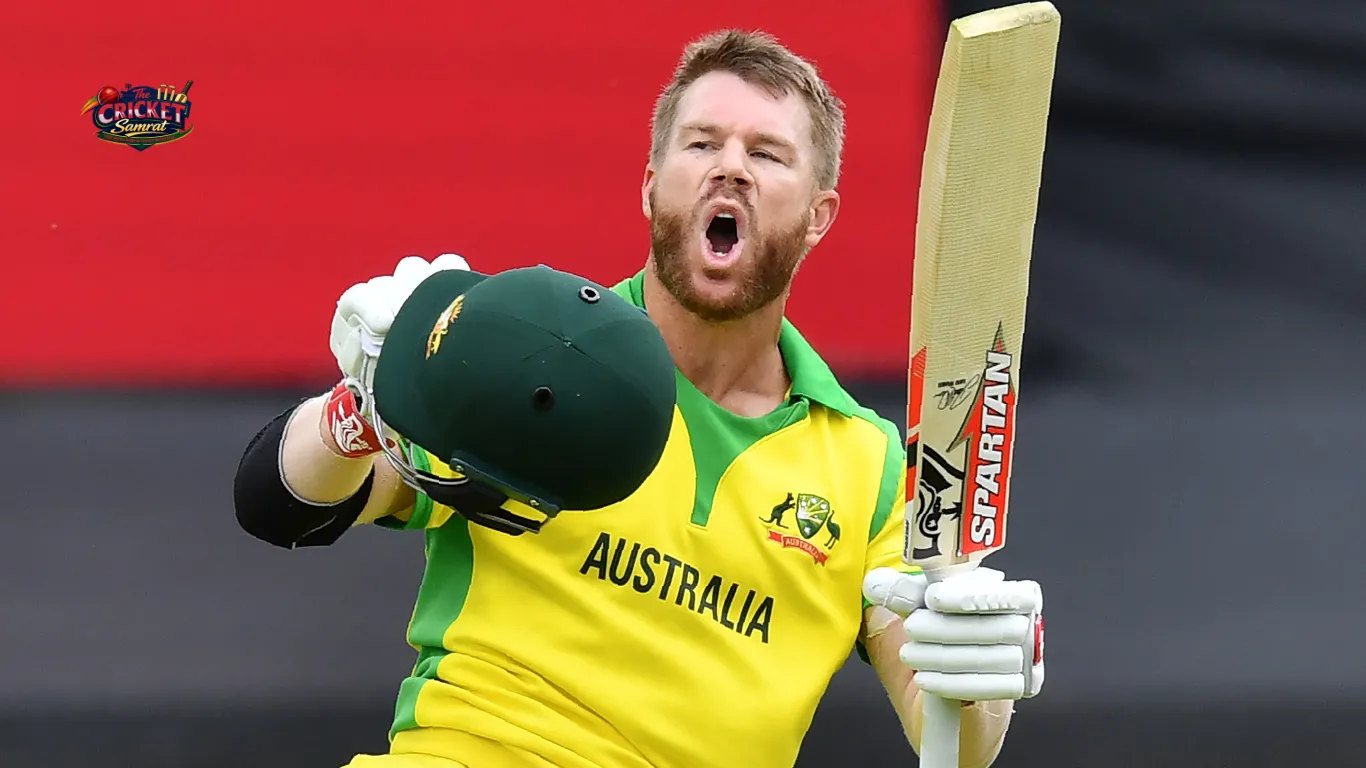
David Warner once again reminded the cricketing world why his name belongs among the greatest T20 batters of all time, producing a breathtaking unbeaten century in the Big Bash League that not only powered Sydney Thunder to a commanding total but also etched his name deeper into the record books. With a masterful 130 not out against the Hobart Hurricanes, Warner moved past Rohit Sharma on the list of T20 centuries and drew level with Virat Kohli, reinforcing his legacy as one of the most destructive openers the format has ever seen.
The innings, played on Saturday night at Engie Stadium, was vintage David Warner-fearless, explosive, and built on supreme confidence. Coming at a time when Sydney Thunder were struggling at the bottom of the Big Bash League table, the knock carried both statistical and emotional significance. It was not just a personal milestone but also a timely reminder of Warner’s enduring class and ability to dominate elite bowling attacks.
A Historic Night for David Warner in the Big Bash League
David Warner’s unbeaten 130 came off just 65 balls and featured a staggering display of power hitting blended with calculated shot selection. The innings marked his ninth T20 century, placing him joint third on the all-time list alongside Virat Kohli and South Africa’s Rilee Rossouw. More notably, it saw Warner move clear of Rohit Sharma, as well as several other modern T20 greats including Glenn Maxwell, Jos Buttler, Faf du Plessis, Aaron Finch, Michael Klinger, and Abhishek Sharma-all of whom currently sit on eight T20 hundreds.
Only a select few batters in world cricket have managed to consistently score centuries across different T20 leagues and international competitions. Warner’s achievement is even more remarkable considering the span of his career and the evolution of T20 bowling strategies aimed specifically at neutralising aggressive openers.
For Warner, this was also a personal comeback of sorts. The century was his second in Big Bash League history and his first in the tournament since December 2011, underlining just how rare and special the moment was. Additionally, it was his first T20 hundred in six years, a statistic that highlights both the longevity of his career and the significance of the performance.
A Shaky Start Turns Into a One-Man Show
Sydney Thunder’s innings began in dramatic and almost disastrous fashion. Hobart Hurricanes fast bowler Will Prestwidge delivered a dream start for the visitors, striking with the first two balls of the match. Matthew Gilkes and Sam Konstas were both dismissed without scoring, leaving the Thunder reeling at 2 for 0.
During that early chaos, David Warner found himself stranded at the non-striker’s end, unable to face a delivery as wickets fell around him. Prestwidge nearly completed a remarkable hat-trick when his next ball drifted down the leg side, narrowly missing the opportunity to remove a third batter in as many deliveries.
At that moment, the match appeared firmly in Hobart’s control. But cricket, particularly T20 cricket, has a way of changing in an instant-and David Warner was about to prove that point emphatically.
Warner Finds His Rhythm and Takes Control
Once Warner finally faced a delivery, the tone of the innings gradually began to shift. Initially cautious, he focused on rebuilding the innings and stabilising the batting order. The early overs saw Warner rotating the strike intelligently, picking gaps rather than forcing shots.
As the innings progressed, his timing improved, his confidence soared, and the Hurricanes’ bowlers began to feel the pressure. Warner’s footwork against pace and spin was flawless, allowing him to access all parts of the ground. Pull shots, lofted drives, and trademark cuts flowed effortlessly from his bat.
What truly set the innings apart was Warner’s ability to change gears. After anchoring the innings through the middle overs, he launched a brutal assault towards the end, smashing 50 runs off his final 15 balls. It was a breathtaking display of power-hitting that left both the Hurricanes and the crowd stunned.
Record-Breaking Power and Precision
David Warner finished his innings with nine sixes and 11 fours, dismantling the Hobart Hurricanes’ bowling attack and setting a new record for the highest individual score in Sydney Thunder history. His 130 not out also became the highest individual score of the current Big Bash League season, further underlining the dominance of the performance.
Every bowler was tested, and few could find a consistent answer. Warner’s ability to pick slower balls, adjust to changes in length, and exploit fielding restrictions showcased not just raw power but a deep understanding of the T20 format.
The Thunder eventually posted a formidable 4 for 205, a total that always looked beyond Hobart’s reach given the conditions and the pressure of a large chase.
Valuable Support from the Middle Order
While David Warner was unquestionably the star of the show, he did receive valuable contributions from his teammates. Sam Billings played a composed supporting role, scoring 20 off 24 balls, ensuring that Warner had time to build his innings without excessive risk.
Nic Maddinson added momentum with 30 runs from 26 deliveries, striking the ball cleanly before retiring hurt late in the innings. His partnership with Warner helped maintain the scoring rate during the middle overs.
At the death, Daniel Sams provided a late flourish, smashing an unbeaten 14 off just six balls, pushing the Thunder past the 200-run mark and applying additional pressure on the Hurricanes.
Hurricanes’ Bowlers Under Pressure
From Hobart’s perspective, it was a challenging night with the ball. Will Prestwidge, despite conceding little overall, remained the standout performer. His figures of 2 for 19 from two overs reflected both his early impact and his ability to maintain control in a high-scoring match.
Captain Nathan Ellis picked up one wicket but endured a tough outing, conceding 46 runs as Warner targeted his variations. Rishad Hossain was relatively economical by comparison, giving away 29 runs from his four overs, but even he struggled to fully contain Warner once the onslaught began.
Warner Reflects on the Innings
Speaking after the match, David Warner expressed satisfaction not only with his personal milestone but also with the team’s overall effort.
“It feels really good to put 200 on the board,” Warner said. He acknowledged the early setbacks and credited his success to backing his natural game and trusting the process, even after watching two wickets fall before he had faced a ball.
His comments reflected the mindset of a seasoned professional-someone who understands that pressure situations require calm decision-making and belief in one’s strengths.
A Timely Boost for Sydney Thunder
Entering the match, Sydney Thunder were languishing at the bottom of the Big Bash League table and desperately searching for momentum. David Warner’s record-equalling century could prove to be a turning point in their campaign.
Beyond the immediate impact on the points table, the innings injected belief into a side that had struggled for consistency. A performance of this magnitude often has a ripple effect, lifting the confidence of teammates and altering the narrative of a season.
David Warner’s Place Among T20 Greats
With this innings, David Warner once again cemented his status among the most prolific and feared run-scorers in T20 cricket. Drawing level with Virat Kohli on nine T20 centuries places him in elite company, while surpassing Rohit Sharma highlights his consistency across leagues and conditions.
What sets Warner apart is not just the volume of runs or centuries, but the manner in which they are scored. His ability to dominate from the top of the order, adapt to different pitches, and perform under pressure has made him a cornerstone of every team he has represented.
As T20 cricket continues to evolve, with younger players emerging and strategies becoming increasingly complex, performances like this serve as a reminder that experience, skill, and self-belief remain invaluable assets.
Conclusion: A Statement Innings That Echoes Beyond One Match
David Warner’s unbeaten 130 in the Big Bash League was more than just a match-winning knock. It was a statement-a declaration that he remains one of the premier batters in world cricket. By surpassing Rohit Sharma and matching Virat Kohli on the T20 centuries list, Warner reinforced his place in the upper echelon of the game’s modern legends.
For Sydney Thunder, the innings could mark the start of a resurgence. For cricket fans, it was a thrilling reminder of what David Warner is capable of when he finds his rhythm. And for Warner himself, it was another unforgettable chapter in a career defined by bold strokes, relentless ambition, and an unwavering hunger for runs.
As the Big Bash League season unfolds, one thing is clear: when David Warner is in this kind of form, records are never safe, and opposition bowlers are always under threat.