
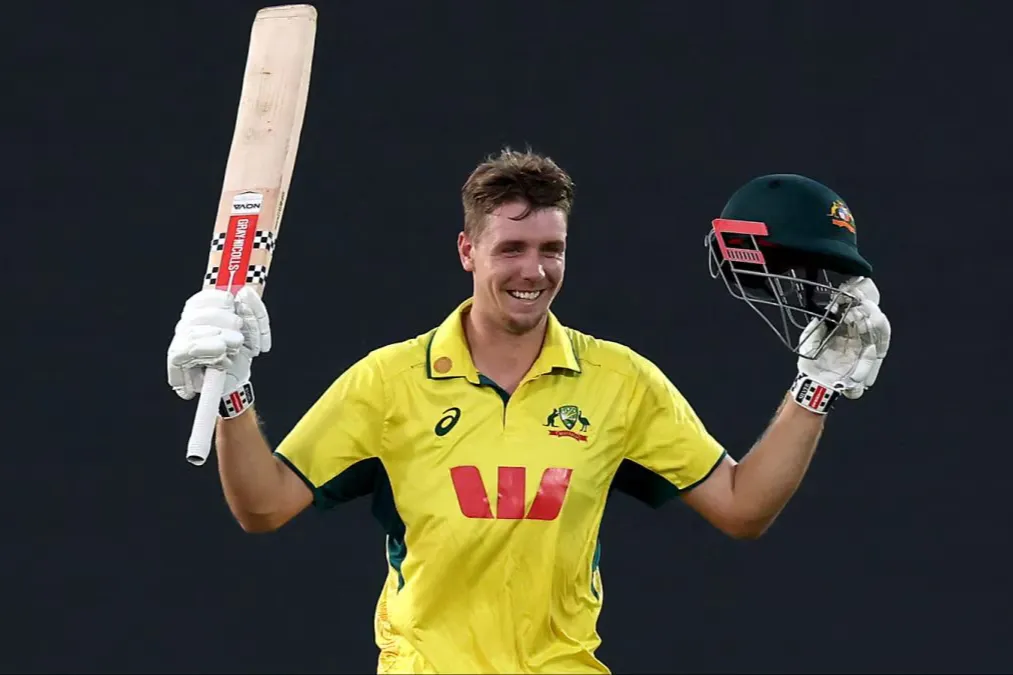
In modern international cricket, few names capture the blend of physical presence, technical finesse, and long-term potential quite like Cameron green. Towering at two metres tall, armed with a naturally elegant batting technique and the ability to generate steep bounce with the ball, Green represents a new generation of all-round cricketers built for all formats of the game.
From a teenage prodigy in Western Australia to a match-winner for Australia across Tests, ODIs, T20Is, and the Indian Premier League, Cameron green’s journey has been shaped as much by adversity as by achievement. Injuries, competition for places, and the relentless demands of three-format cricket have tested him repeatedly. Yet each setback has been followed by reinvention, maturity, and growth.
This is the complete story of Cameron green — his early promise, international breakthroughs, IPL stardom, injury battles, statistical evolution, and his place in the future of Australian cricket.
Cameron Green: Personal Profile
| Detail | Information |
|---|---|
| Full Name | Cameron Donald Green |
| Date of Birth | June 03, 1999 |
| Age | 26 years |
| Batting Style | Right-hand bat |
| Bowling Style | Right-arm fast-medium |
| Playing Role | Batting all-rounder |
| Height | Approximately 200 cm |
| Nationality | Australian |
Early Life and Junior Cricket: A Talent Identified Early
Cameron green was earmarked for elite cricket long before his name became familiar to international audiences. Growing up in Western Australia, his development followed a structured but demanding pathway, shaped by junior club cricket and state-level youth systems.
As a schoolboy, Green was already contracted to Western Australia — a rare achievement that highlighted just how highly regarded he was within Australian cricket circles. His early coaches quickly recognised a unique combination: a fast-bowling frame paired with a batting technique that was compact, classical, and unusually mature for his age.
Representing Subiaco-Floreat and Western Australia’s junior teams, Green’s appetite for runs became a defining trait. While many young fast bowlers focus primarily on pace, Cameron green invested equal energy into refining his batting, laying the foundation for his future as a genuine all-rounder.
First-Class Debut at 17: A Statement Performance
Cameron green made his first-class debut for Western Australia against Tasmania in February 2017, aged just 17. The match immediately showcased why he was considered special.
On debut, Green returned bowling figures of 5 for 24, an extraordinary achievement for a teenager facing seasoned professionals. His ability to extract bounce and movement, particularly with the outswing, stood out instantly.
However, while his bowling drew headlines, insiders continued to emphasise his batting potential — a quiet confidence that would soon be validated.
Injury Setbacks and a Crucial Reset
The early stages of Cameron green’s career were interrupted by a recurring challenge: stress fractures in his lower back. These injuries forced him to step away from competitive cricket at critical moments, including missing the entire 2017–18 first-class season.
Instead of rushing back, Green spent the 2018 winter at Cricket Australia’s National Performance Centre in Brisbane. This period became a turning point. With reduced bowling workloads, his batting flourished. Technical adjustments, physical conditioning, and mental development transformed his approach.
By the time he returned in the 2019–20 season, Cameron green was no longer seen merely as a fast-bowling prospect who could bat. He had evolved into a frontline batting all-rounder.
Breakthrough Domestic Season: Runs That Demanded Attention
The 2019–20 season marked Cameron green’s true breakthrough. One innings in particular announced his arrival as a serious batting force.
Against Queensland at the Gabba, Green produced one of the most remarkable match-saving performances in recent Australian domestic cricket history. He scored 87 not out and 121 not out, batting across two innings to secure an extraordinary draw for Western Australia.
That summer, he went on to score two more centuries, confirming that his batting success was no anomaly. In October 2020, he elevated his reputation further with a career-best 197 off 438 balls against New South Wales — an innings defined by patience, control, and concentration.
Selectors could no longer ignore him.
International Call-Up and Test Debut
Cameron green earned his first international call-up in late 2020, selected in Australia’s ODI and T20I squads against India. Soon after, he was handed a Test debut against the same opposition in Adelaide.
His early Test career was defined by consistency rather than spectacular numbers. Across his first four Test series, Green recorded half-centuries that showcased his temperament against high-quality bowling attacks.
Selectors valued his balance: a batter capable of absorbing pressure and a bowler who could provide breakthroughs or control when needed.
First Major Test Milestones
Green’s confidence grew steadily. In late 2022, during a Test against South Africa at the Melbourne Cricket Ground, he claimed his maiden five-wicket haul — 5 for 27 — despite playing with a badly broken finger.
Shortly after returning to the side during Australia’s tour of India, Cameron green achieved another milestone: his maiden Test century. The hundred, scored in Ahmedabad, was a reward for years of persistence and adaptation.
Cameron Green Career Batting Statistics
Batting & Fielding (All Formats)
| Format | Matches | Runs | Average | Highest Score | 100s | 50s |
|---|---|---|---|---|---|---|
| Tests | 37 | 1736 | 32.75 | 174* | 2 | 7 |
| ODIs | 31 | 782 | 43.44 | 118* | 1 | 2 |
| T20Is | 22 | 557 | 32.76 | 62* | 0 | 6 |
| First-Class | 78 | 4893 | 44.88 | 251 | 14 | 16 |
| List A | 51 | 1381 | 41.84 | 144 | 3 | 4 |
| T20s | 64 | 1370 | 33.41 | 100* | 1 | 8 |
Bowling Contribution: More Than a Part-Timer
Although injuries limited his bowling workload at times, Cameron green’s impact with the ball remains significant.
Bowling Statistics (All Formats)
| Format | Wickets | Average | Best Bowling |
|---|---|---|---|
| Tests | 39 | 38.94 | 5/27 |
| ODIs | 20 | 39.20 | 5/33 |
| T20Is | 12 | 24.16 | 3/35 |
| First-Class | 83 | 35.03 | 6/30 |
| List A | 30 | 44.03 | 5/33 |
| T20s | 28 | 34.82 | 3/35 |
IPL Stardom: The Auction That Changed Everything
Cameron green’s T20 credentials gained global attention during Australia’s tour of India, where he struck back-to-back T20I fifties on challenging pitches.
At the 2022 IPL auction, that reputation translated into one of the most dramatic bidding wars in recent history. Mumbai Indians secured his services for INR 17.50 crore, making him one of the most expensive overseas players in the tournament.
In the 2023 IPL season, Green justified that investment with a breathtaking 47-ball century, underlining his ability to dominate elite bowling attacks.
Cameron Green T20 League Performance
IPL Batting Record
| Tournament | Matches | Runs | Average | Strike Rate | 100s | 50s |
|---|---|---|---|---|---|---|
| IPL | 29 | 707 | 41.58 | 153.69 | 1 | 2 |
The Ashes Challenge and Temporary Setback
The demands of three-format cricket eventually took their toll. During the 2023 Ashes series in England, Cameron green struggled to find rhythm in Test cricket and was dropped in favour of Mitchell Marsh, who produced immediate impact.
However, the selectors’ long-term faith in Green never wavered. Following David Warner’s retirement, Australia reshaped their batting order, promoting Steven Smith to opener largely to accommodate Cameron green at number four.
The decision paid dividends.
Career-Defining Knock in Wellington
Just three matches into his new role at number four, Cameron green delivered one of the finest innings of his career. Against New Zealand in Wellington, he scored an unbeaten 174, combining authority with patience in testing conditions.
The innings silenced doubts and reaffirmed his status as a long-term pillar of Australia’s Test batting lineup.
Injury, Surgery, and Comeback
Later in the year, during a white-ball tour of England, Cameron green suffered another back injury that required surgery. The setback ruled him out of the entire 2024–25 season — a frustrating interruption just as his career seemed to be peaking.
Yet true to form, his return was impactful. During Australia’s tour of the Caribbean, Green played a key role in a 3–0 series sweep over West Indies, contributing a vital fifty and two forties under pressure.
Recent Matches Snapshot
| Match | Runs | Bowling | Date | Format |
|---|---|---|---|---|
| Australia vs Pakistan | 36 | 0/11 | Jan 29, 2026 | T20I |
| Australia vs England | 37 & 22* | 1/85 | Jan 04, 2026 | Test |
| Australia vs England | 17 & 19 | 1/0 | Dec 26, 2025 | Test |
Read also: Nathan Ellis: From Humble Beginnings to International Cricket Stardom
Debut and Most Recent Appearances
| Format | Debut | Latest Match |
|---|---|---|
| Test | vs India, Dec 2020 | vs England, Jan 2026 |
| ODI | vs India, Dec 2020 | vs South Africa, Aug 2025 |
| T20I | vs Pakistan, Apr 2022 | vs Pakistan, Jan 2026 |
Read also: Harry Brook: England’s Rising Star and White-Ball Captain
Legacy and Future Outlook
At just 26, Cameron green has already experienced nearly every phase of a professional cricketing journey — prodigy, injury-hit prospect, international regular, IPL superstar, and comeback performer.
What separates him from many contemporaries is adaptability. Whether reshaping his bowling workload, altering his batting position, or adjusting to new formats, Green continues to evolve.
For Australia, Cameron green represents stability, versatility, and long-term vision. For global cricket fans, he embodies the modern all-rounder — tall, technically sound, mentally resilient, and capable of changing games with bat or ball.
As the next decade unfolds, Cameron green’s best chapters may still be unwritten. But one thing is already clear: his story is far from finished — and the cricketing world will be watching closely.